Iraq Verifies Complete US Military Removal from Federal Territory
Iraq claims that after decades of deployment, US military have completely left federal bases, however troops are still present in the Kurdistan Region.
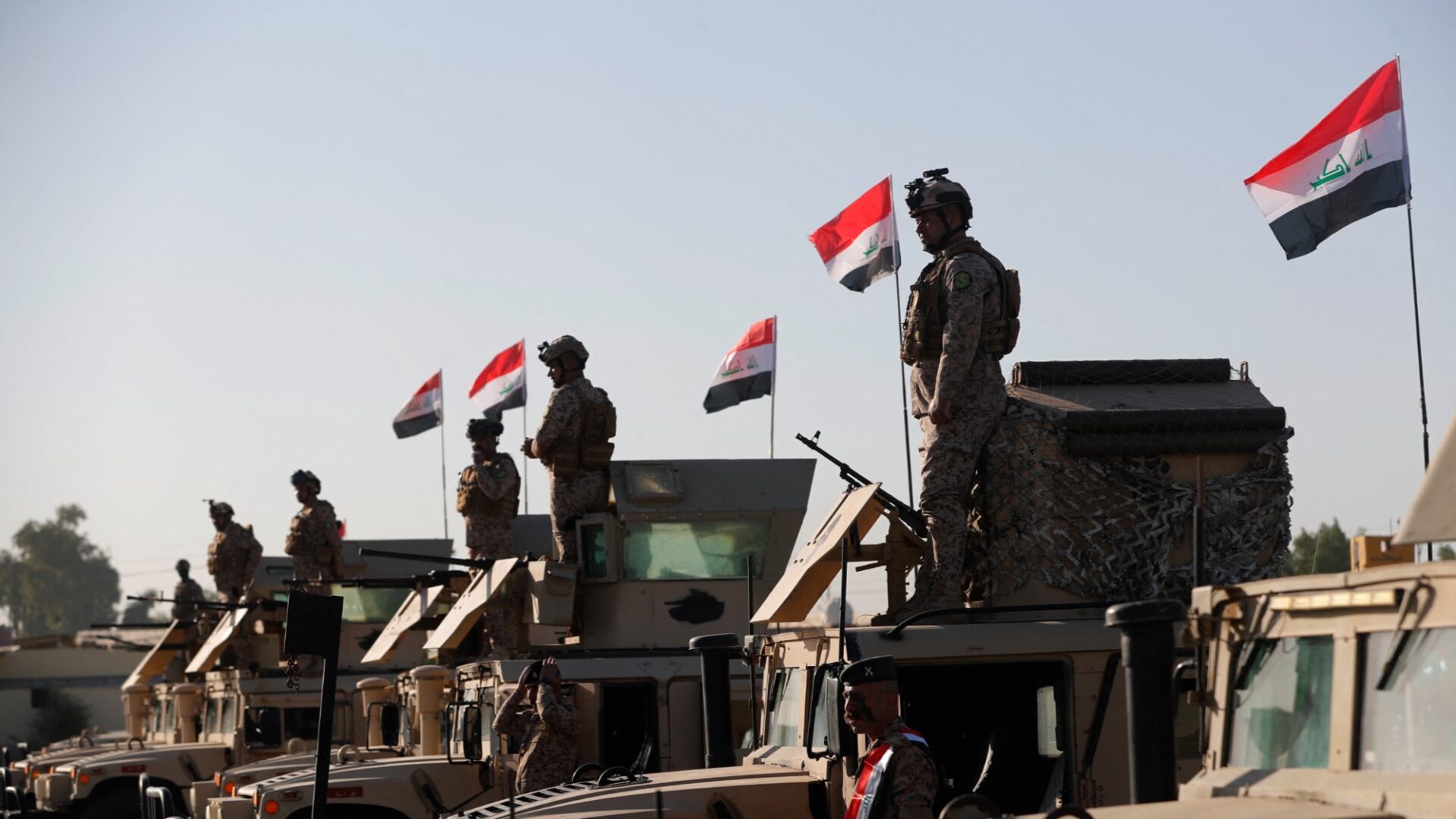
In a significant step toward the end of the US military presence after more than 20 years, the Iraqi government has announced that all US forces have completely left military installations on the country’s federal territory.
Iraq’s defense ministry announced in a statement on Sunday that the last batch of US advisers had left Al-Asad Air Base in the western Iraqi province of Anbar. Since the early years of the US-led invasion in 2003, American troops have been stationed at the site. The ministry added that the Joint Operations Command headquarters had been abandoned by the US-led coalition fighting the Islamic State (IS) group, giving Iraqi security forces exclusive authority over both locations.
The withdrawal comes after years of incremental cutbacks following the Iraqi government’s official 2023 request for a US withdrawal. Nonetheless, American forces are still based in the semi-autonomous Kurdistan Region at Harir Air Base in the province of Erbil. The Kurdistan Region has its own parliament, government, and security forces under the Iraqi constitution, which restricts Baghdad’s direct control over it.
The level of US military participation in Iraq has varied greatly over time. Approximately 170,000 US forces were stationed during the conflict’s peak. In 2011, former President Barack Obama issued an order for a complete pullout; but, at Baghdad’s request, some 5,000 troops returned in 2014 to aid in the fight against IS. Approximately 2,500 personnel have continued to serve in an advise and support capacity since the US concluded its official combat mission in December 2021.
The symbolic termination of the United States’ presence at Al-Asad Air Base was highlighted by the release of video footage by Iraq’s defense ministry that showed senior military officers strolling through deserted hallways. Later, without going into any detail, US Central Command affirmed that the Iraqi ministry’s statement regarding the handover was correct.
The departure occurs as US President Donald Trump considers taking military action against Tehran in response to fatal protests that challenge Iran’s authority, escalating regional tensions between the US and Iran. Iran and militants with Iranian support have repeatedly targeted US personnel at Al-Asad over the years. The US killed senior Iranian commander Qasem Soleimani in Baghdad, and Iran retaliated by attacking the facility with ballistic missiles in January 2020. More recently, after the attack on Israel on October 7, 2023, militias affiliated with Iran escalated their attacks; a strike in August 2024 resulted in multiple injuries to US forces.
According to Iraqi officials, the country’s armed forces are now capable of securing its territory, and future collaboration with Washington would concentrate on joint exercises, training, equipment acquisition, and operational coordination under bilateral agreements. Baghdad stated that operations against IS are still ongoing in neighboring Syria, even though it views the coalition’s mission inside Iraq as completed.
Additionally, officials did not exclude out combined US-Iraqi counter-IS operations launched from Al-Asad if necessary, and they pointed out that logistical assistance for coalition missions in Syria may still pass through the Erbil air base.
Baghdad’s position in talks over the disarmament of non-state armed groups may be strengthened by the US exit. For a long time, a number of militias supported by Iran have used the US military presence as an excuse to keep their weapons. Washington-designated terrorist organizations like Kataib Hezbollah and Harakat al-Nujaba have repeatedly stated that they would only disarm when Iraq attained complete sovereignty, which includes the withdrawal of international forces.
Although the militias did not immediately respond to Sunday’s statement, many of them continue to have a significant impact on Iraq’s political, security, and economic environment even after being formally included into the Popular Mobilization Forces.