EU considers retaliation, calls an urgent meeting on Trump’s Greenland tariffs, and characterizes the US plan as blackmail
EU prioritizes diplomacy while considering a €93 billion reprisal plan at emergency discussions over Trump’s threat of a Greenland tariff.
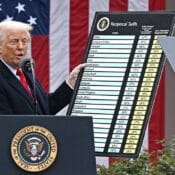
Following US President Donald Trump’s announcement that he would impose a 10% tariff on imports from several EU nations, including Denmark, France, and Germany, unless they agreed to Washington’s quest to purchase Greenland, European Union (EU) leaders hurried into crisis negotiations on Sunday.
Major EU nations also denounced Trump’s tax threats on European allies over Greenland as blackmail on Sunday, while France suggested a number of unproven economic countermeasures in response.
Trump pledged on Saturday to impose a series of higher taxes on EU countries, including Britain, Norway, Denmark, Sweden, France, Germany, the Netherlands, and Finland, until the US is permitted to purchase Greenland.
As EU leaders increased connections, Cyprus, which holds the rotating six-month EU presidency, called ambassadors to an emergency conference in Brussels that began at 5 p.m. (1600 GMT) Subday.
The “Anti-Coercion Instrument,” also known as the “bazooka,” could restrict access to public tenders, investments, or banking activities, or it could restrict trade in services, such as digital services, in which the US has an excess with the bloc, according to a source close to French President Emmanuel Macron.
However, an update regarding the meeting’s outcome is anticipated later on Monday, January 18. According to information obtained, EU nations will not yet use the anti-coercion tool in reaction to Trump’s tariff threats on Greenland. According to insiders, the EU will give priority to a “diplomatic solution.”
During the hurried conference in Brussels, the EU members reportedly retreated from using the trade “bazooka” in response to US President Donald Trump’s tariff threats over Greenland.
According to the sources, EU member states would refrain from taking any retaliatory action while they prioritize communication and diplomacy with the US.
However, if Trump fulfills his February 1 threat to impose an additional 10% duty on eight European nations, they may resurrect a €93 billion retaliation package that targets US goods.
Following that date, a decision will be made about the reinstatement of the tariffs that were suspended last year. The €93 billion package, which was drafted last year in the midst of uncertainty surrounding Trump’s willingness to accept a trade agreement between the US and the EU, anticipates retaliatory EU tariffs of up to 30% on a variety of US goods, including poultry and automobiles.
As a dispute with the United States over the future of Denmark’s enormous Arctic island intensifies, all eight nations—which are already subject to 10% and 15% US tariffs—have sent a small number of military soldiers to Greenland, according to Reuters.
In a joint statement released on Sunday, the eight countries stated that “tariff threats undermine transatlantic relations and risk a dangerous downward spiral.”
They claimed that no one was in danger and that the Danish exercise was intended to improve Arctic security. On the basis of territorial integrity and sovereignty, they said that they were prepared to have a conversation.
In a written statement, Danish Prime Minister Mette Frederiksen expressed her satisfaction with the consistent sentiments from the rest of the continent and added, “Europe will not be blackmailed.” The prime ministers of Sweden and Germany both agreed.
Regarding Trump’s threat, Dutch Foreign Minister David van Weel declared on Dutch television, “It’s blackmail what he’s doing.”
António Costa, the president of the European Council, has called an extraordinary summit of EU leaders for the “coming days.” According to a person with knowledge of the situation, the summit is scheduled for Thursday, January 22.
Macron’s appeal was echoed by Germany’s engineers association, Valerie Hayer, the leader of the centrist Renew Europe group, and Bernd Lange, the German Social Democrat who chairs the European Parliament’s trade committee.
Irish Prime Minister Michael Martin, meantime, stated that although the EU will undoubtedly strike back, it was “a bit premature” to use the anti-coercion tool.
Additionally, Italian Prime Minister Giorgia Meloni, who has a stronger relationship with the US President than some other EU leaders, called the tariff threat “a mistake” on Sunday and said she had spoken with Trump a few hours before and shared her thoughts with him.
She told reporters on a trip to Korea that “he seemed interested in listening,” and she said she would call other European leaders later on Sunday. There are no Italian troops in Greenland.
When asked how Britain will react to the additional tariffs, Culture Secretary Lisa Nandy stated that in order to settle the conflict, friends must cooperate with the US.
Our stance on Greenland cannot be compromised. Working together rather than starting a verbal spat is in our best interests as a group, she told Sky News on Sunday.
Trade agreements the US made with the UK in May and the EU in July are called into question by the tariff threats. The asymmetrical nature of the restricted accords, which compel foreign partners to eliminate import levies while the US maintains broad tariffs, has already drawn criticism.
It now appears likely that the European Parliament will put the EU-US trade agreement on hold. Manfred Weber, the leader of the European People’s Party, the largest group in parliament, stated late on Saturday that approval was not now conceivable, despite a vote on lifting many EU import taxes being scheduled for January 26–27.
Lawmaker Juergen Hardt, a Christian Democrat from Germany, has suggested boycotting the soccer World Cup being hosted by the United States this year as a final resort “to bring President Trump to his senses on the Greenland issue.”