Iran issues a warning against any US strike while the judiciary suggests executions related to unrest
Iran’s president on Sunday cautioned that any U.S. military action would provoke a “harsh response” from Tehran, following statements from an Iranian official indicating that at least 5,000 individuals, including approximately 500 security personnel, had lost their lives in nationwide protests.
The protests in Iran, which began last month in Tehran’s Grand Bazaar due to economic issues, quickly evolved into a political movement that spread throughout the country. Participants from various generations and income levels—shopkeepers, students, men and women, the impoverished and the affluent—united in their demand for the end of clerical rule.
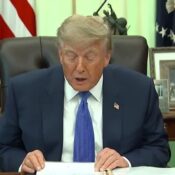
U.S. President Donald Trump has consistently warned of potential intervention if protesters continue to be killed on the streets or face execution. In an interview with Politico on Saturday, he stated, “it’s time to look for new leadership in Iran.”
On Sunday, Iran suggested it could proceed with the execution of individuals arrested during the recent unrest. As its clerical leaders confront increasing international pressure amid the deadliest turmoil since the 1979 Islamic revolution, the country aims to dissuade Trump from intervening.
Iran’s President Masoud Pezeshkian on X cautioned that Tehran’s reaction “to any unjust aggression will be severe and regrettable”, emphasizing that any assault on the country’s supreme leader is “equivalent to a full-scale war against the nation”.
Rights group reports 24,000 arrests.
Last week, protests diminished after a severe crackdown.
On Saturday, the U.S.-based rights group HRANA reported that the death toll had climbed to 3,308, with an additional 4,382 cases currently under review. It reported that it had verified over 24,000 arrests.
On Friday, Trump expressed gratitude to Tehran’s leaders in a social media post, noting that they had canceled the planned executions of 800 individuals. He has deployed U.S. military assets to the region, yet he has not detailed his potential actions.
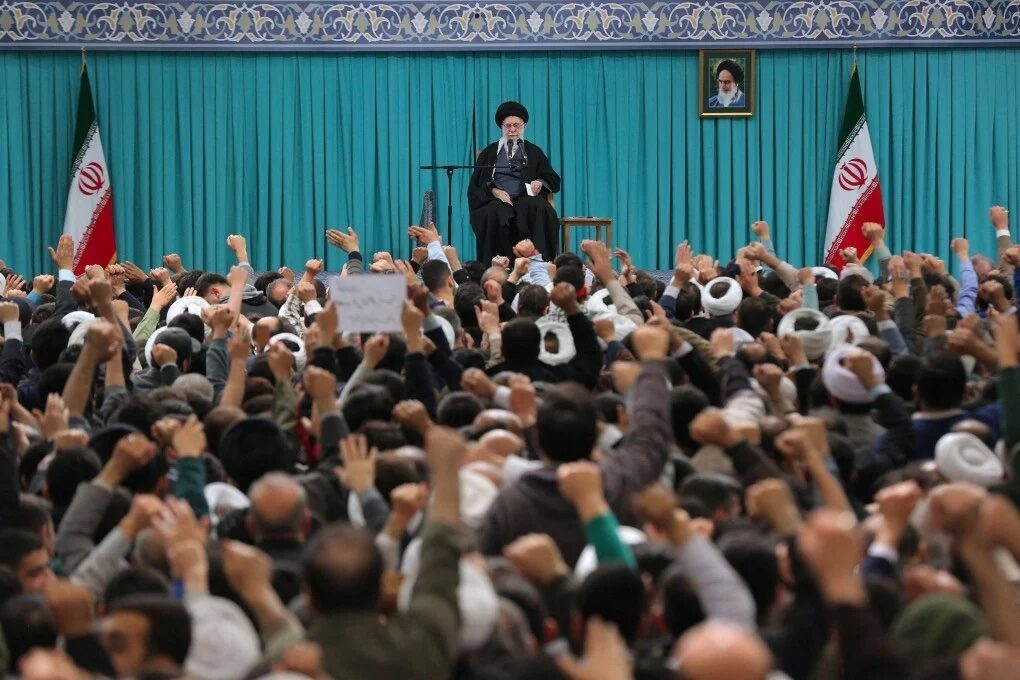
One day later, Supreme Leader Ayatollah Ali Khamenei labeled Trump a “criminal,” recognizing “several thousand deaths” that he attributed to “terrorists and rioters” associated with the U.S. and Israel.
Iran’s judiciary has signaled that executions could proceed. “A series of actions have been identified as Mohareb, which is among the most severe Islamic punishments,” stated Iranian judiciary spokesperson Asghar Jahangir during a press conference on Sunday.
Mohareb, an Islamic legal term referring to waging war against God, is subject to the death penalty under Iranian law.
An Iranian official informed Reuters that the confirmed death toll was not expected to “increase sharply,” noting that “Israel and armed groups abroad” had provided support and equipment to those protesting in the streets.
The clerical establishment consistently attributes unrest to foreign adversaries, such as the U.S. and Israel, a principal opponent of the Islamic Republic that conducted military strikes in June.
Internet blackouts were temporarily lifted for a few hours on Saturday; however, internet monitoring group NetBlocks reported that they subsequently resumed.
A resident in Tehran reported that last week he observed riot police firing directly at a group of protesters, primarily consisting of young men and women. Videos circulating on social media, with some verified by Reuters, depict security forces suppressing demonstrations throughout the country.
THE HIGHEST DEATH TOLL IN KURDISH REGIONS
An Iranian official, speaking on the condition of anonymity due to the sensitive nature of the topic, indicated that some of the most intense clashes and the highest death toll occurred in the Kurdish regions of northwest Iran.
Kurdish separatists have been active in the region, and the flare-ups have been some of the most violent during previous periods of unrest.
On January 14, three sources informed Reuters that armed Kurdish separatist groups aimed to cross the border into Iran from Iraq, indicating that foreign entities might be looking to exploit the prevailing instability.
Faizan Ali, a 40-year-old medical doctor from Lahore, expressed that he had to shorten his trip to Iran to see his Iranian wife in the central city of Isfahan due to the lack of internet and communication with his family in Pakistan.
I witnessed a chaotic crowd setting fire to structures, financial institutions, and vehicles. “I also saw someone stab a passer-by,” he informed Reuters upon his return to Lahore.