Trump’s deported West Africans were taken in by Ghana. Then it made them go home
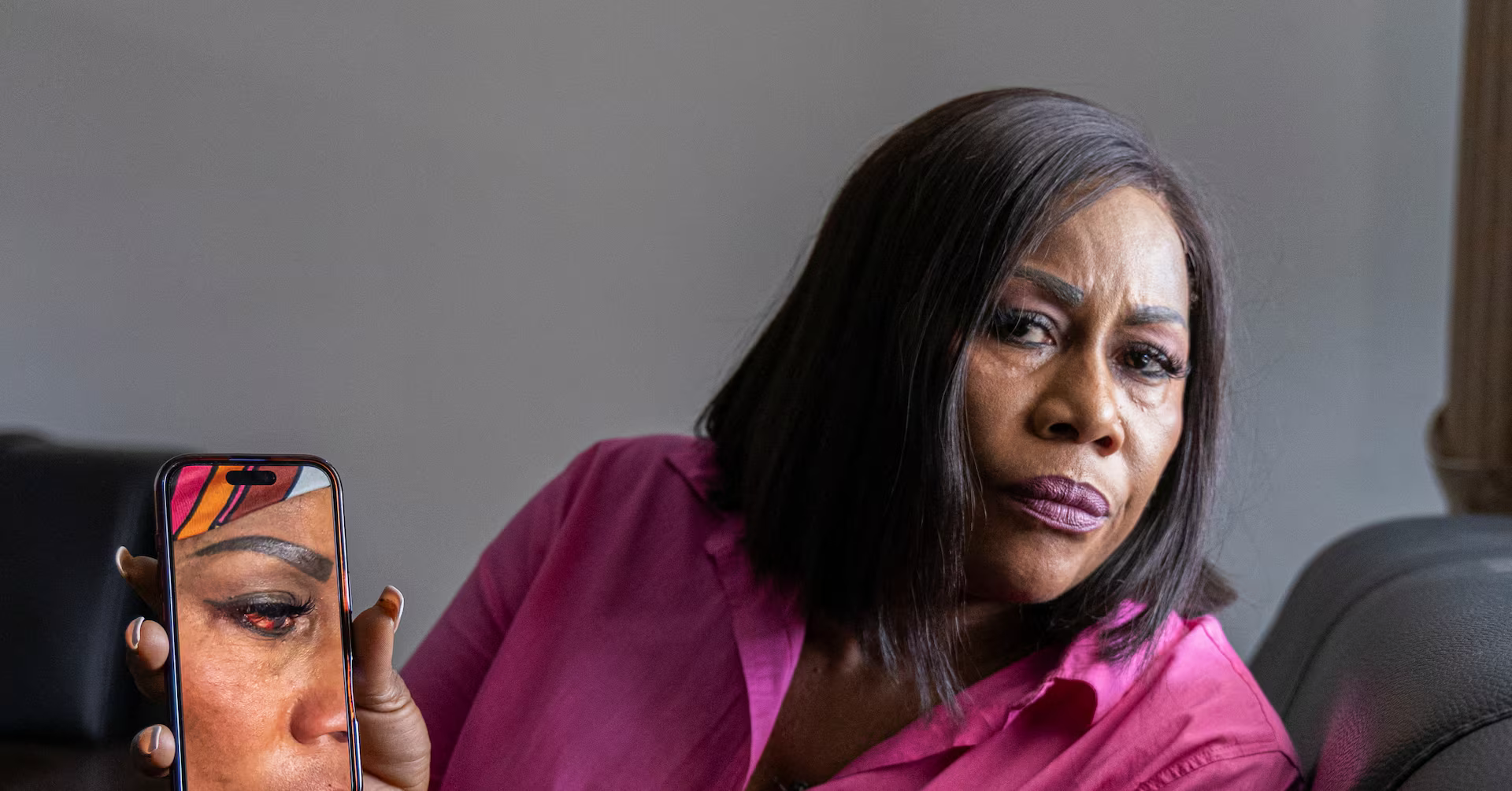
Rabbiatu Kuyateh requested protection from deportation to her home country of Sierra Leone after being held by U.S. immigration officers in July. She claimed that because of her father’s connections to the political opposition, she feared torture.
Her request was granted by an immigration judge. However, she was deported to Ghana, another nation in West Africa, on November 5. She claimed that after being held at a motel for six days, she was taken against her will back to her native country.
Video posted on social media at the time, verified by Kuyateh’s family, shows men in green and black uniforms dragging her across the hotel floor to a waiting van. “I’m not going!” she blurts out.
Trump’s deported West Africans were taken in by Ghana. Then it compelled them to return home.
In the midst of a contentious debate over U.S. President Donald Trump’s use of “third-country removals” to expedite the departure of undocumented immigrants who are difficult to return to their home countries—part of a massive crackdown that aims to deport millions—the video made headlines.
Lawyers in both nations who filed cases on their behalf claim that Kuyateh, 58, was one of more than 30 third-country nationals deported by the US to Ghana last year.
According to a Reuters tally based on interviews with six lawyers, court filings in both countries, and complaints filed with the U.N. human rights office in Geneva, at least 22 of those were sent by Ghana to their home countries despite having received court-ordered protection in the U.S. intended to prevent this from happening.
The lawyers said Ghana’s repatriations appeared systematic and that none of their clients had opportunities to raise legal objections before being sent home.
Through conversations with one of the migrants and two lawyers, Reuters also discovered that at least three U.S. deportees who had protection against this in the United States were sent home by Equatorial Guinea, an oil-rich Central African nation. There have never been any reports of these repatriations before.
Human rights organizations and migrant advocates claim that the Trump administration employs third-country removals—also known as “refoulement”—to circumvent international and U.S. rules that forbid sending people back to nations where they risk torture or persecution.
According to Elora Mukherjee, director of the Immigrants’ Rights Clinic at Columbia Law School in New York, “Ghana and Equatorial Guinea are not safe third countries, and the United States should not be deporting individuals there if they do not afford a meaningful opportunity to challenge repatriation.” “Third countries cannot be used to circumvent the prohibition on refoulement.”
According to Department of Homeland Security (DHS) spokesman Tricia McLaughlin, all individuals detained in Ghana and Equatorial Guinea were “illegal aliens” who were subject to due process and ultimate deportation orders.
“We are following the written wording of the legislation. If a judge finds an illegal alien has no right to be in this country, we are going to remove them,” she said in a statement to Reuters.
In response to inquiries concerning the ensuing repatriations, McLaughlin stated, “Once an illegal alien is in another country’s custody, we refer you to them for questions.”
The administration’s “unwavering commitment to end illegal and mass immigration and bolster America’s border security” was not echoed by the U.S. State Department.
Questions concerning the treatment of U.S. deportees were not answered by Ghana’s immigration office, interior ministry, or foreign ministry. Neither did the governments of Sierra Leone and Equatorial Guinea.
On November 12, Ghana’s interior ministry declared that it will begin looking into how Kuyateh was handled by national immigration service personnel. The results of that investigation have not been made public.
“MY FAMILY IS THERE.”
After leaving Sierra Leone in November for another West African nation, which she requested not be named for security reasons, Kuyateh met with Reuters journalists.
She said that she was finding it difficult to adjust to her new situation, which included having to spend holidays apart from her elderly parents and adult son, all of whom are citizens of the United States. “I consider America as my second home,” she added. “My whole family is there.”
When Kuyateh was arrested by Immigration and Customs Enforcement (ICE) officers during a routine check-in, she had been a resident of Maryland for almost 30 years.
She said that she fled a civil conflict between 1991–2002 by coming to the United States. However, her attorney, Hannah Bridges, claims that a removal order was issued for overstaying a visa and that her asylum application was rejected because she failed to show up for a hearing.
Kuyateh claimed that she was raped and imprisoned by Sierra Leonean government forces during the conflict in her request for protection against being sent there. More recently, her brother was detained and tortured during a 2014 visit due to their father’s political activities, she stated in the document, seen by Reuters.
Her story could not be independently confirmed by the news organization. In this case, the judge granted her “withholding of removal” protection, which prohibits U.S. immigration officials from transferring an individual to a nation where they are likely to suffer grave injury.
Bridges denied that Kuyateh was given due process prior to her deportation to Ghana, claiming that ICE did not notify her client of her destination until she was getting on a plane to Accra.
Requests for comment from ICE were not answered.
The U.S. Supreme Court ruled in June that the administration can send migrants to countries other than their own without offering them a chance to show the harms they might face, while a legal challenge proceeds before a lower court in Boston.
At least six African countries have consented to accept deportees from third countries. Although the United States has occasionally been willing to make substantial payments to the nations, not much information has been made public regarding the agreements.
In November, Democrat Senator Jeanne Shaheen of New Hampshire expressed concerns regarding a $7.5 million payment to Equatorial Guinea, claiming in a letter to Secretary of State Marco Rubio that the country has one of the most corrupt regimes in the world.
At a news conference on Wednesday, presidential spokesperson Felix Kwakye Ofosu stated that Ghana’s government will only accept West Africans without criminal histories. “As and when they come, they are processed and sent to their countries of origin,” he said.
In September, Foreign Minister Samuel Okudzeto Ablakwa informed reporters that Ghana would not be compensated financially, citing humanitarian considerations as the basis for its decision to accept migrants.
He later revealed to a local television station, however, that American officials had mentioned the potential of tariff and visa concessions in exchange for assistance with “immigration challenges.”
In September, the foreign ministry declared that the United States will be lifting the July visa restrictions on its citizens. On December 1, Ablakwa posted on X that Washington had lifted a 15% tariff on cocoa and other agricultural products.
Reuters was unable to determine whether the modifications had anything to do with Ghana’s immigration cooperation.
“No comment on the details of our diplomatic communications with other governments” was the State Department’s statement.
Fears of torture and persecution
Oliver Barker-Vormawor, a lawyer from Ghana, and Meredyth Yoon, the litigation director at Asian Americans Advancing Justice’s Atlanta chapter, informed Reuters that they had verified two deportation flights to Ghana. They claimed they were looking for information regarding three further planes, one of which departed the United States on September 5 with 14 citizens of third countries and another on November 5 with 19.
Citizens of the Gambia, Guinea, Mali, Nigeria, Senegal, Sierra Leone, and Togo were among those later repatriated, according to their attorneys.
They claimed that at least ten were given U.S. protection because their political beliefs put them in danger back home. Four informed U.S. courts they feared female genital mutilation, while three additional gay or bisexual people were considered at risk due to their origins in nations that criminalize same-sex relationships.
Two women from Togo were driven over the border on motorbikes and dropped off in Togolese territory, circumventing formal crossings, three of the lawyers said. According to the lawyers who launched a case in Accra contesting the legitimacy of the government’s arrangement with the United States, Ghana also transferred migrants to Togo from nations like Nigeria and Liberia. Reuters was unable to independently confirm the attorneys’ story. Requests for comment from the participating governments were not answered.
A Washington-based federal judge, Tanya Chutkan, criticised the arrangement with Ghana, saying at a hearing in September that it appeared the Trump administration crafted the deal as a way “to make an end run” around legal requirements that it refrain from sending migrants into danger in their home countries. Chutkan, however, claimed she lacked the authority to consider a lawsuit brought by five deportees who were concerned about being sent back home.
The State Department told the court that it had “received diplomatic assurances” from Ghana that the plaintiffs would not be sent to nations where they were afraid of torture or persecution.
When Reuters asked the State Department if any measures had been taken to prevent Ghana and Equatorial Guinea from sending more deportees to nations where they are in danger, the State Department did not reply.
McLaughlin, from DHS, said many of those sent to Ghana were “heinous criminals with rap sheets that included injury to a child, robbery, aggravated assault and fraud.”
Six of them had been represented by Yoon, who stated that while “a few” had convictions, “most had no criminal record whatsoever.”
Diadie Camara told Reuters that after fleeing hereditary slavery in Mauritania, a prevalent practice in his native North Africa, he was arrested at the border between the United States and Mexico in 2024. According to a copy of the ruling seen by Reuters, a U.S. immigration judge protected him from being deported to Mauritania after rejecting his asylum plea in March.
According to two lawyers and a human rights activist who interacted with some of the migrants, the United States flew Camara, 27, and eight others from countries such as Angola, Eritrea, Georgia, and Ghana to Equatorial Guinea on November 24.
Camara and another migrant interviewed by Reuters who spoke on condition of anonymity said the group was held at a hotel in Malabo while local authorities organized their return.
Both inquired about the possibility of applying for refuge in Equatorial Guinea, but they were informed by government representatives that this was not feasible.
“I am now in hiding, and I don’t know what to do,” Camara said over the phone, adding that he was afraid he may be discovered by the family that enslaved him and punished him for his escape. On December 25, he and another Mauritanian national were flown home via Morocco.
Requests for comment from the governments of Mauritania and Equatorial Guinea were not answered.