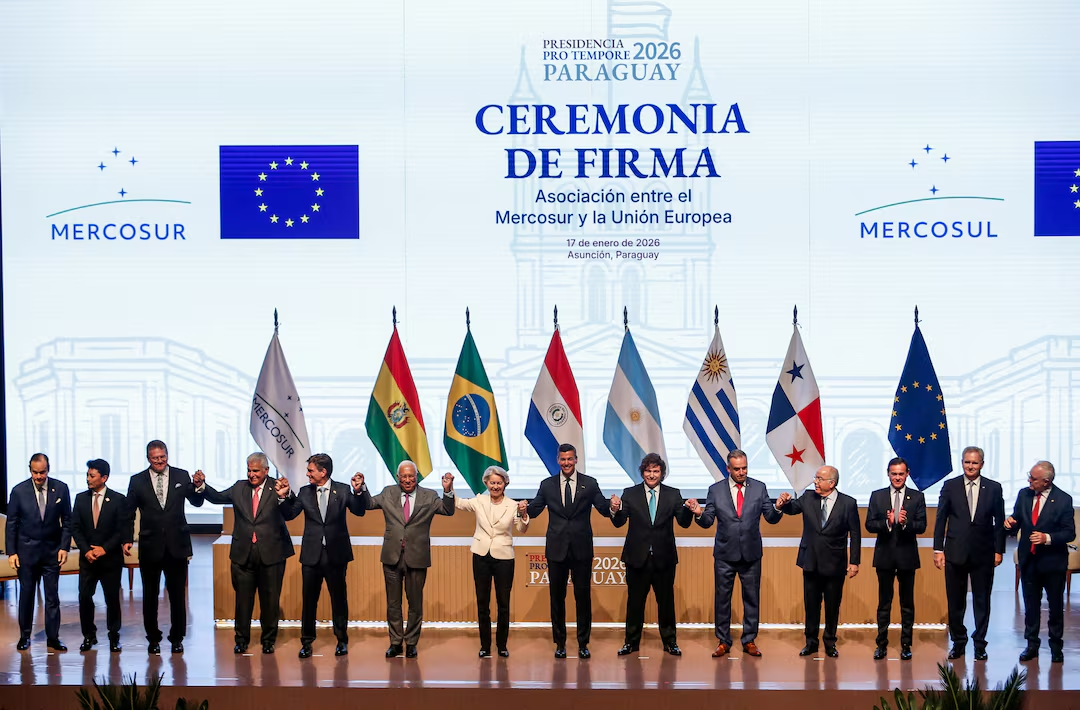
High-ranking officials from the EU and the South American bloc Mercosur finalized a free trade agreement on Saturday in Paraguay, marking the European Union’s most significant trade accord to date after 25 years of negotiations.
The agreement aims to reduce tariffs and enhance trade between the two regions, and it now requires approval from the European Parliament as well as ratification by the legislatures of Mercosur members Argentina, Brazil, Paraguay, and Uruguay.
Ursula von der Leyen, President of the European Commission, and Antonio Costa, President of the European Council, attended Saturday’s ceremony alongside the leaders of Mercosur countries, with the exception of Brazilian President Luiz Inacio Lula da Silva, who was represented by his foreign minister.
Concerns in Europe Regarding Inexpensive Imports
Last week, most European nations approved the deal, although farmers and environmental groups expressed concerns about a potential influx of cheap South American imports and the risk of heightened deforestation.
Von der Leyen, after her meeting with Lula, stated that the agreement would establish the largest free trade zone globally before proceeding to Asuncion for the signing.
The signing of the EU-Mercosur trade deal in Asuncion conveys a powerful message to the global community. It demonstrates a thoughtful and intentional decision. We opt for fair trade instead of tariffs. “We prioritize a fruitful, enduring collaboration rather than solitude,” she stated on Saturday.
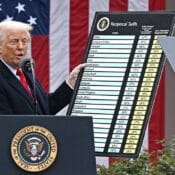
Just before the ceremony on Saturday morning, U.S. President Donald Trump vowed to impose increasing tariffs on eight European nations if the United States is not permitted to purchase Greenland. “This agreement will help both our blocs navigate an increasingly turbulent political environment without abandoning our values, marking a true milestone in shoring up our economic security,” Costa said.
Graphic: This tree chart illustrates a comparison of the populations between the EU and Mercosur countries alongside the five most populous countries in the world.
Graphic: This tree chart illustrates a comparison of the populations between the EU and Mercosur countries alongside the five most populous countries globally.
Although Mercosur officials have voiced concerns regarding specific regulations in the agreement, Lula stated on Friday in Rio de Janeiro that it will create more opportunities and enhance trade and investment for both sides.
The Brazilian government stated that the deal is “emblematic of Lula’s efforts to expand and diversify markets,” noting that South America’s largest economy is also in talks for agreements with the United Arab Emirates, Canada, and Vietnam, in addition to expanding a tariff-preference pact with India.
In 2024, trade between the EU and Mercosur, representing a market of 700 million individuals, attained a value of 111 billion euros.
The exports of the European Union primarily include machinery, chemical products, and transport equipment, while Mercosur focuses its exports on agricultural goods, minerals, wood pulp, and paper.