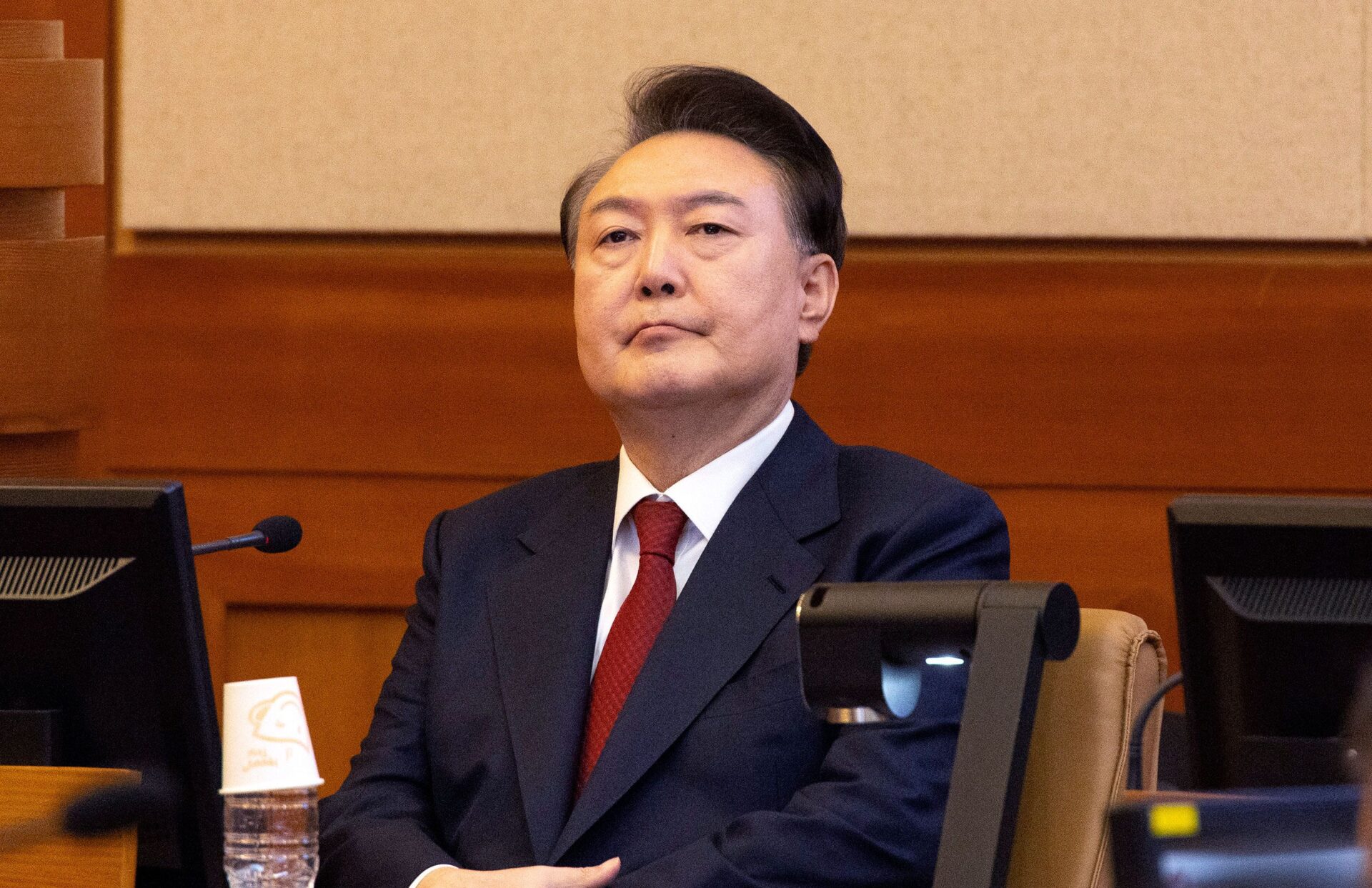
Yoon, the former president of South Korea, was given a five-year prison sentence for his attempt to declare martial law.
Yoon Suk Yeol, the former president of South Korea who was impeached, was found guilty of abuse of authority, obstruction of justice, and forging official papers related to his unsuccessful effort to establish martial law in 2024. Yeol was sentenced to five years in jail.
The decision, which was made on Friday, is the first of four cases that resulted from Yoon’s unexpected declaration of martial law. Despite being short-lived and quickly revoked by parliamentarians, the declaration caused political unrest throughout the nation, leading to widespread demonstrations and an emergency meeting of parliament as lawmakers rushed to stop the action.
Yoon’s actions “plunged the country into political crisis,” according to the presiding judge’s ruling, and he chastised the former president for exhibiting “no remorse” during the hearings.
Many people believe that Friday’s decision will serve as a predictor of how the other cases against Yoon will play out. He is accused of a number of offenses, including campaign law violations and misuse of authority. Prosecutors are pursuing the death penalty for rebellion, which is the most serious of all. In that instance, a verdict is anticipated in February.
About 100 of Yoon’s supporters gathered outside the courthouse to watch the livestreamed proceedings on a giant screen during the sentence. Some carried red flags with phrases like “Yoon, again! Restore Korea’s greatness. As the guilty decision was given, some stood quietly, looking solemn, while others yelled at the judge.
The court determined that Yoon had illegally used members of the presidential security detail to thwart his arrest, that he had not consulted the entire cabinet before imposing martial law, and that he had written and subsequently destroyed a fabricated document that purported the prime minister and defense minister had approved the action.
The judge declared, “The accused had an obligation to protect the law and the constitution, but he chose to ignore them.”
The offenses for which prosecutors had requested a 10-year prison term were decided on Friday. The appeal period is now seven days for both the prosecution and the defense.
Yoon has continuously refuted every accusation. He maintains that the president is not required by the constitution to consult all members of the cabinet before using emergency powers, and he contends that the arrest warrant that was issued against him was unlawful. He has insisted throughout his trials that there were no procedural errors in his imposition of martial law and that investigators lacked the legal right to question or hold him.
Prosecutors contend that Yoon’s failure to admit fault warrants a heavier punishment, even though South Korean courts frequently grant mercy to defendants who take responsibility.
Yoon is not the first former leader of South Korea to be imprisoned. Ex-President Park Geun-hye was given a 20-year prison sentence in 2021 for bribery and abuse of power, but she was eventually pardoned and freed.
South Korean voters gave opposition leader Lee Jae Myung a resounding victory in the presidential election six months after Yoon’s abortive attempt to impose martial law. However, the country’s profound political divisions are still being shown by Yoon’s ongoing trials.
Yoon has a devoted following that sees him as a political martyr despite the fact that his activities have been widely denounced. Nearly 30% of South Koreans, according to a survey done last December, did not think his declaration of martial law amounted to revolt.
Following the edict, tens of thousands of people demonstrated in the streets, but Yoon’s supporters also staged smaller counter-protests, serving as a reminder that the effects of his presidency are still felt in South Korea’s political scene.