Benin grants citizenship to the African diaspora with Spike Lee’s assistance
Isaline Attelly, originally from the Caribbean island of Martinique, had been residing in Benin for almost a year when she discovered that her family’s ties to the West African nation extended much deeper into history.
Genealogical records revealed that her great-grandmother on her mother’s side was born in present-day Benin and, during the peak of transatlantic slavery, was transported across the Atlantic Ocean.
Last year’s discovery led Attelly, a 28-year-old content creator, to enroll in a new program that offers Beninese citizenship to individuals of African descent.
The “My Afro Origins” programme plays a significant role in President Patrice Talon’s strategy to enhance his country’s visibility, particularly to potential tourists, by emphasizing its notable involvement in the transatlantic trafficking of enslaved individuals.
It brings me a sense of pride. “It seems that my journey has completed a full circle,” Attelly shared with Reuters following her naturalisation ceremony. “I feel a deep sense of pride and joy in representing my ancestors.”
PROJECTS SHED LIGHT ON BENIN’S ROLE IN SLAVERY
The initial naturalisation ceremonies have aligned with the introduction of initiatives aimed at reviving that history, such as a new “Door of No Return” in Ouidah, a notable departure point for transatlantic trafficking, and a replica of an 18th-century ship that carried enslaved individuals, featuring sculptures inside that represent nearly 300 captives. Both remain in the process of being built.
This year, the government intends to inaugurate a new International Museum of Memory and Slavery at the former home of Francisco Felix de Souza, a notable trafficker of enslaved individuals during the 18th and 19th centuries.
Talon, having endured a coup attempt last month, is anticipated to conclude his decade-long presidency following the upcoming election in April. He has enlisted prominent figures to promote his vision. Filmmaker Spike Lee and his wife Tonya Lee Lewis were appointed ambassadors for the program aimed at the African-American community last year. “Our brothers and sisters in Benin are telling us: come home, welcome us home, come back to the motherland.” “Return to where your roots lie,” Lee expressed to France 24 last year.
In July 2025, American R&B star Ciara became one of the initial recipients of Beninese citizenship. She took the stage last week at a concert in Ouidah, participating in an annual festival dedicated to voodoo, delivering hits like “Level Up” in a set that lasted until 3 a.m. Husband and American football quarterback Russell Wilson attended and expressed his hope to become a citizen himself “real soon”.
PROMOTE ‘RIGHT OF RETURN’
Since the launch of the “My Afro Origins” programme last year, approximately 50 individuals have been granted Beninese citizenship, as reported by the Justice Ministry. The ministry is currently processing thousands of applications and receives around 100 new submissions daily.
According to Foreign Minister Olushegun Adjadi Bakari, applicants must be at least 18 years old and provide documentation or a DNA test that verifies their connections to the continent. Additionally, they must not hold citizenship in any other African country, as reported by Reuters.
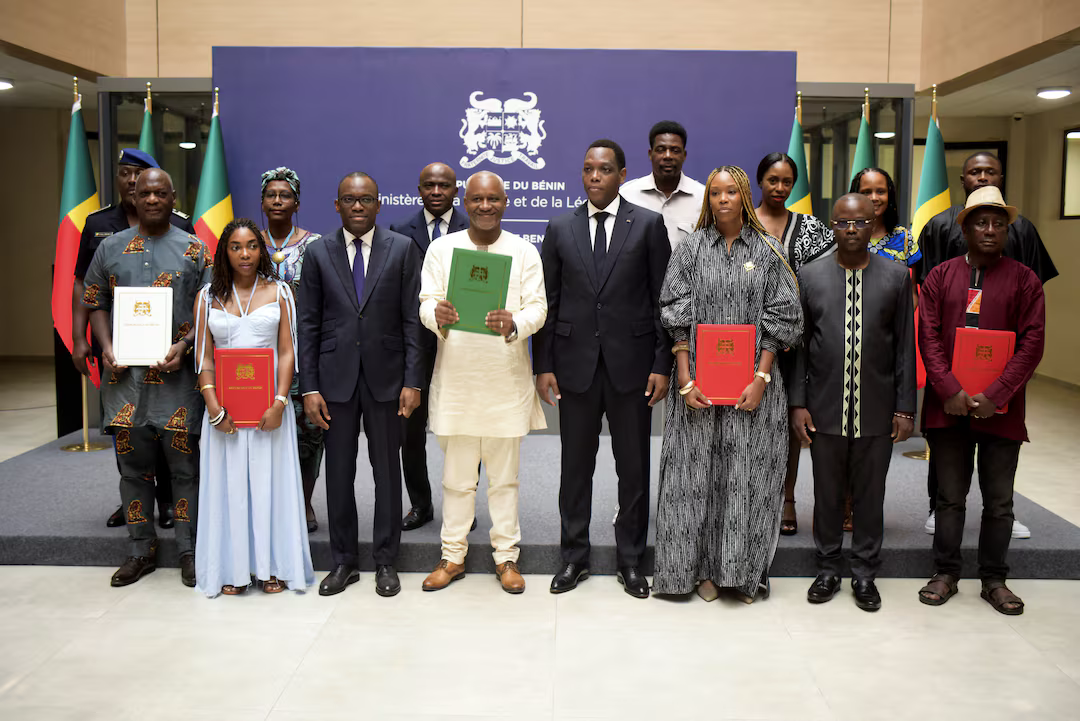
During the naturalisation ceremony on December 27 in Cotonou, the largest city and economic capital of Benin, Attelly and nine others were awarded their citizenship certificates and took photos beside the Beninese flag.
According to Kofi Okyere Darko, presidential adviser on diaspora affairs, Benin’s programme resembles an initiative in Ghana that has, since 2016, granted citizenship to 684 members of the African diaspora.
CARICOM, the regional bloc of the Caribbean, has supported a “right of return” for descendants of enslaved individuals, as part of a reparations plan established in 2014.
According to CARICOM, resettlement should be financed by “those states that are responsible for the forced movement and enslavement” of millions, specifically referring to European states and governments.
While substantial advancements have yet to be achieved in this extensive initiative, the government of Benin remains optimistic that the program can enhance connections between Africans and the diaspora, as stated by Bakari, the foreign minister. “We believe that Africa cannot develop without a strong involvement of its diaspora,” he remarked. “What we are seeking are individuals who will truly identify as African, possessing the evidence that they are part of this continent.”