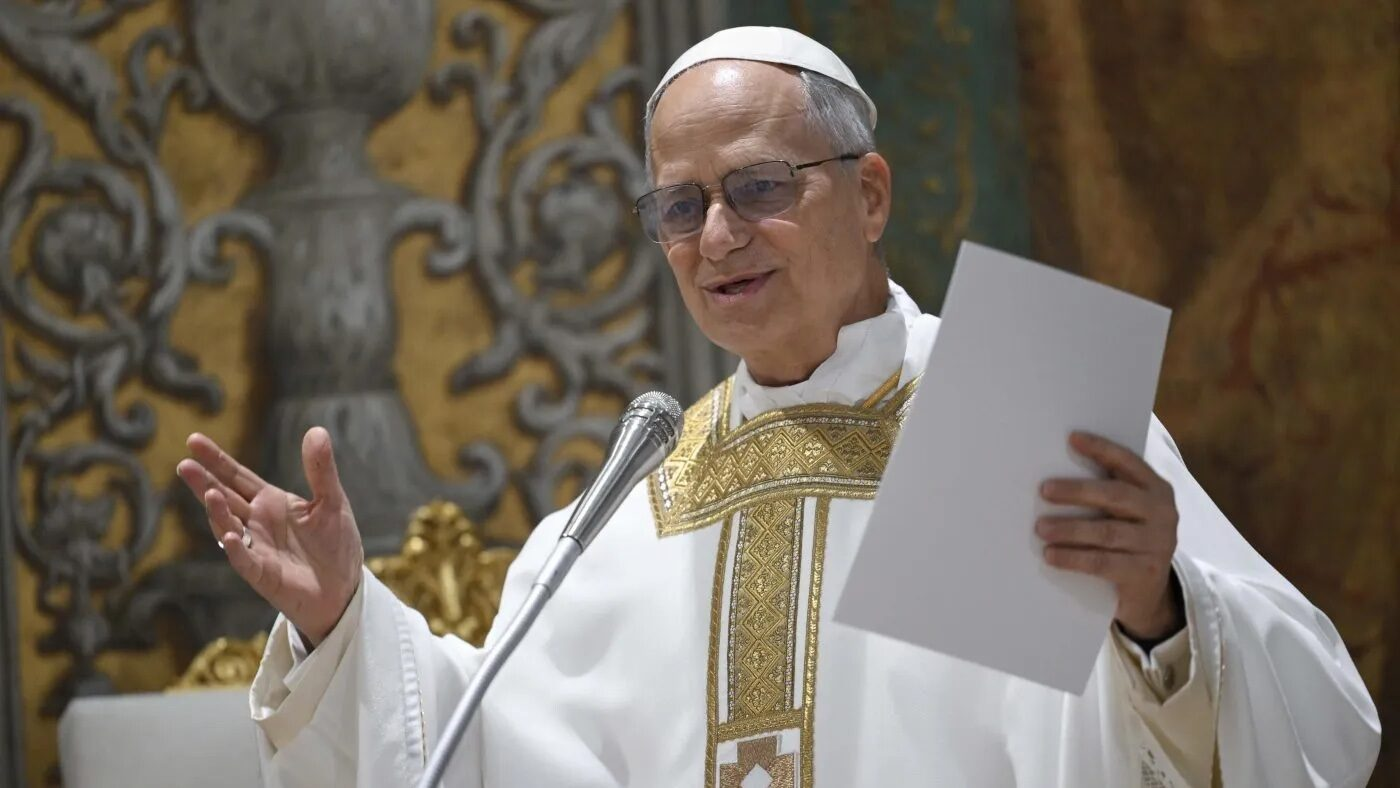
Pope Leo advocates for the rejection of techniques that exploit human life and claims that surrogacy breaches the dignity of both the mother and the child.
As a birth option, surrogacy has drawn criticism from Pope Leo XIV, who claims that it alters the family’s fundamental relational mission.
The Pope emphasized the church’s rejection of “any practice that denies or exploits the origin of life and its development” when speaking to members of the diplomatic corps accredited to the Holy See.
One such technique mentioned was surrogacy.
In a surrogacy arrangement, a woman bears a child on behalf of an intended parent who is unable to conceive.
In order to match, undergo medical exams, and sign documents confirming parentage with payment for the process, intended parents usually collaborate with agencies.
Due to factors like growing infertility rates, improvements in IVF technology, and changing societal perceptions of alternative family structures, surrogacy has grown much more widespread worldwide in recent years.
The Pope declared, “Life is a priceless gift that develops within a committed relationship based on mutual self-giving and service.”
“This exploits the mother’s body and the generative process, distorting the original relational calling of the family, and violates the dignity of both the child, who is reduced to a ‘product,’ by turning gestation into a negotiable service.”
Additionally, he included euthanasia and abortion as violations of the right to life.
In light of this, the Holy See is extremely concerned about initiatives that seek to fund international travel in order to exercise the so-called “right to safe abortion.” Additionally, it finds it abhorrent that public funds are used to repress life instead of supporting women and families,” he stated.
“The protection of every unborn child and the effective and tangible support of every woman so that she can welcome life must remain the primary objectives.”
Euthanasia, which frequently involves a doctor giving a patient fatal medication at the patient’s request or in situations when permission is not feasible, is the deliberate taking of a person’s life to alleviate suffering from a painful, incurable illness.
Belgium, the Netherlands, Canada, Spain, New Zealand, and, most recently, Uruguay are among the countries with established euthanasia laws.
The pope stated that rather than supporting “deceptive forms of compassion” like euthanasia, civil society and states have a duty to respond concretely to situations of vulnerability when sick or lonely people struggle to find a reason to live, offering solutions to human suffering like palliative care and promoting policies of authentic solidarity.