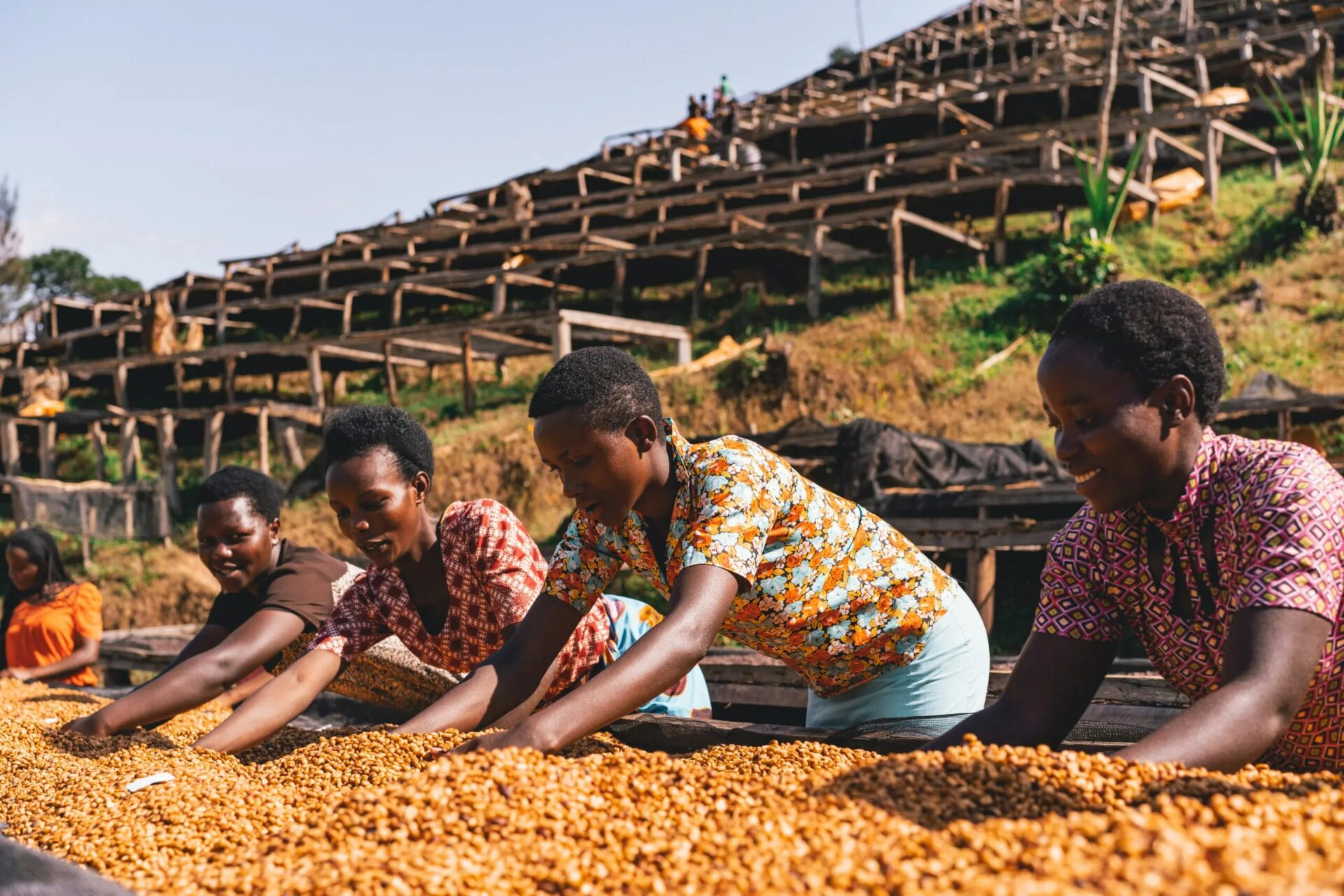
The coffee industry in Rwanda had a historic year in 2025, with export earnings hitting an all-time high of about $150 million. According to the National Agricultural Export Development Board (NAEB), this growth was fueled by higher export volumes, rising global coffee prices, and consistent investment in production and market expansion.
In contrast to 17,142 tonnes worth $89.8 million in 2024, Rwanda exported 23,860 tonnes of green (unroasted) coffee in 2025, earning more than $148.6 million (more than Rwf216 billion), according to official figures. This indicates that export earnings have increased by 65% and export volumes have increased by 39% annually.
Firmer pricing on the global market also contributed to the impressive achievement; the average export price increased between 2024 and 2025 by 19%, from $5.2 to $6.2 per kilogramme.
Despite this impressive overall performance, Rwanda’s primary coffee consumers continued to be conventional markets in Europe and North America, while emerging countries—particularly China—saw steady growth. In an interview with The New Times, NAEB CEO Claude Bizimana stated that this is a reflection of “the growing demand for Rwandan coffee in new consumption markets.”
Belgium emerged as Rwanda’s biggest coffee importer in 2025, buying more than 4,737 tons valued at $32.29 million, according to NAEB data on the top 10 destination nations. This indicates Belgium’s position as one of Europe’s major coffee trading hubs.
As the second-largest buyer of Rwandan specialty coffee in North America, the United States spent $19.12 million on more than 2,581 tonnes.
The Netherlands (1,719 million tonnes, $10.45 million), Sweden (1,776 tonnes, $10.72 million), and Russia (more than 1,958 tonnes, $10.83 million) were other significant European purchasers.
The United Kingdom purchased 960 tons for $7.33 million, while Italy imported 1,287 tonnes.
A expanding market outside of Rwanda’s traditional export base, China, an up-and-coming destination on the Asian continent, imported 869 tonnes worth $5.97 million.
Switzerland bought 488 million euros worth of 860 tonnes to bring back to Europe.
Significant differences in export earnings among markets are seen in South Sudan’s comparatively high number of imports (1,299 tonnes) and low income ($2.14 million).
Although some nations bought less coffee than others that imported more, NAEB data shows that some nations nevertheless made more money from exports. This discrepancy is mostly due to price variances, which are a reflection of consumer choices, market positioning, and coffee quality discrepancies.
Price variations are important in determining the profits made from coffee exports in various nations, according to Bizimana, who stated that export income are not just based on volume.
According to Bizimana, the average price is almost $6.5 per kilogramme, with a minimum of $5.5 and a maximum of $7.6. South Sudan is an exception, mostly importing very low grades, which have an average price of about $1.7 per kilogramme.
According to NAEB, Rwanda’s performance in 2025 indicates that the nation is on course to achieve its goal of exporting 32,000 tons of coffee and earning $192 million in income by 2029 as part of the second phase of the National Strategy for Transformation (NST2).