Syrian army advances into the Aleppo area after Kurdish groups refuse to leave
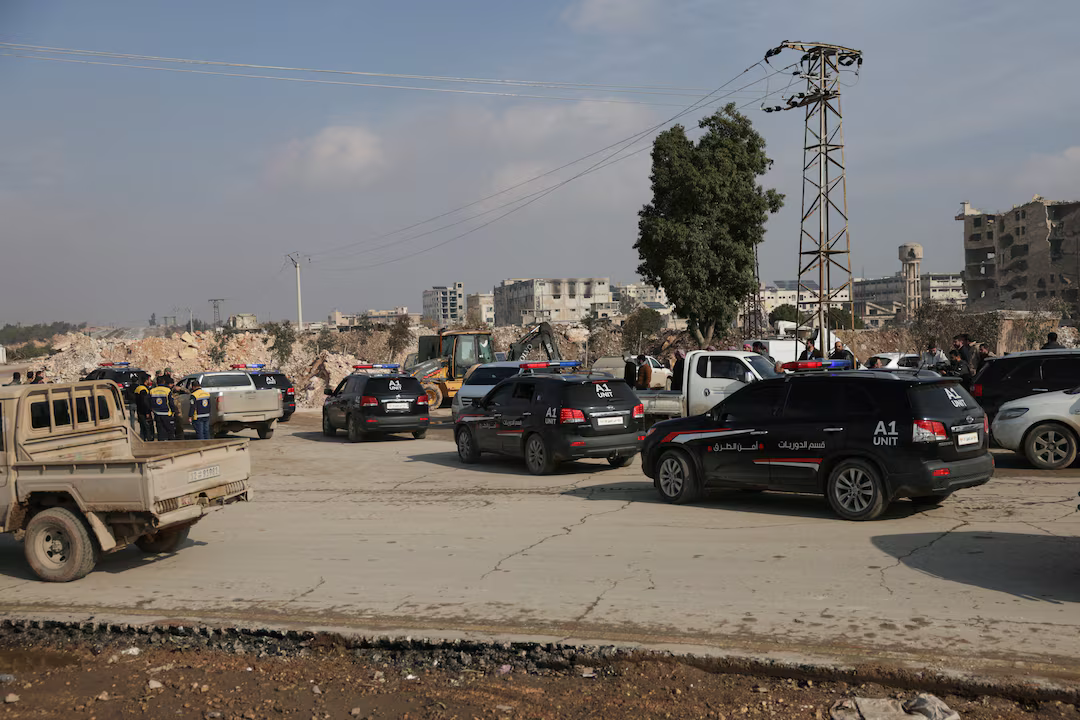
Syrian army said on Friday that it would advance into Aleppo city’s final Kurdish-held area after Kurdish organizations there turned down a government request that their fighters leave as part of a ceasefire agreement.
The bloodshed in Aleppo has highlighted one of Syria’s primary faultlines as the nation attempts to recover from a terrible war, as Kurdish forces are opposing attempts by the Islamist-led administration of President Ahmed al-Sharaa to centralize control over its fighters.
In Aleppo, where Kurdish forces are attempting to hold onto numerous neighborhoods they have controlled since the start of the conflict in 2011, at least nine civilians have been murdered and over 140,000 have fled their homes.
Overnight, the defense ministry declared a truce that required Kurdish soldiers to retreat to the northeast, which is under Kurdish control. As a result, Kurdish forces would no longer have control over the areas of Aleppo that they have controlled.
CEASEFIRE “FAILED,” according to security officials
Kurdish councils that oversee the districts of Sheikh Maksoud and Ashrafiyah in Aleppo, however, issued a statement in which they accused government forces of heavy shelling and claimed that requests to evacuate were “a call to surrender” and that Kurdish forces would instead “defend their neighborhoods.”
A few hours later, the Syrian army declared that it will launch a military assault to clear Sheikh Maksoud, the final Kurdish-held neighborhood, and that the deadline for Kurdish fighters to leave had passed.
The army would occupy the neighborhood by force, two Syrian security officials told Reuters, claiming that truce attempts had failed.
A portion of Sheikh Maksoud was previously targeted by the Syrian defense ministry, which claimed that the Kurdish-led Syrian Democratic Forces (SDF) were using it to launch operations against the “people of Aleppo.” It reported on Friday that three army soldiers had been killed by SDF strikes.
According to Aleppo’s Kurdish security forces, part of the attacks targeted a hospital, which they described as a war crime.
The defense ministry denied it, claiming that the building was a significant weapons storage facility and that the start of Friday’s strikes had destroyed it.
It shared overhead footage purporting to show the site following the strikes and claiming to show additional explosions, demonstrating that it was a weapons stash.
The claim could not be immediately verified by Reuters.
The SDF is a strong security force in northeastern Syria that is dominated by Kurds. It claims that the Kurdish Asayish police now control Kurdish neighborhoods after it withdrew its fighters from Aleppo last year.
The SDF and the defense ministry were supposed to integrate by the end of 2025, as per an agreement reached with Damascus in March, but not much has changed.
The United States and France aim to defuse the situation.
The French foreign ministry stated that it was collaborating with the US to defuse the situation.
According to a ministry statement, Sharaa was asked by President Emmanuel Macron on Thursday “to exercise restraint and reiterated France’s commitment to a united Syria where all segments of Syrian society are represented and protected.”
Reuters was informed by a Western diplomat that the goal of mediation was to defuse the situation and reach an agreement that would see Kurdish forces withdraw from Aleppo and guarantee security for the Kurds who stayed.
Tom Barrack, the U.S. ambassador, was on his way to Damascus, the diplomat added. Barrack’s spokesperson chose not to respond.
In an effort to foster unification between the SDF, which has long benefited from U.S. military assistance, and Damascus, with whom the United States has established strong ties under President Donald Trump, Washington has been actively involved.
Kurdish soldiers were supposed to leave by 9 a.m. (0600 GMT) on Friday according to the government’s overnight truce, but nobody did so, according to Syrian security sources.
Barrack had praised what he described as a “temporary ceasefire” and stated that Washington was making a concerted effort to prolong it over the deadline of 9 a.m. “We are hopeful this weekend will bring a more enduring calm and deeper dialogue,” he wrote in X.
TURKISH ADVISEMENT
With ties to the banned Kurdistan Workers’ Party, Turkey considers the SDF a terrorist group and has threatened to use force if it violates the merger deal.
“I hope that the situation in Aleppo will be normalized through the withdrawal of SDF elements,” Turkish Foreign Minister Hakan Fidan said in a statement on Thursday.
Although Sharaa, a member of the Sunni Muslim majority and a former al Qaeda commander, has frequently pledged to defend minorities, violent outbursts in which government-aligned fighters have slain hundreds of Alawites and Druze have alarmed minority populations over the past year.
The Aleppo Kurdish councils stated that Damascus could not be trusted “with our security and our neighbourhoods” and that the attacks on the districts were intended to cause relocation.
In a Friday phone conversation with Iraqi Kurdish leader Masoud Barzani, Sharaa confirmed that the Kurds were “a fundamental part of the Syrian national fabric,” according to the Syrian presidency.
There has been no announcement from the Kurdish administration or military regarding the number of fighters killed in the recent combat.