Sanctioned Venezuelan Tankers Disguise Locations at Sea and Violate US Blockade
In an early act of defiance, at least 16 sanctioned Venezuelan tankers circumvent the US embargo, mimic places, and depart.
Over the past few days, at least sixteen oil tankers subject to US sanctions have attempted to circumvent a significant US naval blockade on Venezuela’s energy exports, in part by hiding their actual locations or cutting off their transmission signals.
According to a study by The New York Times, the ships had been visible on satellite photos parked in Venezuelan ports for weeks. However, all had left such places by Saturday following President Nicolás Maduro’s detention by US forces, according to the NYT story.
The use of fictitious ship names and false positions, a dishonest practice known as “spoofing,” has allowed satellites to follow four ships as they sail east thirty miles from land. According to internal emails from Venezuela’s state-owned oil business and two individuals in the country’s oil industry who spoke on condition of anonymity out of fear of reprisals, these four have left port without the interim government’s approval. One could see the departures as an early gesture of resistance to the authority of interim President Delcy Rodríguez.
It stated that the remaining 12 have not been found in fresh imagery and are not transmitting any signals.
In an attempt to “paralyze” the regime’s ability to make money, President Donald Trump unilaterally imposed a “complete blockade” on sanctioned Venezuelan oil tankers on December 16. Secretary of State Marco Rubio said on Sunday that the measure was one of the biggest “quarantines” in modern history. Oil supplied to the US Gulf Coast by the American corporation Chevron has been notably excluded from the blockade.
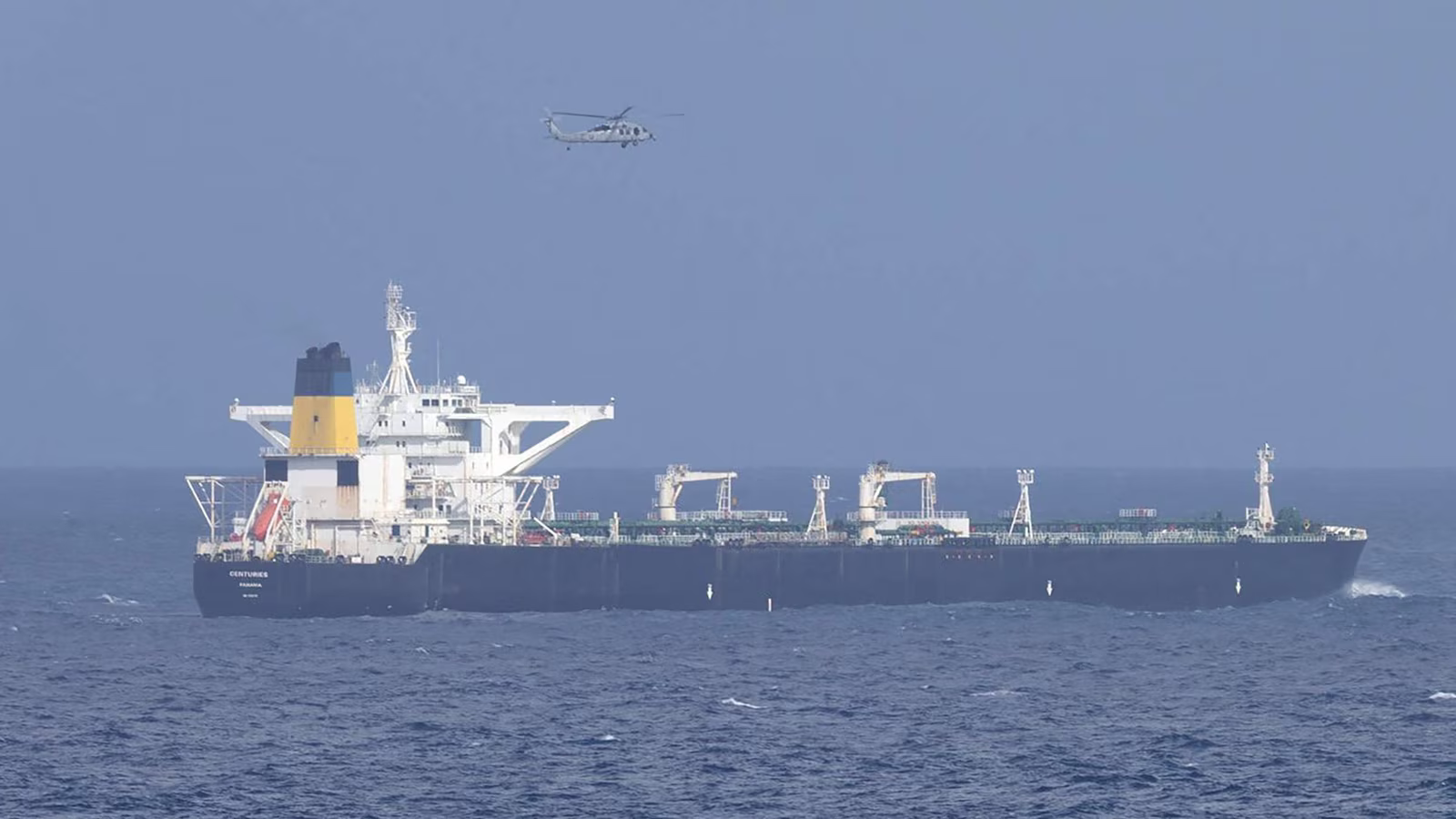
Three vessels have been stopped by US soldiers attempting to trade Venezuelan oil thus far. On December 10, one, named Skipper, was stopped and confiscated by the Coast Guard while en route to China. A third, formerly known as the Bella 1, is now being sought by US authorities. The Centuries was stopped and boarded on December 20 but was not detained.
“The quarantine is in effect focusing on sanctioned shadow vessels transporting sanctioned” Venezuelan oil, a US official responded to questioning from The Times.
As part of this most recent migration, the tankers’ evasive tactics seem to rely on both saturation and deceit. There appears to have been some coordination, as at least three of the ships were close together when they departed Venezuelan waters in the same direction.
TankerTrackers.com, a website that tracks shipping and detected some of the vessels in satellite images, co-founder Samir Madani stated, “The only real way for oil-laden tankers to break through a naval blockade is to overwhelm it with outbound vessels.”
Twelve tankers have ceased transmitting signals and departed port since Saturday, leaving no indication of their whereabouts or intentions. However, there is pressure on Venezuela to sell its crude. Storage capacity has been approaching since the blockade, and halting output might harm infrastructure and oil reserves.
According to the two oil industry sources and internal data for the state-owned oil business, the oil merchants Ramón Carretero and Alex Saab hired the ships that departed without permission. Due to their commercial ties to Maduro’s family, both traders are subject to US sanctions. In 2021, Mr. Saab was imprisoned in the United States; however, the Biden administration exchanged him for American detainees in Venezuela in 2023.
US sanctions applied to 15 of the 16 ships that were in motion on Saturday because they were transporting Russian and Iranian oil.
According to David Tannenbaum, a former sanctions compliance officer at the US Treasury, they would “have to decide what is less risky to flee while they may see a chance to escape or stay and risk future boardings or incursions by US forces in Venezuelan waters.”
A loose-knit collection of illegal tankers known as “the ghost fleet” employs these strategies as part of a modern arsenal of deceit. These include broadcasting the names of retired warships, painting them on the hull, and faking their locations to make them appear somewhere else.
In order to appear in the Baltic Sea, the crude-laden Aquila II faked its location and sent out a signal claiming to be the Cape Balder. The Bertha stated it was in Nigeria and went by the moniker Ekta. The Veronica III also pretended to be off the coast of Nigeria and took on the name DS Vector.
By Sunday, the Vesna, a ship operating under the fictitious name Priya, was hundreds of miles from Venezuela. About 25 miles west of Grenada, it was traveling northeast in the Atlantic Ocean when it was discovered on a satellite image by TankerTrackers.com and confirmed by The Times. It was able to move more quickly because, in contrast to the other three ships seen in the images, it did not seem to be transporting crude.