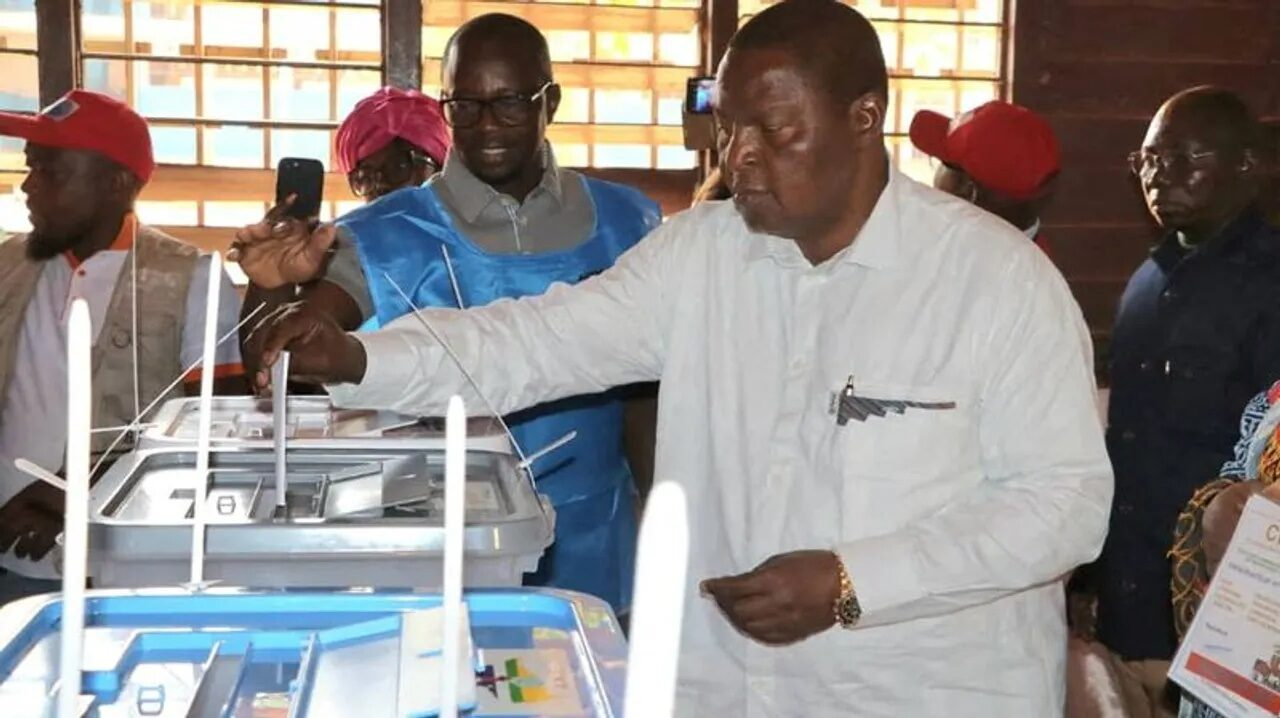
President Touadál received 76% of the vote, according to preliminary data, while the opposition abstained from voting.
According to preliminary data, Faustin Archange Touadæ, the president of the Central African Republic, has won a third term in office after winning an overwhelming majority in the election held last month.
Following the main opposition coalition’s boycott of the poll due to worries about electoral fairness, it was widely anticipated that the 68-year-old former mathematics professor would hold onto power.
In the nation that has been plagued by ongoing conflict since rebels took control in 2013, Touadès’s security record played a significant role in his campaign. The turmoil forced the government to recruit Rwandan soldiers and Russian mercenaries to help.
Following the ratification of a new constitution in 2023 that eliminated term limits for the presidency and permitted him to run for reelection, his continuous hold on power has come under intense attack.
Over 2.4 million people signed up to vote in the general election on December 28. Even though voting materials arrived late and there were issues with the electoral register, observers reported that the vote was generally calm.
The election agency released preliminary results late Monday, indicating that Touadéra had 76 percent of the vote. Former prime ministers Anicet Georges Dologuň and Henri Marie Dondra, who were his nearest rivals, won 15% and 3%, respectively.
Both opposition candidates have demanded that the results be void, claiming that there were several frauds and irregularities. According to Dologuélé, there was “a methodical attempt to manipulate” the result on Friday.
The biggest opposition alliance, BRDC, as it is known in French, said the election was not likely to be fair and boycotted it. The claims have been refuted by the administration.
The Constitutional Court must make a decision on any legal challenges by January 20th in order to announce the outcome.
Even though the Central African Republic has abundant natural resources, such as uranium and diamonds, it is nevertheless one of the poorest and most unstable nations in Africa. About half of the population, according to UN estimates, depends on humanitarian assistance.
Since rebels toppled former President François Bozizé in 2013, the landlocked country has been engulfed in violence. Tensions were reduced by a peace agreement signed in 2019 between the government and 14 armed groups, although six parties eventually left.
Touadéra’s win, according to analysts, might increase Russia’s sway over the nation. Access to riches like gold and diamonds has been exchanged for security support from Moscow.
The Central African Republic was one of the first African nations where Touadès’s administration received security backing from the Wagner Group, a Russian mercenary group.