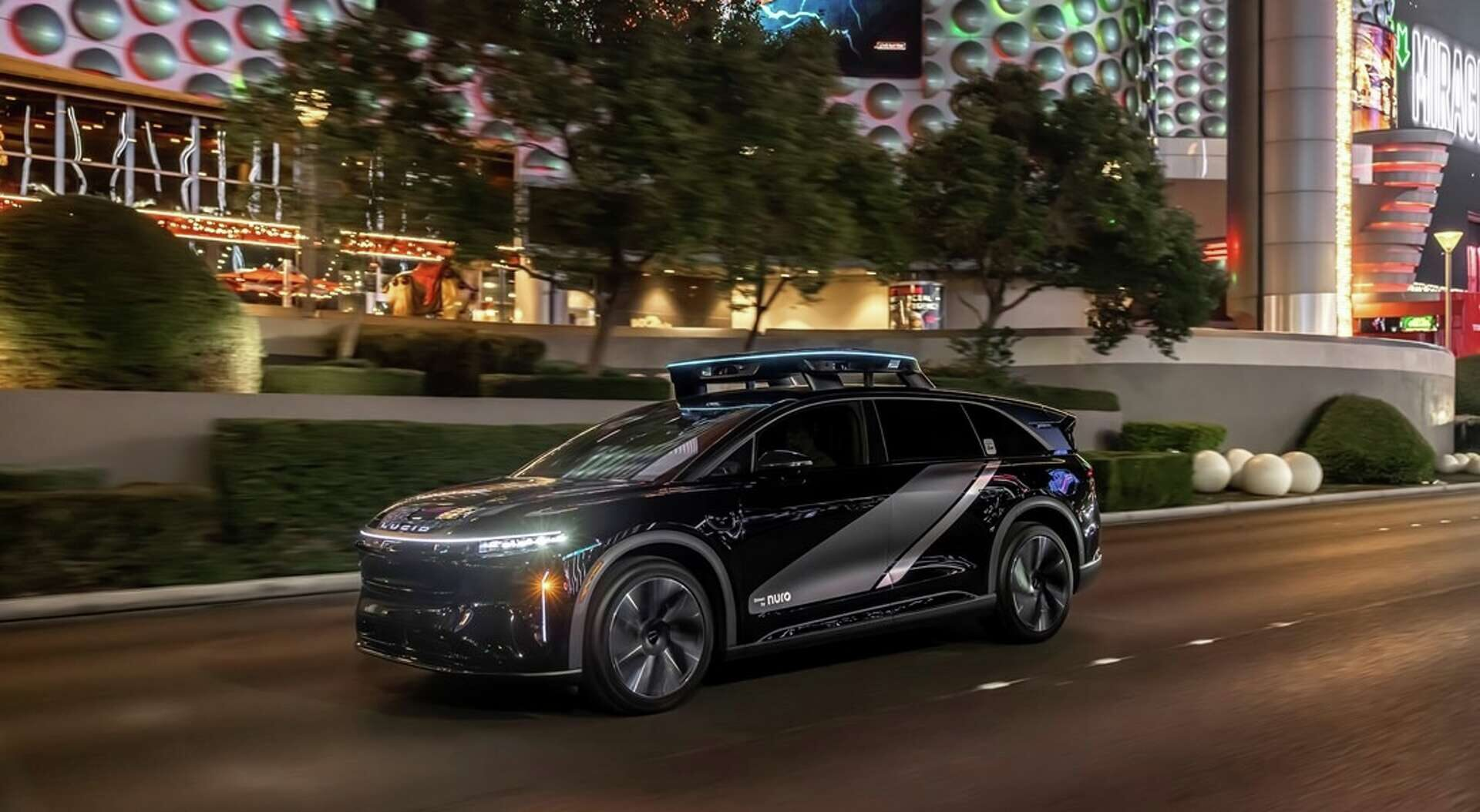
US electric vehicle manufacturer Lucid confirmed autonomous road testing prior to launching its luxury production robotaxi in San Francisco.
At the Consumer Electronics Show (CES) 2026 in Las Vegas, Lucid Group debuted its production-intent robotaxi, a significant step forward in the electric car manufacturer’s transition to autonomous mobility.
The robotaxi was unveiled on January 5, 2026, along with confirmation that autonomous on-road testing had started in December in the San Francisco Bay Area, where the service is anticipated to begin later in 2026. The robotaxi was created in collaboration with ride-hailing behemoth Uber and autonomous driving company Nuro.
Utilizing Lucid’s vehicle architecture, interior comfort, and range efficiency, the autonomous car is constructed on the Lucid Gravity electric SUV platform. Uber gave the public their first glimpse of what to anticipate when the service launches at CES by showcasing both the exterior appearance and the in-cabin experience.
The robotaxi is distinguished by its sensor “halo” located on the roof, which combines radar, solid state lidar, and high resolution cameras to offer 360-degree vision. In order to maximize safety and visibility, the low profile halo is meant to preserve Lucid’s distinctive style.
The halo’s integrated LED illumination shows rider initials, conveys ride status from pickup to drop-off, and aids passengers in identifying the right vehicle.
Lucid’s robotaxi puts use and comfort first within the cabin. The car is positioned as a high-end choice for group travel thanks to its roomy layout, which can fit up to six passengers and provides plenty of luggage space.
In addition to allowing users to communicate with assistance or ask the car to stop, interactive screens let users adjust the temperature, music, and heated seats. The robotaxi’s perception of its environment is also visualized in real time by the system, which shows pre-planned actions including changing lanes, yielding to pedestrians, and negotiating traffic lights.
NVIDIA DRIVE AGX Thor, a component of the NVIDIA DRIVE Hyperion platform, powers autonomous driving performance by providing the real-time AI processing necessary for sophisticated self-driving operations.
Under the guidance of skilled operators, Nuro is spearheading the testing of autonomous roads utilizing technical prototypes. In addition to closed course testing and extensive simulation across a variety of driving conditions, the testing is a component of Nuro’s well-established safety and validation architecture.
The robotaxi is anticipated to go into production at Lucid’s Arizona plant later this year, pending final validation.
The unveiling was a crucial step toward widespread deployment, according to Dave Ferguson, co-founder and co-CEO of Nuro:
“We are making great strides toward delivering autonomy at scale with the launch of our production intent robotaxi with Lucid and Uber.”
Sarfraz Maredia, Uber’s Global Head of Autonomous Mobility & Delivery, stated that the collaboration intends to increase accessible autonomous mobility, saying:
“Later this year, Uber is excited to collaborate with Lucid and Nuro to introduce a cutting-edge robotaxi to the market.”
The effort is part of a larger plan to use Lucid’s EV technology outside of private ownership, according to Lucid. Vice President of ADAS and Autonomous at Lucid, Kay Stepper, stated:
“A major component of Lucid’s strategy to use its technology to build a more accessible and sustainable mobility future is our robotaxi program with Uber and Nuro.”
The robotaxi will be on public exhibit at NVIDIA’s booth at the Fontainebleau Hotel from January 5 to January 8 during CES 2026, providing attendees with an up-close glimpse at Lucid’s autonomous vision.