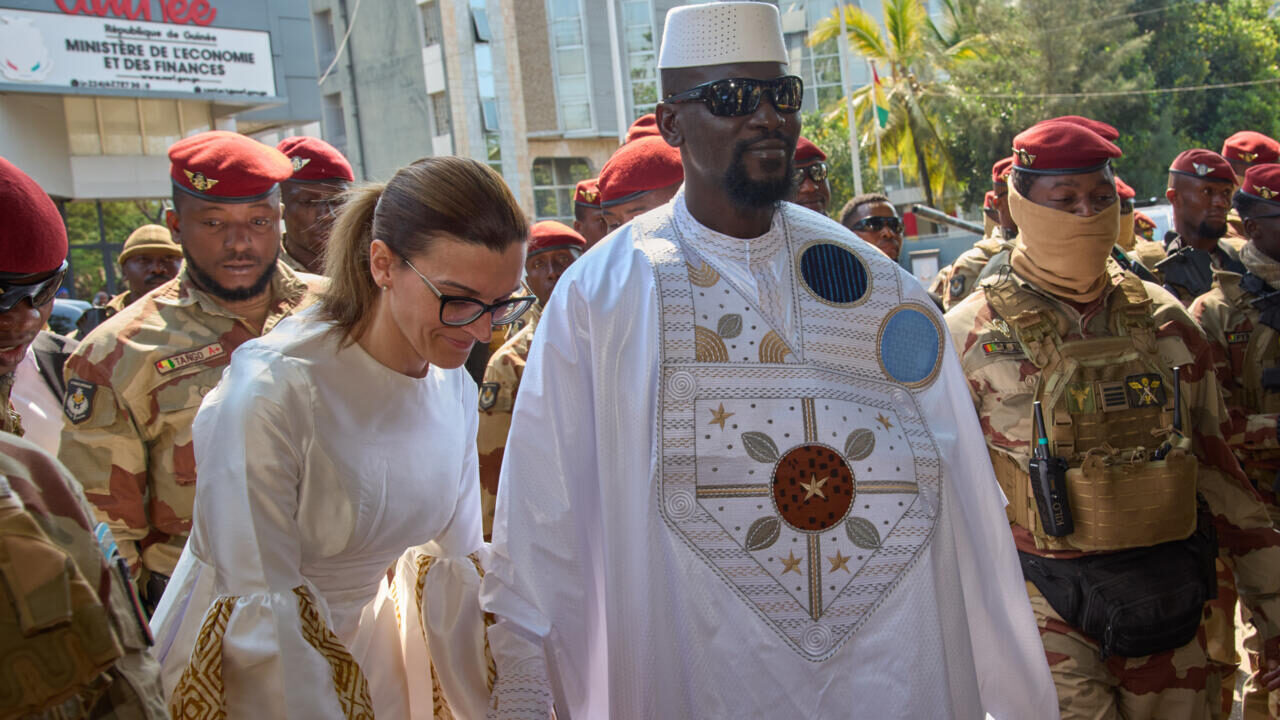
Mamady Doumbouya, the leader of the Guinea coup, has been elected president, as per the provisional results released on Tuesday, marking the completion of the transition back to civilian governance in the resource-rich West African country.
The ex-special forces commander, believed to be in his early 40s, took control in 2021, overthrowing then-President Alpha Conde, who had held the position since 2010. This was part of a sequence of nine coups that have transformed the political landscape in West and Central Africa since 2020.
The provisional results released on Tuesday indicated that Doumbouya secured 86.72% of the December 28 vote, achieving an absolute majority that enables him to bypass a runoff.
The Supreme Court has a period of eight days to confirm the results should any challenges arise.
Doumbouya’s victory, granting him a seven-year mandate, was anticipated by many. Conde and Cellou Dalein Diallo, the longstanding opposition leader in Guinea, are currently in exile, leaving Doumbouya to contend with a divided group of eight challengers.
DOUMBOUYA HAS BACKTRACKED ON HIS COMMITMENT NOT TO RUN
The initial post-coup charter in Guinea prohibited junta members from participating in elections; however, a constitution eliminating those restrictions was approved in a referendum held in September.
Djenabou Toure, the leading election official in the country, announced the results on Tuesday night, revealing a turnout of 80.95%. Voter participation in the capital Conakry seemed lackluster, and opposition politicians dismissed the reported high turnout figure for the September referendum.
Guinean leader Mamadi Doumbouya has submitted his candidacy to the supreme court in preparation for the presidential election in Conakry.
Guinea possesses the largest bauxite reserves globally and boasts the richest untapped iron ore deposit at Simandou, which was officially launched last month following years of delays.
Doumbouya has asserted his role in advancing the project and guaranteeing that Guinea reaps the benefits from its results.
This year, his government revoked the license of Emirates Global Aluminium’s subsidiary, Guinea Alumina Corporation, due to a refinery dispute, and transferred the unit’s assets to a state-owned firm.
The shift towards resource nationalism, reflected in Mali, Burkina Faso, and Niger, has increased his popularity, along with his relative youth in a nation where the median age is approximately 19.
U.N. REPORTS ON RESTRICTED POLITICAL SPACE
Political debate has been subdued under Doumbouya. Civil society organizations allege that his administration has prohibited protests, limited press freedom, and constrained opposition activities.
Last week, U.N. rights chief Volker Turk stated that the campaign period was “severely restricted, marked by intimidation of opposition actors, apparently politically motivated enforced disappearances, and constraints on media freedom.”
On Monday, opposition candidate Faya Lansana Millimono stated at a press conference that the election was tainted by “systematic fraudulent practices” and that observers were obstructed from overseeing the voting and counting processes.
The government has not provided a response to the request for comment.