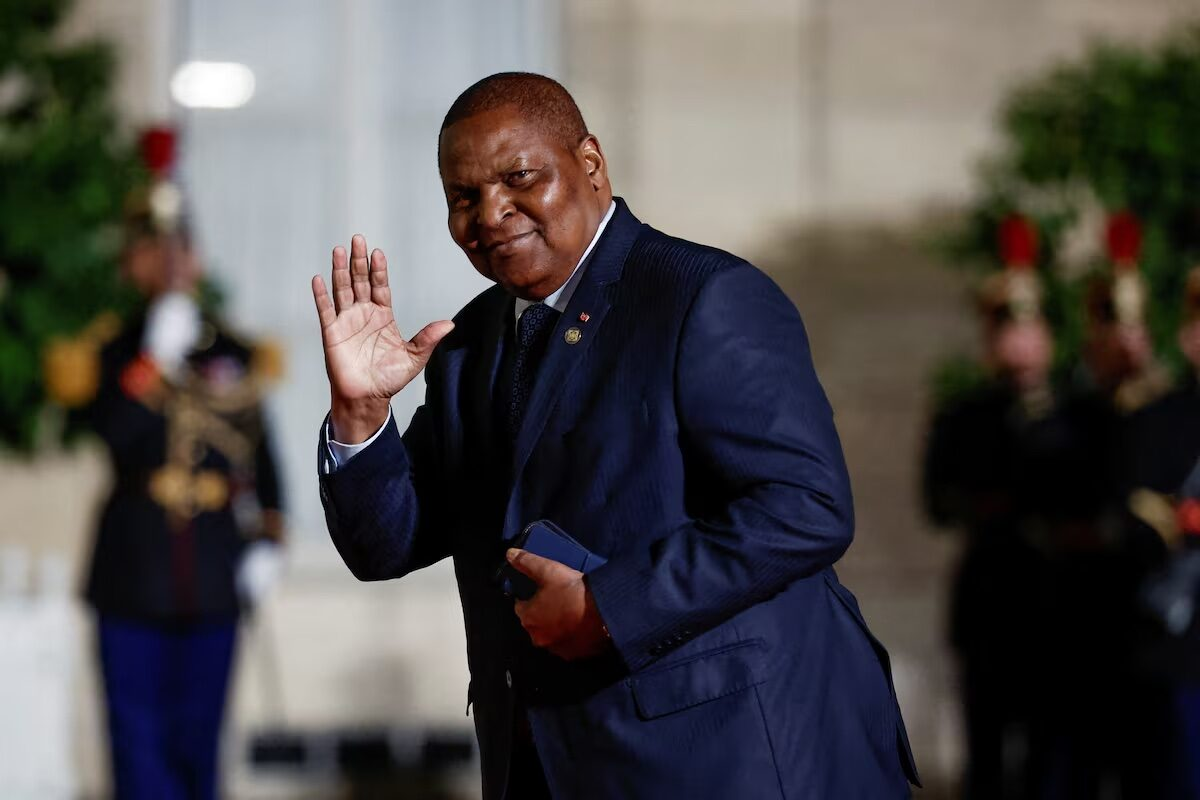
Touadera, a fan of Russia and cryptocurrency, is running for a third term in the Central African Republic
Faustin-Archange Touadera, the president of the Central African Republic, is running for a contentious third term on Sunday. During his ten years in office, he has looked to Russia for security in return for access to resources such as gold.
Having presided over a 2023 referendum that eliminated the presidential term limit, Touadera, 68, is using a strategy that is common in the area to prolong his term.
Other than that, though, he has been a pioneer. CAR was the first nation in West and Central Africa to use Wagner mercenaries from Russia in 2018; Mali, Burkina Faso, and Niger later followed suit.
Furthermore, in 2022, CAR became the second country in the world, after El Salvador, to accept bitcoin as legal tender, making it the first country in Africa to do so.
Touadera has participated in a number of events, including last week’s signing of an agreement to launch Starlink in CAR, while campaigning on his security record and promising infrastructure investment.
When I took office in 2016, it was impossible to go 10 kilometers without encountering harassment. There were no roads, no security. He told supporters at a gathering in Bangui this month, “We have worked so hard to achieve this result today.”
In September, Touadera told the Financial Times that he would welcome any nation that is interested in developing the CAR’s lithium, uranium, and gold reserves, indicating a revived interest in Western alliances despite the country’s close links to Russia.
According to analysts, Touadera has a considerable resource edge over his rivals and is supported by state personnel who are running his campaign.
International Crisis Group’s Charles Bouessel predicted that the president would prevail since he has significantly greater financial resources than his rivals.
Fragile Gains in Security
Following its independence from France in 1960, the CAR has seen numerous cycles of instability, resulting in poverty for the majority of its 5.5 million inhabitants.
Rwanda sent troops to stop rebels from interfering with elections five years ago, and they are still there today. According to IMF data, Touadera signed peace agreements with a number of rebel factions this year, which helped increase economic growth to roughly 3% from 1.9% in 2024 and lessen bloodshed in some areas.
Voters continue to prioritize security. “What we want are roads and peace,” Bangui businessman Jean-Claude Kolego spoke. However, analysts caution that gains are brittle since the rebels have not completely disarmed, reintegration is not complete, and incursions by fighters from neighboring Sudan exacerbate eastern insecurity.
“There are a lot of ingredients that could lead to a renewed cycle of violence,” said Nathalia Dukhan, an analyst for the Global Initiative Against Transnational Crime.
She claimed that the government and its allies “have been using fear and terror” to keep things under control. Human Rights Watch has charged Russian mercenaries with torture and executions.
The U.N. Security Council expanded the mission’s authority for peacekeeping in November. The United States argued against the decision, demanding a shorter extension and a transfer of security to Bangui.
Russia’s Pricey Security Agreement
The expense of Russian security support is high. Russia’s mercenary operations in the Central African Republic, Mali, and Sudan have earned them more than $2.5 billion in African gold, according to a 2023 report by the Africa Center for Strategic Studies think tank.
Touadera has also started two cryptocurrency projects in an attempt to draw in investors, but GI-TOC cautioned that this might make state assets vulnerable to international criminal networks.
In addition to opening a new border connecting the CAR to Cameroon and Sudan and looking for investors for a long-discussed railway project, he has promised to increase mining revenue under a new code that will be enacted in 2024.
However, crime and illicit mining continue to be widespread. Last month, China sent out a rare alert to its people about the dangers of kidnapping, extortion, and slavery in the industry.
According to World Bank figures, two-thirds of the country’s population lived in extreme poverty in 2023, and Touadera’s economic policies have not significantly improved that situation.
Clarisse, a Bangui university student, stated, “We are always promised jobs and schools, but many young people remain unemployed.”