Thousands demonstrate in Goma against AFC/M23’s departure from Uvira
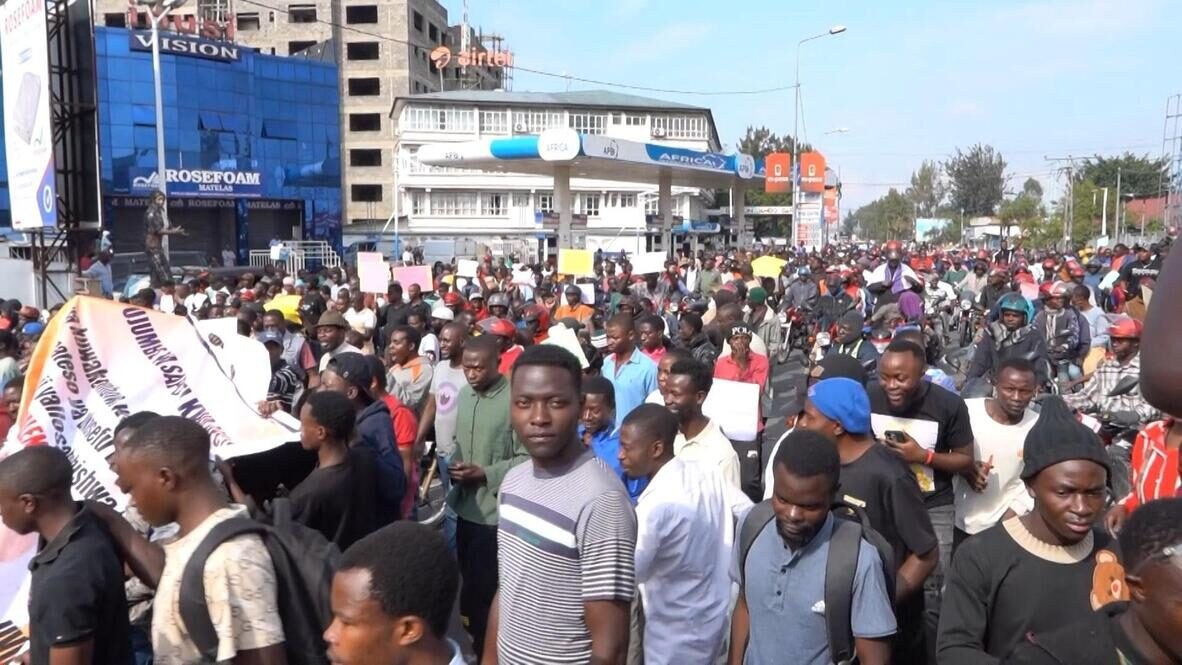
Hundreds of thousands of people on Monday December 22 flocked to Goma’s streets to protest the AFC/M23 rebel movement’s decision to leave the South Kivu town of Uvira.
Five days after capturing Uvira from government control, the group declared on December 15 that it was withdrawing unilaterally. This was hailed as a Doha Peace Process initiative aimed at fostering confidence.
Hundreds of Uvira residents took to the streets following the announcement, demonstrating their disapproval of the decision. They said that the movement’s existence had provided some protection against ongoing violations by numerous armed players and urged the movement to reevaluate its exit.
An estimated 250,000 people in Goma, a city of around two million, went to social media to voice their concerns about a resurgence of violence in regions that were previously under the control of militias and the government army. Social media users posted videos of thousands of locals assembling at the Stade de l’Unite.
On December 17, the AFC/M23 started to retreat.
A complex web of troops ruled over Uvira and the neighboring territories prior to the arrival of the AFC/M23. Among them was the FDLR, a genocidal militia from Rwanda that was frequently operating with or close to Congolese forces and was long accused of massacres, sexual assault, extortion, and forced recruitment by DR Congo citizens and human rights organizations.
Wazalendo groups, which were composed of local militias and were often accused of atrocities by locals, were also active. As part of bilateral security agreements, Burundian military were stationed in South Kivu and contributed to civilian misery and insecurity in the eastern Democratic Republic of the Congo.
Goma protesters articulated their message to both domestic and foreign actors against this backdrop. One protestor, whose words were recorded on camera, responded to what he called a citizen appeal.
He urged citizens and civil society to respect themselves. “We as citizens of this country must honor ourselves on the protection of civilians, security, governance, and the future of the DR Congo.”
He urged men and women “of all origins, communities, languages, and faiths” to speak up in a statement he read, emphasizing that decades of armed war, systematic violence, and severe shortcomings in state security and administration have disproportionately affected civilians.
“A collective path is expressed in this memorandum,” he remarked. It is driven by the pursuit of justice, peace, human dignity, and long-term stability. It is addressed to both the domestic and global communities with an emphasis on accountability, honesty, and averting more suffering.
The speaker condemned years of impunity and abuses of human rights. He blamed both foreign and local armed players for arbitrary arrests, enforced disappearances, torture, sexual abuse, and extortion.
“The populace has endured severe and recurring abuses for a long time,” he remarked. “Sometimes by national militia organizations like the Wazalendo, sometimes by foreign forces like the FDLR. The illegal militarization of citizens, discriminating crimes, the breakdown of the rule of law, and the lack of reliable accountability systems are all things we vehemently condemn.
The right to truth, remembrance, and accountability, he continued, was “inalienable and essential for any lasting peace.”
Regarding recent events, the protester recognized what he called a noticeable, albeit imperfect, change in the security landscape after the AFC/M23 invaded portions of the provinces of North and South Kivu.
According to him, “youth and active civil society forces note a relative but real improvement in the security climate.” “This is demonstrated by the gradual restoration of freedom of movement, a decline in some types of violence against civilians, and a reduction in unlawful roadblocks and extortion.”
He mentioned the start of the resumption of civil, commercial, and educational activity.
“There is a noticeable sense of relief and calm among the populace after years of continuous fear,” he said, adding that more work was required to solidify these advances.
“We firmly believe that protecting civilians should come first. This entails opposing alternative authorities of any kind, unchecked militias, including Wazalendo groups, and the use of citizens for political or military ends. All Congolese people are entitled to life, dignity, safety, and protection.
Additionally, the protesters warned that the AFC/M23 should not leave Uvira too quickly.
According to him, “such a withdrawal risks creating a security vacuum, a return to chaos, and a resurgence of past abuses.”
For almost a year, North and South Kivu’s provincial capitals have been under the authority of the AFC/M23 rebels. They had made their largest advance since February and taken Uvira.