Pakistan agrees to sell Libyan forces weaponry for $4 billion, according to officials
Despite a U.N. arms embargo on the divided North African nation, Pakistan has negotiated an agreement worth more than $4 billion to provide military equipment to the Libyan National Army, according to four Pakistani officials.
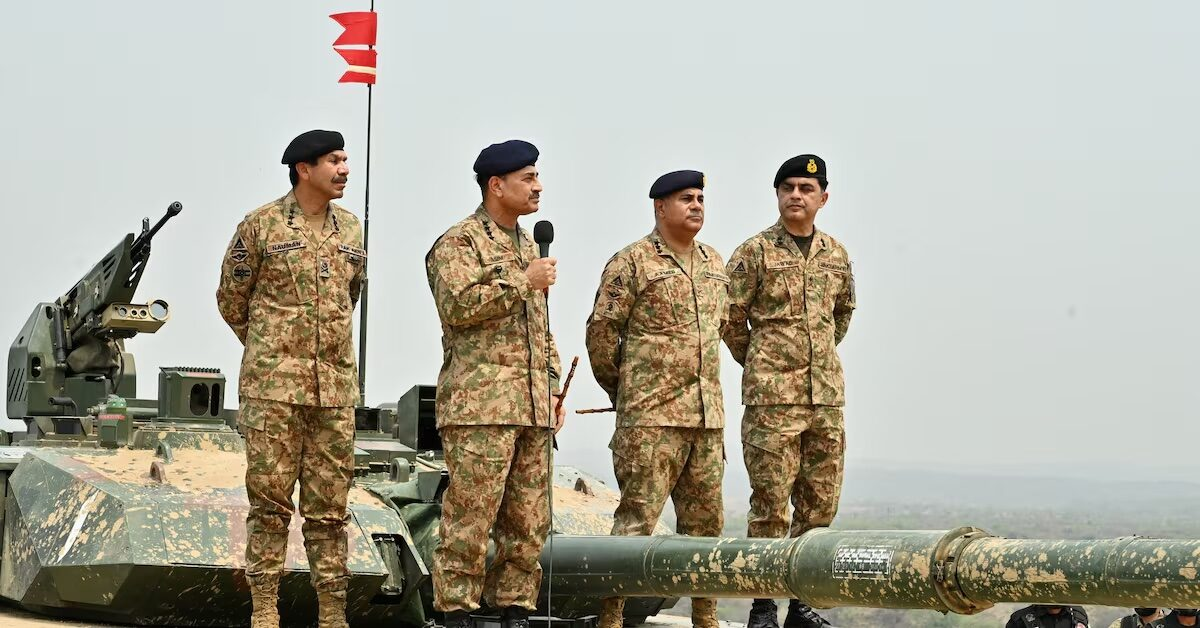
The four officials stated that the agreement, which is among the biggest weapons sales in Pakistan’s history, was completed during a meeting between Saddam Khalifa Haftar, the deputy commander-in-chief of the LNA, and Pakistan military chief Field Marshal Asim Munir last week in the city of Benghazi in eastern Libya.
Because the arrangement was sensitive, the officials, all of whom were involved in defense matters, refused to be named.
Requests for comment were not answered by Pakistan’s military, foreign ministry, or defense ministry.
Given Libya’s protracted instability following a 2011 NATO-backed rebellion that overthrew Muammar Gaddafi and divided the nation between opposing regimes, any arms deal with the LNA is likely to be scrutinized.
The purchase of 16 JF-17 fighter jets, a multi-role combat aircraft jointly manufactured by China and Pakistan, and 12 Super Mushak trainer aircraft, used for basic pilot training, was stated in a copy of the contract before it was finalized that Reuters was able to view.
While one of the Pakistani officials acknowledged that the list was correct, another stated that all of the weapons on it were included in the agreement, albeit he was unable to give precise figures.
One of the Pakistani officials stated that the agreement covered the sale of air, sea, and land equipment over a period of two and a half years, and that the JF-17 fighter jets might also be added. The agreement was valued at over $4 billion, according to two officials, and $4.6 billion, according to the other two.
Without giving specifics, the LNA’s official media station said on Sunday that the group had signed a defense cooperation agreement with Pakistan that encompassed collaborative training, military manufacturing, and the sale of weaponry.
“We announce the launch of a new phase of strategic military cooperation with Pakistan,” Haftar stated during comments the Al-Hadath television network aired on Sunday.
A request for comment from Benghazi authorities was also not immediately answered.
Much of western Libya is ruled by the U.N.-recognized Government of National Unity, which is headed by Prime Minister Abdulhamid Dbeibah. Haftar’s LNA, on the other hand, controls the east and south of the country, including important oilfields, and does not acknowledge the legitimacy of the western government.
ARMS EMBARGO
Since 2011, the United Nations has imposed an arms embargo on Libya, requiring permission before transferring weapons or related materials.
In a report to the United Nations in December 2024, a team of experts stated that the arms embargo on Libya was still “ineffective.” According to the panel, despite the limitations, certain foreign nations have grown more forthcoming about offering military support and training to forces in both eastern and western Libya.
Whether Pakistan or Libya had requested any exemptions from the U.N. embargo was not immediately apparent.
According to three of the Pakistani officials, no U.N. arms embargo had been violated by the agreement.
According to one official, Haftar is not subject to sanctions, another stated that Pakistan is not the only country that has agreements with Libya, and a third stated that Benghazi officials are seeing improved ties with Western nations as a result of increased gasoline exports.
Observing the Pakistani market
Drawing on decades of experience in counterinsurgency and a domestic defense sector that includes aircraft production and refurbishment, armored vehicles, ammunition, and naval construction, Pakistan has been attempting to increase defense exports.
The performance of the Air Force in May’s battles with India has been cited by Islamabad.
“Our recent war with India demonstrated our advanced capabilities to the world,” military leader Munir stated in comments that were aired on Sunday by Al-Hadath.
As a less expensive multirole fighter, Pakistan markets the Chinese-co-developed JF-17 and has established itself as a provider capable of providing aircraft, maintenance, and training outside of Western supply lines.
Along with strengthening its security connections with its Gulf allies, Pakistan has also been holding high-level defense talks with Qatar, signing a Strategic Mutual Defense Agreement with Saudi Arabia, and opening a new tab in September 2025.
As regional and global powers vie for control of Libya’s disjointed security agencies and oil-backed economy, the Libya pact would increase Pakistan’s presence in North Africa.