The top foreign policy advisor to Russian President Vladimir Putin stated on Sunday that the European and Ukrainian modifications to U.S. proposals for ending the war in Ukraine did not bode well for peace relations.
Last month, the media published U.S.-drafted ideas for ending the almost four-year-old conflict, which alarmed European and Ukrainian leaders who fear that they are excessively skewed in favor of Russia and that Kyiv may be pressured into making too many concessions by the administration of U.S. President Donald Trump.
The specifics of the current proposal have not been made public, but since then, Trump envoys have met with negotiators from Europe and Ukraine in an effort to include their own ideas into the U.S. drafts.
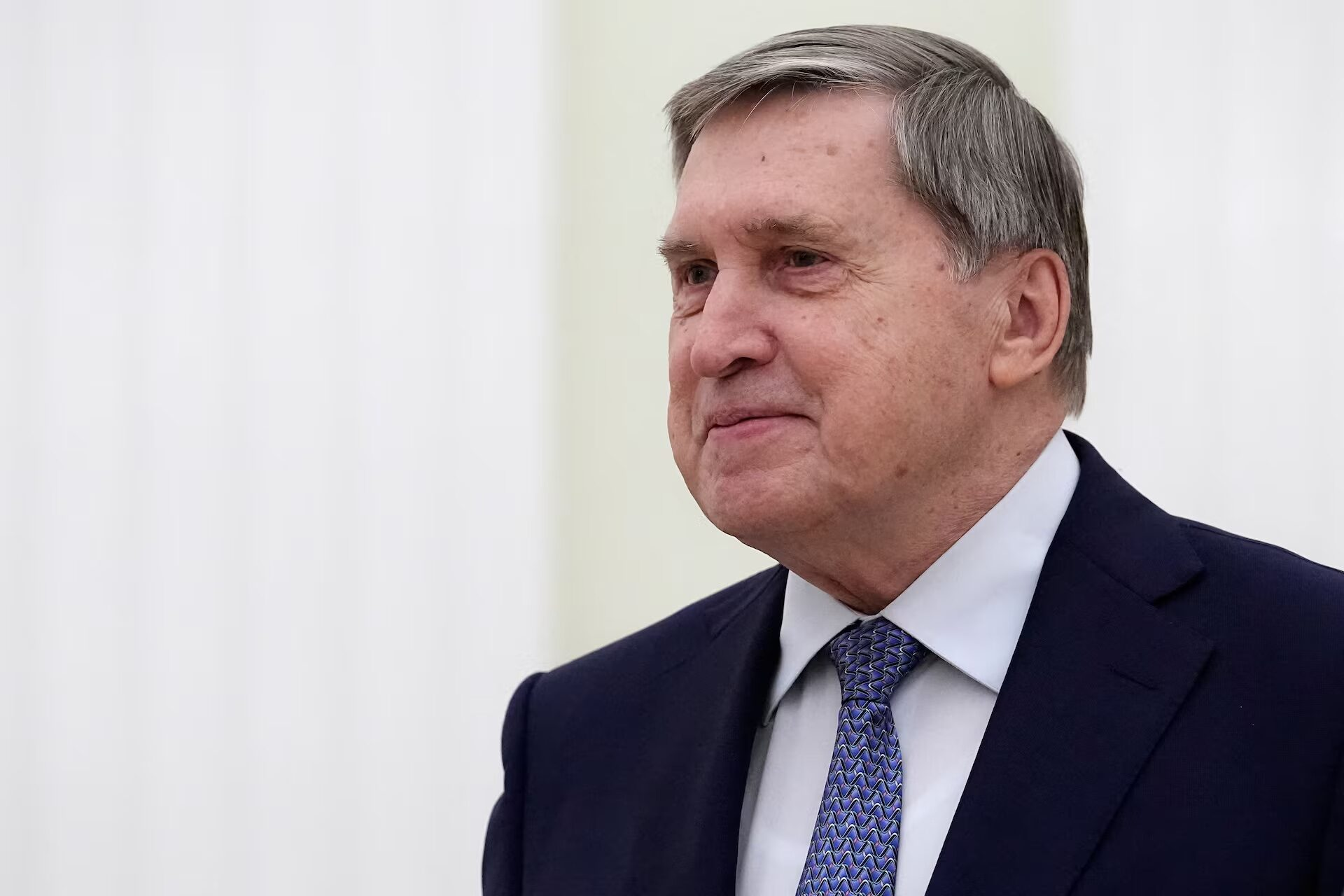
Reporters in Moscow were informed by Yuri Ushakov, a Kremlin foreign policy assistant, that the developments in Ukraine and Europe would not increase the likelihood of peace.
Russian news outlets cited Ushakov as adding, “This is not a forecast,” but he indicated that he had not yet seen the precise blueprints.
“I am sure that the proposals that the Europeans and Ukrainians have made or are trying to make definitely do not improve the document and do not improve the possibility of achieving long-term peace.”
US OFFICIALS IN FLORIDA WITH PUTIN ENVOY
Following a meeting in Florida with Putin’s special envoy Kirill Dmitriev, U.S. special envoy Steve Witkoff, and Trump’s son-in-law Jared Kushner, Ushakov made the statements. Russian television video showed Dmitriev returning to his Miami hotel following the second day of negotiations.
Following Friday’s U.S. discussions with European and Ukrainian officials, the Miami meeting took place.
“He (Dmitriev) will bring back some signals, which the Americans received from the Europeans and the Ukrainians,” was Ushakov’s statement, which Kremlin pool journalist Pavel Zarubin shared on his Telegram channel.
According to Ushakov, Dmitriev would report to Putin on the results of his negotiations when he returned to Moscow on Monday.
“After that, we will formulate the position with which we will proceed, including in our contacts with the Americans,” Ushakov added.
Many issues are at risk, including whether Putin will consent to ending the bloodiest conflict in Europe since World War Two, Ukraine’s future, the degree to which European countries are marginalized, and the viability of a peace agreement mediated by the United States.
Ukrainian President Volodymyr Zelenskiy stated on Saturday that if the United States proposed three-way negotiations with Russia and the Ukraine, Ukraine would support it as long as it allowed for future prisoner swaps and opened the door for national leaders to meet.
A suggestion for three-way negotiations, according to Ushakov, has not been substantially addressed and is not being worked on.
Russia claims that by imposing demands that they know would not be acceptable to Russia, which seized 12 to 17 square kilometers (4.6–6.6 square miles) of Ukrainian territory every day in 2025, European politicians are determined to sabotage the peace negotiations.
Leaders from Ukraine and Europe argue that Russia cannot be permitted to accomplish its goals following what they describe as an imperial-style territory grab.
The largest conflict between Moscow and the West since the height of the Cold War began when Russia invaded Ukraine in February 2022, following eight years of combat in eastern Ukraine.
Putin portrays the battle as a turning point in Russia’s relationship with the West, which he claims degraded Russia following the collapse of the Soviet Union in 1991 by expanding NATO and infringing on what he views as Moscow’s area of influence.