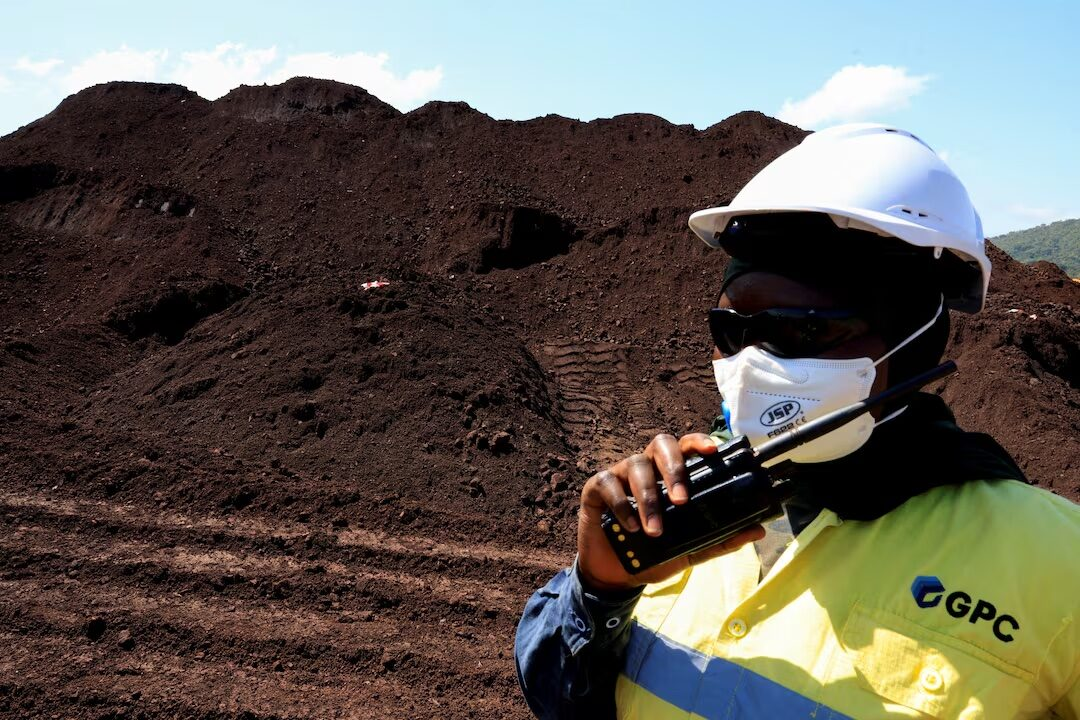
Large-scale layoffs overshadow Simandou mega mine in Guinea when production increases
Guinea’s Simandou mega mining project, touted by the military government as a hallmark of the nation’s economic transformation, is now laying off thousands of workers just as it commences iron ore exports following decades of delays and corruption scandals.
Simandou was officially inaugurated with great fanfare and a public holiday in November, just before the elections on December 28, marking the first since the military coup in 2021 that elevated Mamady Doumbouya to power.
The junta leader is running for president, and political analysts indicate he is the frontrunner, suggesting he may remain in power for an additional seven years.
Guinea stands as the world’s largest exporter of bauxite, a key ingredient in aluminium production, even in the absence of Simandou, the largest untapped reserve of iron ore globally. Despite its mining wealth, the lives of many of its people have not improved significantly.
Data from the World Bank released in 2025 indicated that over fifty percent of the population was living in poverty.
Reuters conducted interviews with a dozen workers and former employees, along with several senior company sources. Requesting anonymity due to the delicate nature of the matter, they indicated that the process of laying off thousands of employees had commenced and that the repercussions were expected to be more significant than those seen in similar mining ventures.
For those who anticipated that Simandou’s aspirations to produce approximately 120 million metric tons of iron ore each year would enhance their lives in the long run, it is a profound disappointment.
Employment reached a high of over 60,000.
According to companies and government sources, employment from Simandou reached a high of over 60,000 jobs in 2024 and 2025, as contractors hurried to meet deadlines imposed by Guinea’s military rulers in an effort to expedite iron ore exports after nearly three decades of delays.
Less than 15,000 individuals will be required to operate the mines, the ports, and the 670-kilometre (416-mile) railway constructed specifically for exporting from the landlocked project.
The project is managed by two consortia: one led by Rio Tinto (RIO.L) and (RIO.AX), and the other by the Winning Consortium Simandou, or WCS, which consists mainly of Chinese companies.
The organization of the work has resulted in a significant reduction in the workforce.
One executive involved stated that the railway was “a simultaneous spread project,” indicating that every section was constructed concurrently, the labor force was increased to peak construction levels, “then falls off a cliff because everything finishes.”
WCS, responsible for overseeing nearly all railway operations through various subcontractors, did not provide comments regarding its workforce when approached.
Rio Tinto, via a joint venture with Simfer, oversees two mine blocks, 78 kilometres of rail linking them to the main rail network, and transshipment facilities at the new port along Guinea’s Atlantic coast. Overall, it has created jobs for approximately 25,000 workers, with 82% being Guinean, throughout the construction phase.
During the operational phase, a representative from Rio Tinto indicated that the Simfer venture is anticipated to need a workforce of approximately 6,000 for employment at the mine and at a transshipment vessel terminal located at the port. The spokesperson indicated that the mine and rail construction is set to be finished next year, whereas work at the port will extend through 2027.
Chris Aitchison, managing director at Rio Tinto-Simfer, expressed his concerns regarding the risks associated with sudden job losses, a situation commonly referred to in the industry as demobilisation.
“It’s the what’s next?” he inquired. “In different jurisdictions, when we demobilize, there is a clear pathway for employees or individuals involved in execution to transition to other projects.”
In similar projects, like Mongolia’s Oyu Tolgoi copper mine, a more diversified economy provided former mining employees with alternative job opportunities.
POTENTIAL FOR SOCIAL DISCONTENT AND INCIDENTS
According to sources within the workforce, the process of job cuts has commenced. In Dantilia, a center in the Faranah region close to Sierra Leone’s border, 8,000 out of 10,000 workers have been laid off in the past three months. The remaining 2,000 have been informed that their employment will conclude in the upcoming months.
According to the workers, approximately 1,500 individuals have already been dismissed in Kamara, which is located in the same district.
“We are waiting with hope, but at this moment, they do not have any solutions, and no promises have been made yet,” a pick-up driver for the Winning Consortium Simandou told Reuters, requesting anonymity. “This is the only job.”
Three sources from Western companies indicated that there is growing concern that decreased staffing levels might elevate the risk of accidents and lead to social unrest.
Concerns were raised regarding the potential for community protests, which might manifest as blockades along the Simandou railway. This comes after incidents where trains have already resulted in the deaths of cattle, causing frustration among local residents who rely on their livestock.
According to company sources, risk assessments conducted by the consortia over the past six months identified areas where individuals or livestock might wander onto tracks and potentially derail trains. This led to the decision to construct fencing that was not included in the original design.
In March, Reuters reported that twelve workers had lost their lives in accidents during the construction of Simandou’s railway from June 2023 to November 2024. Furthermore, a minimum of five local residents lost their lives in traffic accidents involving vehicles associated with the construction work.
Rio Tinto and WCS have reported an additional five worker fatalities.
Mines minister Bouna Sylla stated that the government maintained a firm stance with partners regarding safety and environmental protections.
The commitments made by the government regarding future job opportunities
The sudden loss of jobs is exacerbated by Guinea’s limited infrastructure, narrow skill base, and absence of income buffers.
In conversations with the media leading up to Simandou’s official launch on November 11, Sylla recognized that the layoffs would be difficult.
“For those who have been accustomed to earning a salary and waking up early for work each day, the sudden loss of that stability is quite challenging,” Sylla remarked. He detailed government plans for new infrastructure projects, such as roads, refineries, and power plants, yet he did not provide any timeline.
The official launch at the new export port in Morebaya on Guinea’s Atlantic coast was marked by a vibrant atmosphere, featuring brass bands, honor guards, traditional dancers, and esteemed guests. Doumbouya observed, attired in a white Guinean boubou tunic.
Guinea’s military government has presented “Simandou 2040” as a 15-year strategy aimed at creating thousands of future jobs. This initiative seeks to transform the country into a diversified economy through investments in agriculture, education, transport, technology, finance, and health for the entire population.
The government possesses a 15% interest in Simandou, and the projected $200 billion expense is expected to be partially financed through mining revenues, though it has indicated that the majority should derive from private investment.
Sylla stated that Guinea’s infrastructure agency, the Administration et Contrôle des Grands Projets, was engaged in conducting feasibility studies. According to two sources, the government has also commissioned a KPMG report on re-employment programmes, which is set to be published following the elections.
KPMG has not provided a response to the request for comment. The infrastructure agency announced that the plans entail the development of 3,000 kilometres of new highways over a span of 15 years.
The Extended Anticipation for Prosperity
Nearly 30 years after Rio began investigating the deposit, the question of whether Simandou can bring prosperity to the majority of Guinea remains unresolved.
The IMF, in its “Selected issues” paper on Guinea’s economy released in May 2024, analyzed the macroeconomic impacts of Simandou.
It discovered that the country’s real GDP could increase by 26% by 2030; however, it also indicated that the reduction in poverty might be minimal, at only 0.6 percentage points, unless proactive policies are implemented to manage the transition.
The project’s effect on boosting the number of skilled workers might even result in “a worsening of inequality, particularly in rural areas,” it stated.