Trump’s executive order designates illicit fentanyl as a national security threat, calling for stricter prosecutions, while critics caution that the action may lack legal validity.
President Donald Trump has signed an executive order designating “illicit fentanyl and its core precursor chemicals” as weapons of mass destruction, a decision that has sparked inquiries regarding its legal and practical implications.
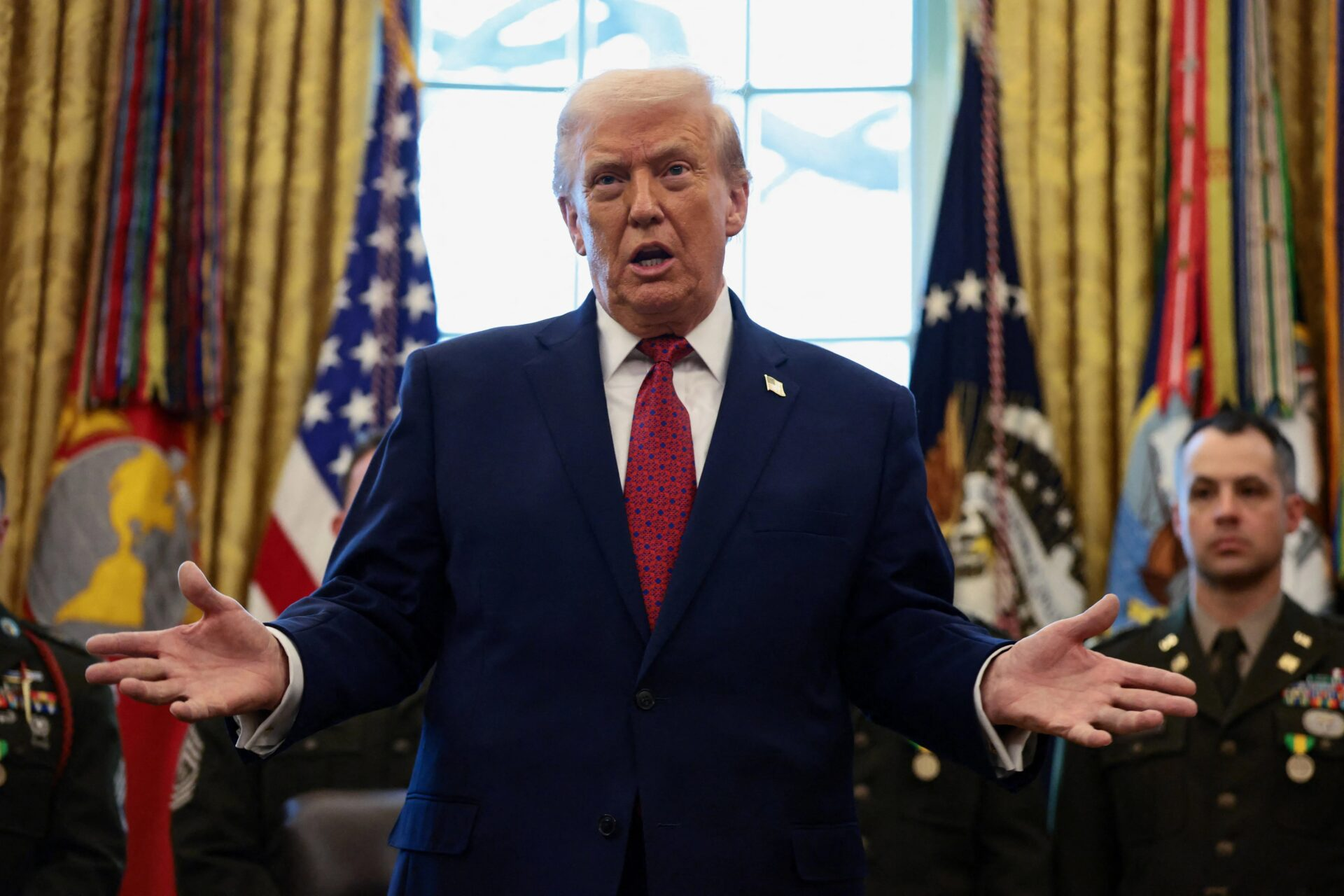
During a speech in the Oval Office on Monday, Trump stated that the order was intended to reduce the influx of fentanyl into the United States. “Today I’m taking one more step to safeguard Americans from the devastating impact of deadly fentanyl pouring into our country with this groundbreaking executive order,” he stated, adding, “No bomb has the effect that this is having.”
The announcement was made at a ceremony recognizing US service members who received medals for their vital contributions to border protection.
Under current US law, it is already illegal to use, threaten, or attempt to use weapons of mass destruction, an offense that may result in the death penalty depending on the circumstances. The law characterizes weapons of mass destruction as encompassing “any weapon involving a biological agent, toxin, or vector.”
Nonetheless, Trump is unable to alter federal law via an executive order. A former federal prosecutor with expertise in national security raised doubts about the potential tangible effects of the designation.
The order asserts that “illicit fentanyl is closer to a chemical weapon than a narcotic” and instructs Attorney General Pam Bondi to “promptly initiate investigations and prosecutions regarding fentanyl trafficking.” The directive also mandates Secretary of State Marco Rubio and Treasury Secretary Scott Bessent to “take suitable actions against pertinent assets and financial institutions in line with applicable law for those engaged in or backing the manufacture, distribution, and sale of illicit fentanyl and its essential precursor chemicals.”
The directive positions the production and distribution of fentanyl as a matter of national security concern. “The production and sale of fentanyl by Foreign Terrorist Organizations and cartels finance their operations, which encompass assassinations, terrorist acts, and insurgencies globally, enabling these entities to undermine our domestic security and the well-being of our Nation,” the order states.
Dennis Fitzpatrick, a former national security attorney with the Eastern District of Virginia, characterized the move as a “political exercise,” contending that it might complicate enforcement of current drug trafficking laws. “We already have established statutes that are well-tested, which prosecutors and agents are familiar with, and they are very clear in their intent, achieving the same objectives,” Fitzpatrick told CNN.
“There’s no practical reason to classify fentanyl as a weapon of mass destruction.” It is a political endeavor.
He stated that this type of action ought to originate from Congress. “This is straightforward lawmaking, and Congress holds both the authority and the responsibility in this area,” Fitzpatrick stated.
The order arrives alongside recent federal estimates indicating that drug overdose deaths in the United States decreased last year, reaching their lowest point in five years. Even with the decrease, synthetic opioids, mainly fentanyl, continued to play a significant role in the majority of overdose fatalities.
At the same White House event, Defence Secretary Pete Hegseth announced that the administration had reinstated the Mexican Border Service medals, which were originally established by Congress in 1918. “Our men and women will don that same medal as Americans did a century ago when called to defend the sovereignty of our nation,” Hegseth stated.