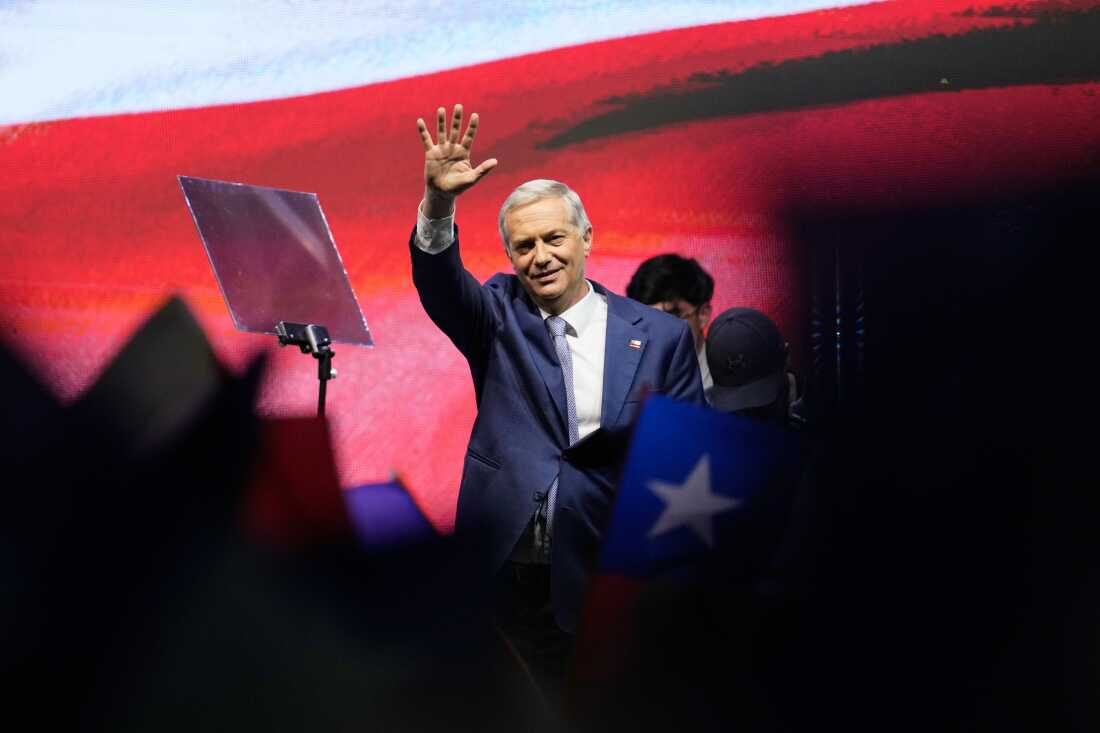
José Antonio Kast wins the presidency of Chile by taking advantage of concerns about crime and immigration to propel the nation’s most dramatic rightward shift.
With the election of right-wing hardliner José Antonio Kast as president, Chile has seen its most rightward shift since the end of military government in 1990.
In Sunday’s runoff election, Kast easily defeated government-backed socialist Jeannette Jara, who received 42% of the vote and conceded soon after the results were released, with 58% of the vote.
Kast has established himself as a law-and-order conservative over his political career by appealing to voters’ concerns about increased crime and migration. Building border barriers, sending the military to areas of high crime, and expelling unlawfully present migrants are some of his suggested solutions.
Speaking to exuberant fans at his Republican Party headquarters in Santiago’s wealthy Las Condes neighborhood, Kast pledged “real change,” stating that reestablishing security was essential to democracy and freedom.
Peace cannot exist in the absence of security. He warned that reforms would take time and effort, but added that “without peace, there is no democracy, and without democracy, there is no freedom.”
Kast’s triumph comes after a series of right-wing political victories throughout Latin America, including the ascent of politicians like Daniel Noboa of Ecuador, Nayib Bukele of El Salvador, and Javier Milei of Argentina. Nearly 20 years of communist rule in Bolivia came to an end in October with the election of centrist Rodrigo Paz.
After losing to incumbent President Gabriel Boric in 2021, Kast’s victory represents his third attempt at the presidency and his second runoff. Growing public worry over immigration and crime, according to analysts, increased his appeal even in historically left-leaning areas.
Kast’s resounding win was partly influenced by voter opposition to Jara’s Communist Party affiliation, according to political scientist Claudia Heiss of the University of Chile.
Even while Chile is still one of the safest countries in Latin America, organized crime networks, porous borders, and a rise in migration, especially from Venezuela, have all contributed to an increase in violent crime in recent years.
Expectations of less regulation and business-friendly policies helped the peso and local stocks in the world’s largest producer of copper and a significant supplier of lithium, and markets responded favorably to Kast’s election.
But Congress, which is still sharply split, is certain to oppose Kast. While the lower house is controlled by a populist alliance, the Senate is evenly divided between the left and the right, which may restrict the reach of his more contentious changes.
According to analysts, Kast will have to strike a compromise between his ideological pledges and the demands of leading a large and heterogeneous electoral coalition.