Ford withdraws from electric vehicles and is charged $19.5 billion as the sector is affected by Trump’s policies
Ford Motor (F.N.) announced Monday that it will take a $19.5 billion writedown and is discontinuing a number of electric vehicle models. This is the most dramatic example to date of the auto industry’s retreat from battery-powered models in response to the policies of the Trump administration and the decline in demand for EVs.
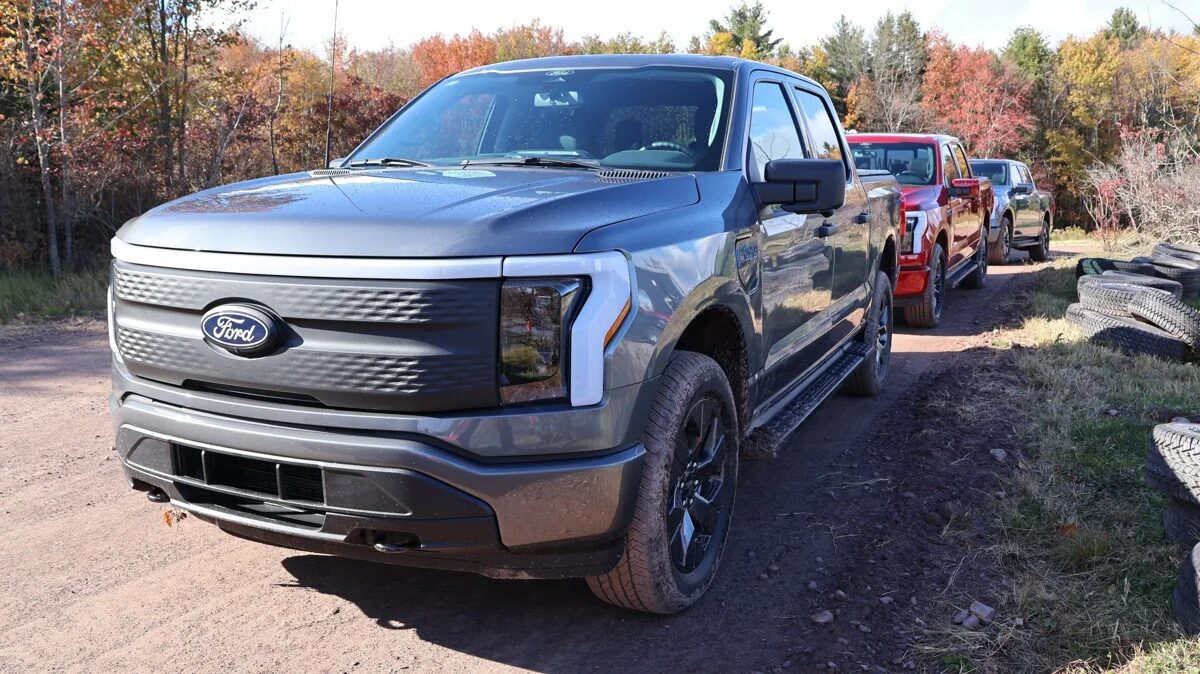
The business, based in Dearborn, Michigan, said that it will replace the completely electric F-150 Lightning with a new extended-range electric vehicle that recharges its battery using a gas-powered engine. The corporation is also getting rid of its planned electric commercial vans and a next-generation electric truck code-named the T3.
“The market’s significant shift over the past few months was the driving force behind our decision,” Ford CEO Jim Farley told Reuters in an interview.
Although there would be some layoffs at a jointly owned battery plant in Kentucky in the near future, Ford stated that it will make a significant shift toward gas and hybrid vehicles and eventually hire thousands of workers. By 2030, the business hopes to increase the percentage of hybrids, extended-range EVs, and pure EVs worldwide from 17% to 50%.
As stated by the corporation, the writedown will be spaced out, with the most of it occurring in the fourth quarter and continuing into 2027 and 2021.
It costs about $8.5 billion to scrap planned EV vehicles. The breakup of a battery joint venture with South Korea’s SK On is linked to almost $6 billion, while Ford attributed $5 billion to “program-related expenses.”
Additionally, the automaker increased its 2025 adjusted earnings before interest and taxes forecast from $6 billion to $6.5 billion to roughly $7 billion.
Following hours, Ford’s stock increased by almost 1%.
The EV market being reshaped by Trump’s policies.
Ford’s change is a reflection of the auto industry’s reaction to the decline in demand for battery-powered vehicles following the hundreds of billions of dollars that automakers invested in electric vehicles at the beginning of this decade. With U.S. President Donald Trump’s policies that slashed federal assistance for electric vehicles and relaxed tailpipe-emissions regulations, which may incentivize automakers to sell more gas-powered vehicles, the outlook for electric vehicles deteriorated dramatically this year.
The expiration on September 30 of a $7,500 consumer tax credit that had been in place for over 15 years to boost demand caused a roughly 40% decline in U.S. sales of electric vehicles in November. Additionally, the Trump administration froze the penalties that automakers pay for breaking fuel-economy rules in the huge tax and spending measure that was passed in July.
Comedian Jimmy Fallon wrote a song on the F-150 Lightning, which began rolling off assembly lines with great excitement in 2022. In response to a surge of 200,000 orders, Ford expanded the model’s production, but sales haven’t kept up. This year, through November, the company sold 25,583 Lightnings, a 10% drop from the same period last year.
The T3 truck, which was to be a key component of Ford’s second-generation EV portfolio, was to be constructed entirely in a new facility in Tennessee as the replacement for the F-150 Lightning. Starting in 2029, Ford will begin producing new gas-powered vehicles at the Tennessee plant in place of the electric pickup.
With the news made on Monday, Ford essentially discontinued all of its second-generation EV cars. The company is focusing on more reasonably priced EV cars for its future portfolio, which were developed by a California-based “skunkworks” team. In 2027, Ford intends to start selling the first car from that squad, which will be priced at around $30,000. Ford’s Louisville facility is producing this midsize electric truck.
Ford’s chief of gas and electric vehicle operations, Andrew Frick, stated, “We are putting that money into higher-returning areas instead of spending billions more on large EVs that now have no path to profitability.” Earlier this year, Ford stated that it anticipated losing approximately $5 billion on its electric vehicle business this year, which is comparable to the amount it lost in 2024.
GM AND STELLANTIS RETURN
Due to the recent decline in EV sales in the United States, automakers who rushed electric vehicles onto the market are now competing for a smaller consumer base. Many major automakers, including Ford, are reducing their EV offers and switching back to gas and hybrid cars in order to offset losses in that market.
According to analysts, this may provide pure-play EV manufacturers like Rivian (RIVN.O) and Tesla (TSLA.O) a chance to gain market share, albeit from a lesser total.
A $1.6 billion charge was made to General Motors (GM.N) in October for modifying its plans for an electric vehicle facility, and the company cautioned that it will probably incur additional penalties in the future. Opening a new tab, Stellantis (STLAM.MI) has reversed some of its EV plans, abandoning a planned electric Ram pickup truck in favor of hybrids.
The shift to hybrids by certain conventional manufacturers is a follow-up to that of Toyota Motor, the market leader for hybrid cars for a long time, which prioritized the technology even during the EV heyday of the industry.
Ford announced last year that it would have to pay up to $1.9 billion to cancel a three-row electrified SUV. The carmaker stated on Monday that it now expects its electric vehicle division to turn a profit by 2029.
The announcement last week by SK On, Ford’s joint venture partner, that it was terminating its cooperation with the company disrupted Ford’s EV production facilities and three battery plants in the South. As part of the split, the carmaker announced Monday that SK On will own and run a battery factory in Tennessee, while a Ford company will independently own and run its battery plants in Kentucky.
Energy storage system batteries will be produced in Ford’s battery operations in Michigan and Kentucky, with the company aiming to bring initial capacity online in 18 months. The Marshall, Michigan, facility will also manufacture batteries for Ford’s midsize electric vehicle truck, which costs $30,000.