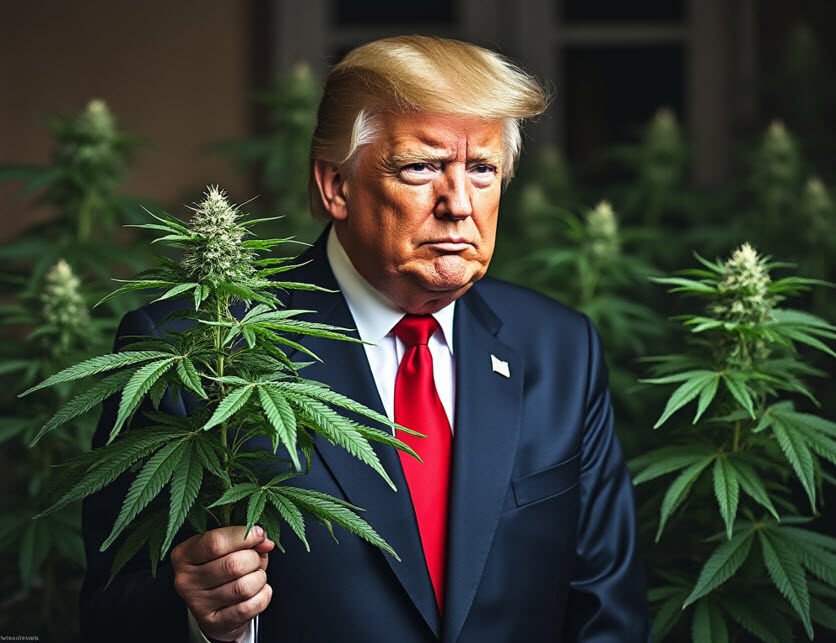
Trump intends to reclassify marijuana from Schedule I to Schedule III, which will raise business optimism and cause cannabis stocks to soar.
Cannabis stocks rose Friday as a result of industry optimism following rumors that President Donald Trump intends to drastically reduce federal marijuana prohibitions. Cannabis greenhouse operator Innovative Industrial Properties had a roughly 9% increase, while producers Tilray Brands and Canopy Growth saw increases of over 44% and 52%, respectively. With a gain of more than 54%, the Amplify Seymour Cannabis ETF (CNBS) had its biggest day ever.
Trump is anticipated to release an executive order as early as Monday to reschedule marijuana and heroin from Schedule I drugs to Schedule III drugs, which are less controlled and include things like steroids and Tylenol with codeine, according to people familiar with the situation. The modification would modify how cannabis businesses are treated tax-wise and promote more investment in the industry.
Trump plans to direct government agencies to carry out the reclassification, according to a report initially published by the Washington Post on Thursday. Axios notes that the action may be implemented as early as next year. Industry analysts say it was always a matter of “when,” not “if,” since Trump had first proposed the concept in August.
The decision is “positive” for the cannabis market, according to Ed Groshans of investment bank Compass Point, who also predicted that the Drug Enforcement Administration will finalize a proposed rule for the categorization by summer. The Supreme Court’s upcoming rulings on state laws and federal cannabis prohibition might hasten regulatory timeframes, according to Bill Kirk, senior research analyst at Roth.
Leaders in the industry voiced cautious optimism on the possible changes. Shawn Hauser, a lawyer at cannabis-focused law firm Vicente LLP, called a reclassification a “partial victory,” pointing out that more extensive legalization and regulatory reform are still required. Tilray CEO Irwin Simon stated, “I’m a lot more optimistic than I ever have been.”
“This is the start of a new era of public health policy,” Hauser continued. It overturns almost a century of antiquated drug laws that contradict science and medicine if it is put into effect.
Despite increasing acceptance and relaxed state-level rules, cannabis equities have been underperforming since the market frenzy before to the COVID-19 pandemic. For instance, Tilray shares, adjusted for splits, were trading at little over $10 lately, much below their peak of nearly $2,140 in September 2018.
The cannabis sector is anticipating a potential turning point with Trump’s anticipated executive order, which may change federal drug policy, attract investment, and progressively normalize marijuana under national law.