Russia threatens legal action as the EU intends to finance Ukraine’s recovery with €210 billion in frozen assets
Russia criticizes the EU’s proposal to utilize €210 billion of its frozen assets for Ukraine’s recovery and is suing Euroclear in Moscow.
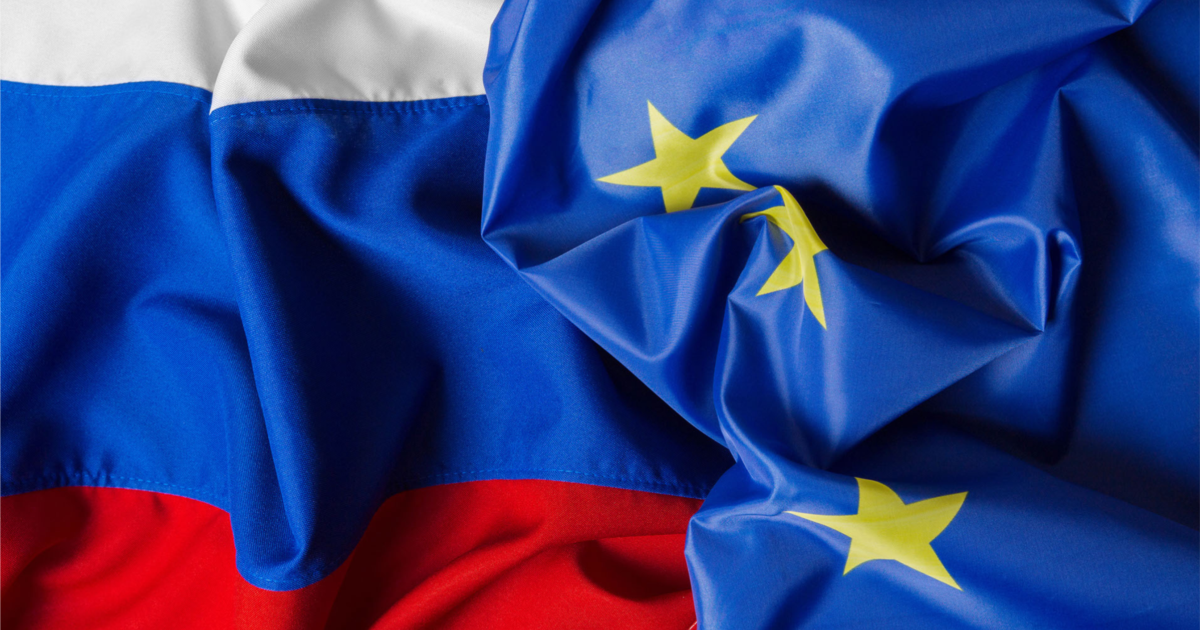
Russia has vehemently denounced the European Union governments’ decision to permanently immobilize €210 billion (£185 billion) in Russian assets that have been frozen in the EU since the beginning of Russia’s full-scale invasion of Ukraine in February 2022. European authorities plan to utilize the funds to provide Kyiv a loan to assist it pay for its economic and military demands. The Belgian bank Euroclear holds the majority of the donations.
The Russian Central Bank declared that it is suing Euroclear in Moscow to contest the legitimacy of using cash that Moscow has frozen for Ukraine. Moscow officials have accused the EU of stealing, claiming that any attempt to repurpose the assets would violate international financial standards and that the action is illegal.
After almost four years of conflict, Ukraine is expected to need €135.7 billion (£119 billion; $159 billion) for the next two years to continue its defense and reconstruction activities. Europe wants to pay about two-thirds of that amount.
The frozen assets that were seized days after the invasion, according to the EU and Ukraine, should be used as compensation to reconstruct the damage caused by Russia. German Chancellor Friedrich Merz stated that the money would allow Ukraine to defend itself against future Russian attacks, while Ukrainian President Volodymyr Zelensky stated that “it’s only fair that Russia’s frozen assets should be used to rebuild what Russia has destroyed – and that money then becomes ours.” Officials stressed that European financial institutions are legally shielded from Russian legal action.
Belgium is worried about the risks and has warned that if the plan doesn’t work, it might be left with huge liabilities. Valaña Urbain, the CEO of Euroclear, warned that using the assets could cause instability in the global financial system, especially since Euroclear also owns €16–17 billion in Russian assets. Before accepting the reparations plan, Belgian Prime Minister Bart De Wever has set a number of “rational, reasonable, and justified conditions” for the EU. He has also refused to rule out legal action if the reparations plan “poses significant risks” for his nation.
The EU has so far restricted the use of the frozen assets to giving Ukraine €3.7 billion in 2024 in “windfall profits.” The money’ full deployment has become imperative, nevertheless, as international military assistance to Ukraine has decreased in 2025, in part because to the US drastically cutting financing under President Donald Trump. Prior to the conference on Thursday of next week, the EU is working nonstop to find a solution that Belgium will accept.
About two-thirds of Ukraine’s immediate finance needs, or €90 billion, are intended to be provided by two major EU proposals. Belgium prefers the option of raising the funds on capital markets that are supported by the EU budget. Belgium’s preferred course of action is this, but it would be challenging to get a unanimous vote from EU leaders when Hungary and Slovakia protest against paying Ukraine’s military. A loan from Russia’s frozen assets, which have mostly turned into cash that Euroclear holds through the European Central Bank, is the subject of the other.
The European Commission, the executive branch of the EU, acknowledges that Belgium has valid concerns and claims to be sure that it has addressed them. The objective is to provide Belgium with a guarantee that covers all of Russia’s €210 billion in EU assets. According to a Commission source, funds held by Russia’s own clearing house in the EU would be used to offset Euroclear’s loss of its own assets in Russia. Any decision made by a Russian court would not be accepted in the EU if Russia pursued Belgium directly.
An important change was the agreement by EU ambassadors to permanently immobilize Russia’s central bank assets, eliminating the need for a six-month renewal and lowering Belgium’s risk. In order to keep the assets frozen as long as there is a “immediate threat to the economic interests of the union” or until Russia fully compensates Ukraine for the war, the EU ambassadors invoked an emergency clause under Article 122 of the EU Treaties.
Elisabeth Svantesson, Sweden’s finance minister, described the ruling as a “significant step in enabling more support for Ukraine and protecting our democracy.”
Belgium is still committed to helping Ukraine, but it is cautious about taking on too much financial risk. The Belgian economy, which has a GDP of about €565 billion, could become unstable if Euroclear is forced to provide the loan, according to experts.
Some EU members, such as Hungary and Slovakia, have opposed the plan, while seven nations near Russia—including Finland, Poland, and the Baltic states—have emphasized that using the frozen assets is the best financial option. If nothing is done, Europe will have limited options, German MP Norbert Röttgen said.
“For us, it’s a matter of destiny,” states prominent conservative MP Norbert Röttgen of Germany. I’m not sure what we’ll do if we don’t succeed. We must therefore be successful in a week.
Possible US plans to use some of Russia’s frozen funds for other purposes are also a source of concern. According to reports, early versions of a US peace plan call for rebuilding using $100 billion of the assets, with the US and Europe sharing the profits. Such plans may become more difficult if the EU decides to immobilize the cash indefinitely, necessitating that US negotiators obtain access to the monies from the majority of EU member states.
Viktor Orban, the prime minister of Hungary, criticized the plan, saying that EU leaders are “placing themselves above the rules” and substituting bureaucratic discretion for the rule of law.
The decision to permanently immobilize Russia’s assets is seen to be a crucial step in guaranteeing Ukraine obtains the financial support required to sustain its war effort and post-war rebuilding as EU leaders get ready for next week’s summit.