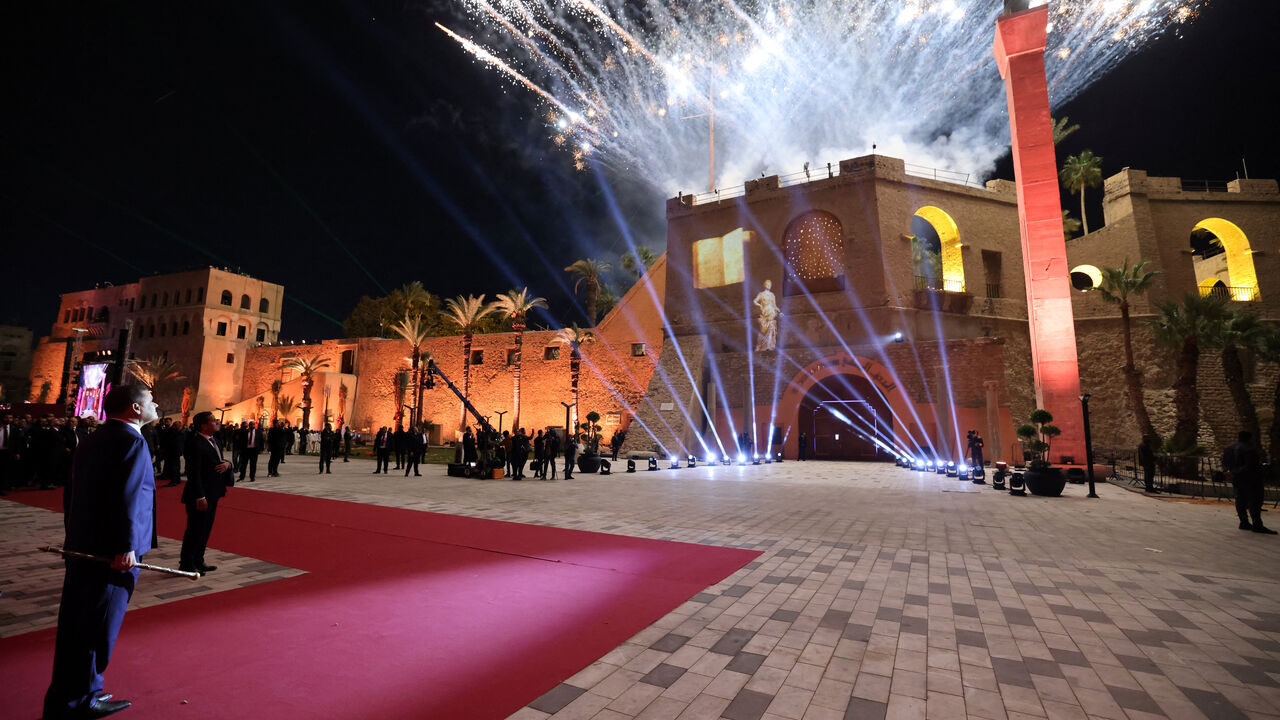
The Red Castle, also known as As-Saraya Al-Hamra, Libya’s national museum, has reopened in Tripoli, giving the public access to some of the nation’s most valuable historical artifacts for the first time since the uprising that overthrew Muammar Gaddafi.
The largest museum in Libya was shut down in 2011 amid a NATO-backed rebellion against longstanding leader Gaddafi, who gave a vehement address from the castle’s walls.
The Tripoli-based Government of National Unity (GNU), which was elected in 2021 through a democratic process supported by the United Nations, began renovations in March 2023.
According to GNU Prime Minister Abdulhamid al-Dbiebah, “the reopening of the National Museum is not just a cultural moment but a live testimony that Libya is building its institutions,” during a Friday reopening ceremony.
The museum’s 10,000 square meters of gallery space, which was constructed in the 1980s, is filled with artifacts from Libya’s Roman, Greek, and Islamic eras as well as sculptures, mosaics, murals, and coins.
Millennia-old mummies from the ancient communities of Jaghbub, close to Libya’s eastern border with Egypt, and Uan Muhuggiag, in the country’s far south, are also included in the collection.
According to museum director Fatima Abdullah Ahmed, “the current program focuses on enabling schools to visit the museum during this period, until it is officially opened to the public at the beginning of the year,” she told Reuters.
Before the unveiling, Mohamed Farj Shakshoki, the chairman of the antiquities department’s board of directors, told Reuters that Libya had since retrieved 21 artifacts that were smuggled out of the country following Gaddafi’s overthrow, particularly from France, Switzerland, and the United States.
Negotiations are in progress to retrieve around two dozen artifacts from Austria and Spain, according to Shakshoki.
The United States sent nine artifacts to Libya in 2022, including ceramics, urns, and funeral stone heads.
Libya is home to five UNESCO World Heritage monuments, all of which it declared endangered in 2016 because of conflict and instability.
Libya’s UNESCO delegation announced in July that one of the sites, the ancient city of Ghadames, had been taken off the list due to better security.