U.S. aid cuts prevent hungry children in Kenya from receiving life-saving care
The global supply of therapeutic food for children with acute malnutrition was disrupted by USAID’s deconstruction. For some, assistance may come too late to prevent long-term cognitive and physical harm.
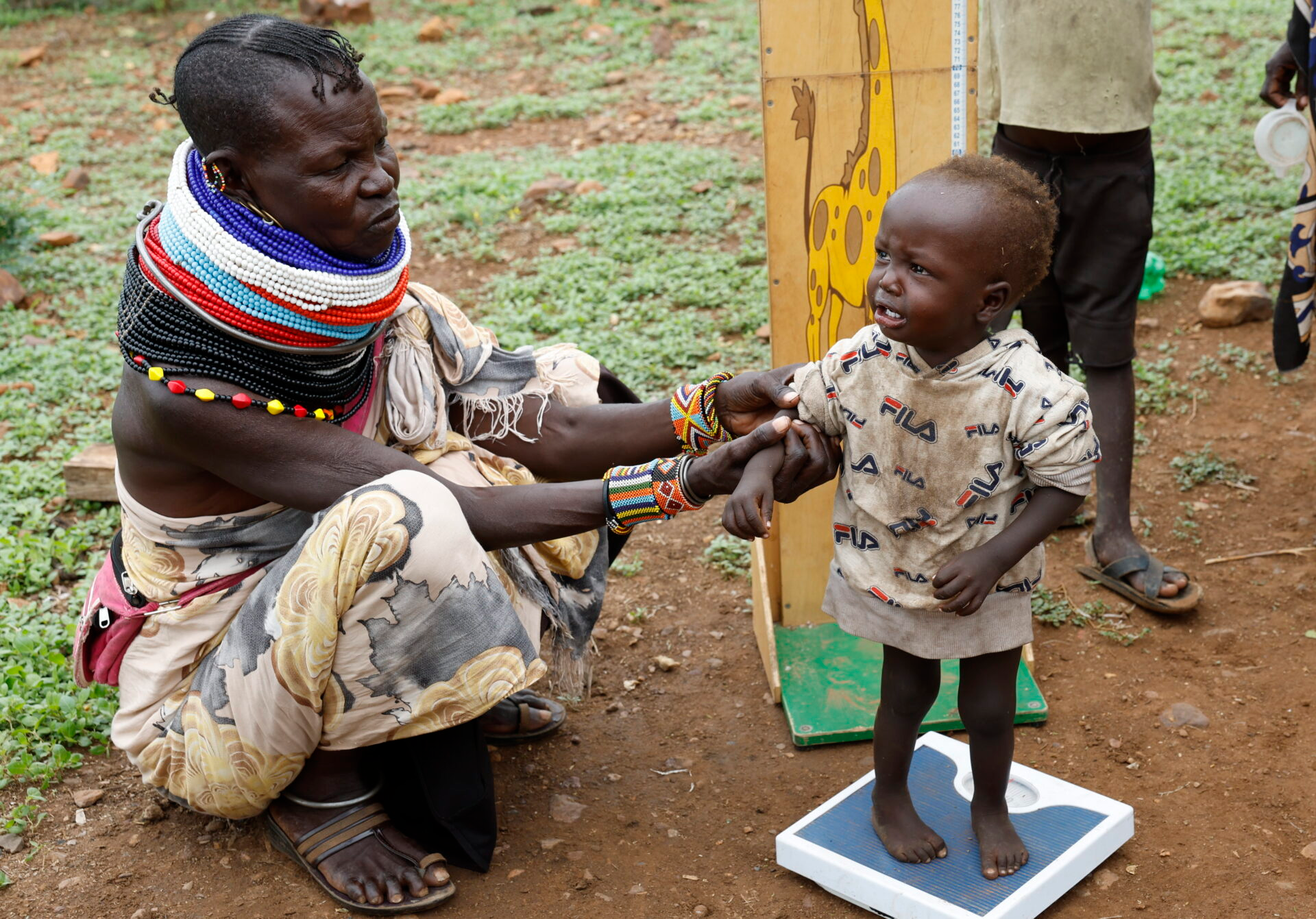
After beginning a course of life-saving specialized food, Kenyan pastoralist Hellen Etiman had hope that her extremely emaciated kid would soon recover.
The family was forced to rely on wild fruit that was foraged in the arid plains of Turkana county, in the northwest of the country, when 4-year-old Peter Lokoyen relapsed in July due to a shortage of supplies at the medical center that was treating him.
He was little over 87 cm (2.85 ft) tall and weighed 11.4 kg (25.13 lb) by late October, which was one-third less than the World Health Organization’s median for boys his age. Melvine, his 20-month-old sister, was almost as tall as him.
Five current and former aid officials told Reuters that children like Peter lost a lifeline when President Donald Trump decided to cut global aid programs and destroy the U.S. Agency for International Development.
About half of the world’s supply of ready-to-use therapeutic food (RUTF), a nutrient-dense paste made from peanuts that is used to treat children with severe acute malnutrition or wasting—the most deadly type of undernourishment—was being purchased and distributed by the U.S. agency.
According to UNICEF, the largest buyer and distributor of RUTF worldwide, drought was driving up demand for the nutritious paste in some parts of Kenya, and children were arriving to medical institutions in worse shape due to funding cuts for community outreach programs that screen for malnutrition.
The U.N. children’s agency told Reuters that shortages at some facilities were caused by “short-term operational issues” and that the majority of its financing for RUTF supplies was restored in March.
Clinic shelves that are empty
Health professionals and relief officials in Turkana, however, stated that the supply pipeline’s recovery was taking some time.
At the end of October, Reuters journalists visited seven clinics in the area, where famine is being caused by a recent locust infestation, sporadic fighting between rival pastoralists, and recurrent drought. They discovered that the shelves were mostly devoid of peanut paste.
Kenya is the most developed economy in East Africa and serves as a haven for refugees from wars in Sudan and Somalia.
Melaku Yirga, Africa director for Mercy Corps, a U.S.-funded non-profit, stated, “If this can happen in Kenya, it raises serious concerns about what’s ahead for countries already facing greater instability.”
Four of the institutions Reuters visited recently received supplies from UNICEF, and three more are waiting on deliveries from government-run relief depots, the U.N. children’s agency told Reuters in a statement.
However, Yirga noted that for certain kids, it might be too late to prevent irreversible physical and mental harm.
“Stunted growth, weakened immunity, and impaired brain development are some of the serious and sometimes irreversible health consequences that can occur when a severely malnourished child goes months without RUTF,” he stated.
“These treatment gaps not only slow recovery, but they also put children’s lives in danger. For some, the window for saving their lives may have already closed by the time treatment resumes.”
While U.S.-funded programs were suspended after Trump’s executive order on January 20 suspending foreign assistance pending a 90-day review, aid organizations such as Mercy Corps and Action Against Hunger have reported a few deaths among malnourished children whose parents were unable to access treatment in Nigeria and the Democratic Republic of the Congo.
According to Trump, international aid is disproportionately funded by the United States, and he wants other nations to bear a larger percentage of the cost. In order to concentrate on local issues, Britain, France, Germany, the Netherlands, and Sweden have likewise reduced funding in recent years.
U.S. Secretary of State Marco Rubio has disputed on numerous occasions that the U.S. cuts caused any deaths.
In response to inquiries from Reuters, the U.S. State Department stated that Washington is working to combat food poverty and malnutrition worldwide, including funding life-saving measures for children suffering from severe acute malnutrition.
The government declared in August that it will give UNICEF an extra $93 million to buy and distribute RUTF to around a million children in 13 nations, including Kenya.
“Our support is intended to enable Kenya and partners to meet their needs, not replace local and regional responsibility,” said the department. “Progress hinges on leadership and investment from Kenyan and regional authorities and other contributors.”
The State Department’s comments and the effect of funding reduction on the fight against malnutrition were not addressed by Kenya’s health ministry.
Unprecedented cuts
The primary worldwide hunger monitor, the Integrated Food Security Phase Classification system, estimates that 179,000 people in Kenya are suffering from emergency levels of hunger, with the majority of those affected concentrated in four arid counties, including Turkana.
Advertisement — To proceed, scroll
In September, it was anticipated that between April 2025 and March 2026, more than 87,200 children under the age of five in Turkana alone would require treatment for acute malnutrition, including 17,000 with severe wasting.
According to Etiman, Peter’s mother, the family’s goat herd was severely damaged by years of drought, making it difficult for her to provide for her five children.
The family’s last hot meal, a pot of tea 36 hours prior, was represented by a mound of ashes in their thatch hut in Lomolem village. Etiman, 30, has emergency gingerbread fruit supplies hidden nearby.
Peter awoke for the first time in two hours as she cracked apart the stiff peel to reveal the edible fruit, determined to consume his portion of the meager supper.
When the usually active toddler started to sleep for extended amounts of time during the day in March, Etiman realized something was amiss. A nutritionist recommended a course of RUTF after she drove him to the closest medical facility in Kangatosa, which was an hour’s walk away.
The straightforward treatment for severe wasting in children under five years old is taking at least two packets of peanut paste daily for six weeks to three months.
According to government figures, therapeutic foods, in conjunction with screening initiatives and follow-up home visits, helped lower mortality among children under five in Kenya from approximately 115 deaths per 1,000 live births in 2003 to 41 in 2022.
However, the clinic had ran out when Etiman went back to Kangatosa in June to pick up her weekly supply. When an outreach team came to her house in late October to take Peter’s measurements, the malnourished kid was exhibiting symptoms of stunting, a disease that is usually irreversible in young children.
Etiman stated, “He gets weaker and less active every day.” “I think there is no chance that he will recover.”
Health professionals at four of the clinics Reuters visited reported that they had been functioning for at least three months without any RUTF. Together, the approximately 300 packages from three additional clinics may have treated two or three children who were seriously malnourished.
As a result, parents had stopped bringing their kids in or participating in screening programs, which made it challenging to gauge the extent of the situation, according to the health professionals.
Five Kenyan health workers, a current relief worker, and a former UNICEF official who visited Turkana during past droughts were interviewed by Reuters. Everyone agreed that the current shortages were unheard of.
Nutritionist Khadija Ahmed of Aposta village claimed that the vacant benches in the waiting room of her clinic made her feel hopeless. She hadn’t given her patients RUTF packets for seven months.
Ahmed treated Ebei Eleman, a 6-month-old boy, for severe acute malnutrition in March. Areng, his 4-year-old sister, became unwell while he recovered rapidly, but she was unable to use the peanut paste for very long. She is still extremely undernourished.
“How will I save these children?” Ahmed enquired.
CUTS OF FUNDING
According to Reuters, the global food aid supply was disrupted by Trump’s executive order. Because the money required to pay suppliers was frozen, contracts to manufacture and deliver RUTF were suddenly canceled or suspended.
Supplies in Kenya did not run out, according to UNICEF, which told Reuters that “buffer stocks” were used until financing was restored.
According to the government, the brief “stockouts” at certain institutions occurred because supplies were depleted during community outreach initiatives or because of problems with transportation and need forecasting.
Due to budget shortages, UNICEF-supported programs to screen for malnutrition have been halted, the organization stated.
According to a health ministry PowerPoint presentation distributed to humanitarian partners and confirmed by two relief sources, as of August, mass screening programs in Kenya covered less than 15% of malnutrition hotspots, down from 75% in 2023.
According to the U.N. humanitarian organization OCHA, the United States has donated slightly less than $263 million so far this year, although it continues to be the world’s largest supporter of nutrition programs. It made a $991 million contribution in 2024.
In nations like Congo, Nigeria, Somalia, and Sudan, where food shortages, water scarcity, and acute malnutrition are on the rise, Mercy Corps said it was forced to discontinue 42 programs.
According to Mercy Corps, the State Department informed the organization in November that it would stop providing any further financing for a program that aimed to lower the rate of malnutrition among 600,000 households in northern Kenya.
The World Food Programme (WFP) reported in October that global funding fell 40%, from $9.8 billion in 2024 to a projected $6.4 billion in 2025.
According to WFP, a 30% decline in expected donations in Kenya prompted the organization to reduce food rations and halt cash-based transfers to more than 700,000 refugees during the summer.
Of the 100,000 children targeted, just 17,000 received supplemental meal programs for children suffering from mild acute malnutrition, which were halted in seven of ten counties, according to the report.
Kenya anticipates having enough RUTF to cover its needs until January, almost all acquired through UNICEF, according to a health ministry presentation reviewed by Reuters.
According to UNICEF, Kenya will get about $5 million from the U.S. grant that was announced in August. It stated that its pipeline is expected to continue till June but did not disclose any information regarding existing supplies.
The first seven boxes of peanut paste that the Kangatosa clinic has gotten since June arrived in November.
Etiman’s son has started receiving therapy again, according to Peter Tuluke, the supervising dietician. However, after contracting malaria, the kid dropped more than 10% of his body weight in the three weeks since his last weigh-in.