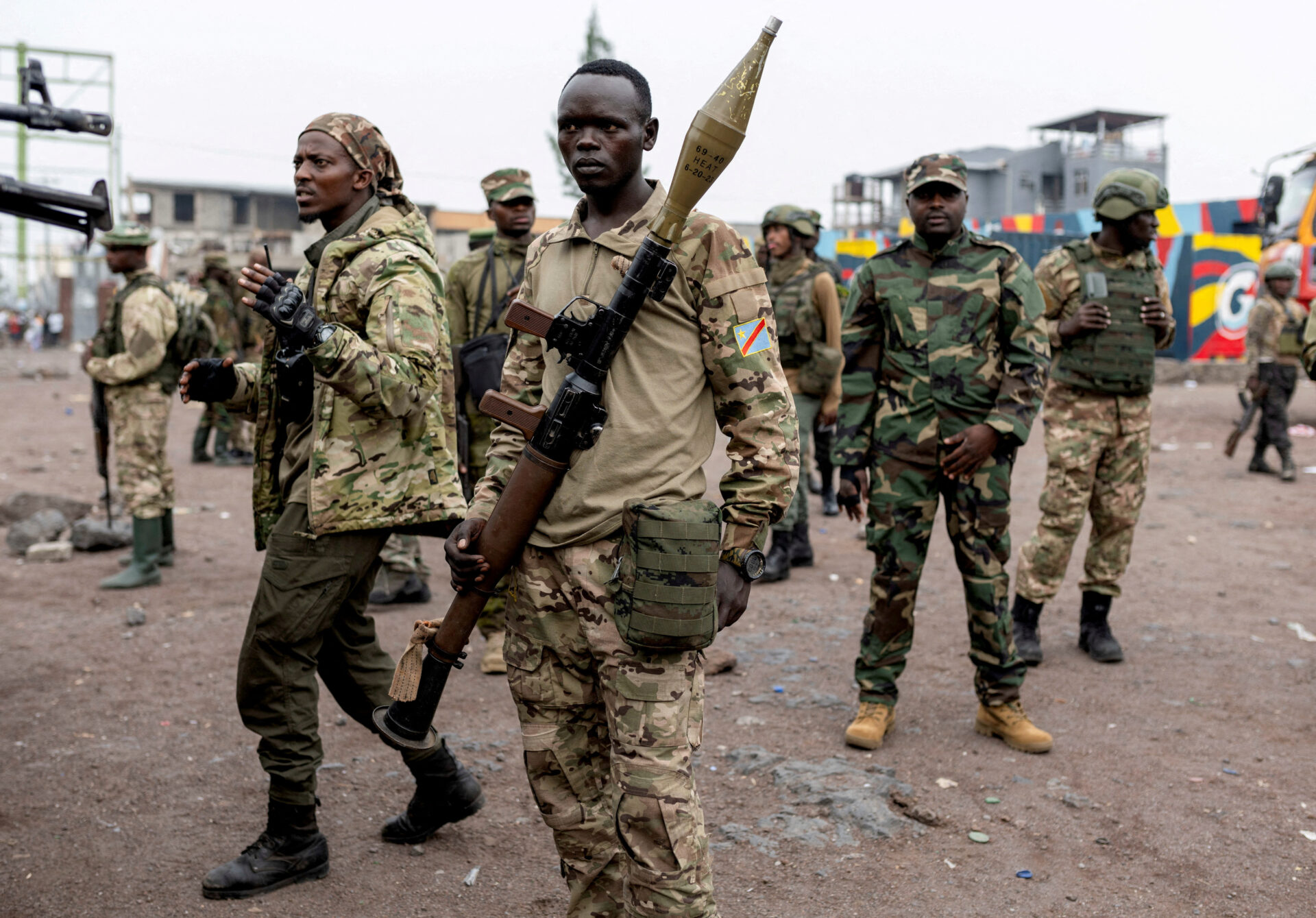
President Paul Kagame has accused that neighboring Burundi is intensifying the longstanding conflict in eastern DR Congo, highlighting that over 20,000 Burundian troops have been stationed in North Kivu and South Kivu provinces, where they have been engaged in assaults on civilians.
On Wednesday, December 11, following the swearing-in ceremony of newly appointed government officials, Kagame remarked that Burundi’s military presence in eastern DR Congo has emerged as a significant catalyst for violence, while Rwanda continues to bear the blame from the international community.
Burundi has stationed over 20,000 troops in strategic areas of eastern DR Congo, such as Uvira, Kalimi, Kindu, Walikale, and Kisangani. Kagame noted that these troops are not merely present; they are actively involved in combat operations against the Banyamulenge population.
“You find yourself questioning the actions of these Burundians as they engage in bombing and killing residents in Minembwe,” President Kagame stated.
Even with Burundi’s military involvement, President Kagame noted that the international community swiftly pointed fingers at Rwanda following the recent takeover of Uvira by the AFC/M23 movement.
“Following the recent capture of Uvira, the international community swiftly placed blame on Rwanda.” “We are now bearing those burdens,” he stated, emphasizing that Rwanda continues to face threats and sanctions for an issue that is widely understood yet deliberately overlooked.
That works for us. “However, we also wish to select the reasons for which we are held accountable,” he stated.
President Kagame disclosed that he had a personal conversation with Burundi’s President Evariste Ndayishimiye regarding the deployment shortly after Burundi decided to stay in eastern DR Congo, despite the East African Community Regional Force (EACRF) being withdrawn in 2023.
When Kagame raised concerns about the deployment in regions such as Goma and Rutshuru, which are distant from the South Kivu areas where Burundi alleged its security threats began, Ndayishimiye refuted the presence of troops in those locations.
“He declined and inquired about the source of my information regarding the absence of Burundian troops in the northern region of eastern DR Congo,” Kagame stated, noting that the evidence surfaced promptly.
A coalition overlooked
President Kagame stated that the troops from Burundi have allied with the Congolese army, FARDC, as well as the FDLR militias. The latter refers to a terrorist militia supported by Kinshasa, composed of remnants from those responsible for the 1994 Genocide against the Tutsi in Rwanda.
The President stated that Rwanda had taken action to ensure AFC/M23’s withdrawal from Walikale, with the assurance that this would lead to dialogue. As soon as M23 pulled back, the Congolese army and its coalition took back the territories and launched an attack on M23.
The Head of State rejected assertions that hostilities intensified following Rwanda’s signing of the Washington Accords on December 4.
The escalation existed prior to our signing, not subsequent to the signing of the peace accords. However, I continue to encounter false information suggesting that the conflict began after we signed,” he stated.
Kigali willingly signed the agreement and expressed readiness to uphold its commitments, he reiterated, emphasizing that all parties must be held accountable.
Each individual faces their own portion of this issue, and they ought to be held accountable. Whether it’s DR Congo, Burundi, or us. “We will not be held accountable for the actions of others,” he stated.
On Tuesday, December 10, the AFC/M23 movement declared that it had taken control of Uvira, a key city in South Kivu, after several days of conflict that began in early December. Uvira stands as the second largest city in South Kivu Province. The capital, Bukavu, has remained under rebel control since February.