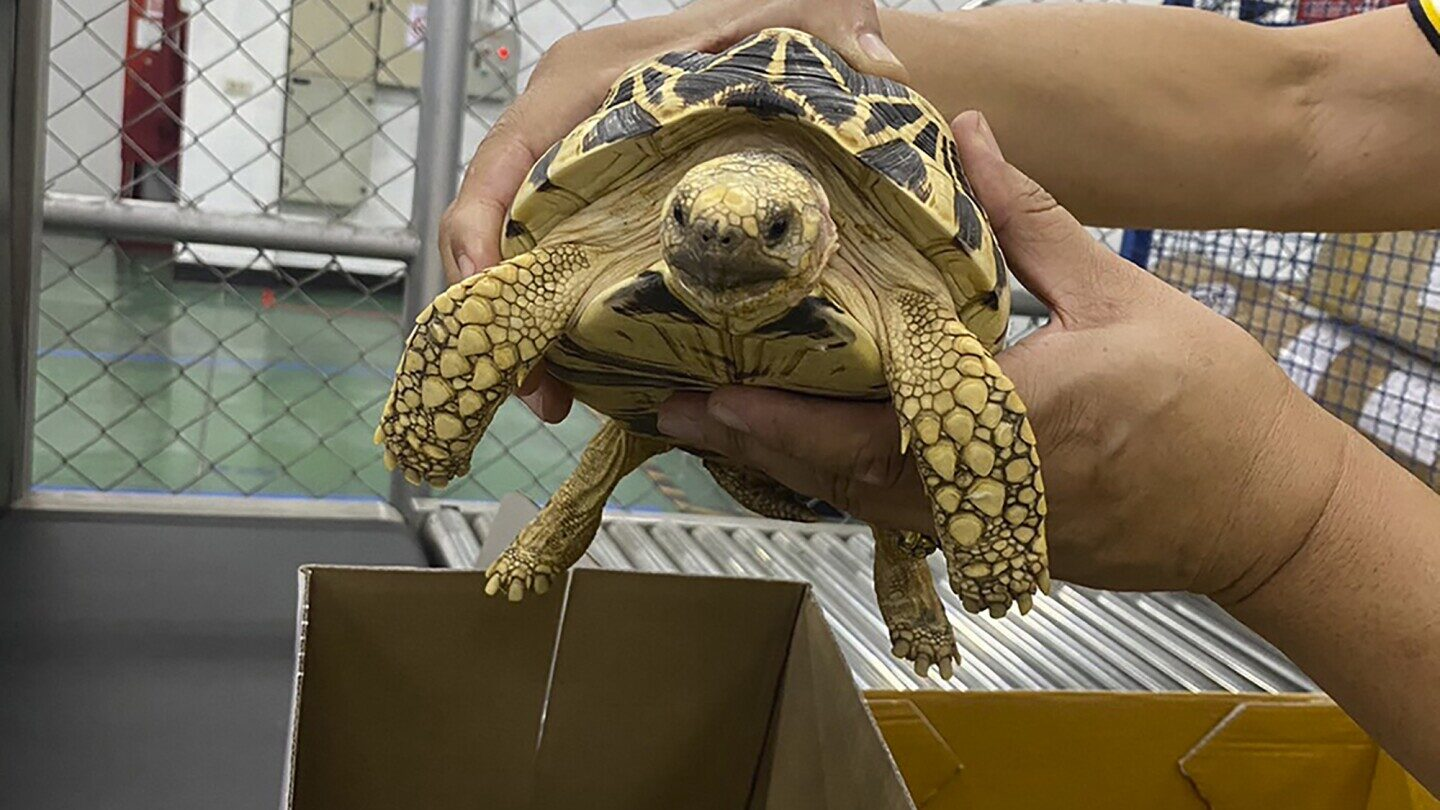
30,000 live animals, 5.8 tonnes of bushmeat, and significant plant and timber captures were found globally as a result of Operation Thunder 2025.
According to Interpol and the World Customs Organization (WCO), a month-long international campaign against illegal wildlife trafficking has led to the identification of 1,100 suspects and the seizure of around 30,000 live animals.
Operation Thunder 2025 was a multinational operation that took place in 134 nations between September 15 and October 15. A record haul of protected animals, plants, and illegally logged timber was found during 4,640 seizures by police, customs, border agents, and wildlife authorities.
The results, according to authorities, show that the illicit market is expanding quickly from Africa to Europe, Asia, and the Americas.
The increase in the bushmeat trade was one concerning trend, with antelope, giraffe, zebra, and primate meat being confiscated in several nations. A record 5.8 tons of bushmeat were confiscated globally, according to officials, with a large portion of that amount traveling from African nations into Europe.
Over 245 tonnes of protected marine species, including thousands of shark fins, were seized as a result of an increase in marine trafficking.
A significant rise in the smuggling of small foreign species, including around 10,500 butterflies, spiders, and other arthropods—many of which are protected under CITES—was discovered during the investigation. According to Interpol, eliminating these species puts ecosystems at risk and may result in the introduction of invasive diseases or pests.
Illegal timber exports topped 32,000 cubic meters, and illegal plant trafficking reached unprecedented heights with over 10 tons recovered.
Significant incidents were documented worldwide, such as the seizure of 17,000 abalone and pangolins by South Africa, the confiscation of over 10,000 birds and insects by Indonesia, the recovery of over 100 pieces of ivory by Tanzania, the dismantling of a wildlife trafficking network by Brazil, and the interception of over 1,300 primate body parts by North American authorities via mail.
According to the findings, wildlife crime is increasingly closely linked to other illicit activities, “from drug trafficking to human exploitation,” according to Interpol Chief Valdecy Urquiza. Customs authorities continue to be the “frontline defense” against the growing trade, the WCO added.
In order to guide future investigations as the illegal wildlife trade grows in spite of international sanctions, the data collected during the operation will now be used to map global trafficking routes and identify important criminal networks.