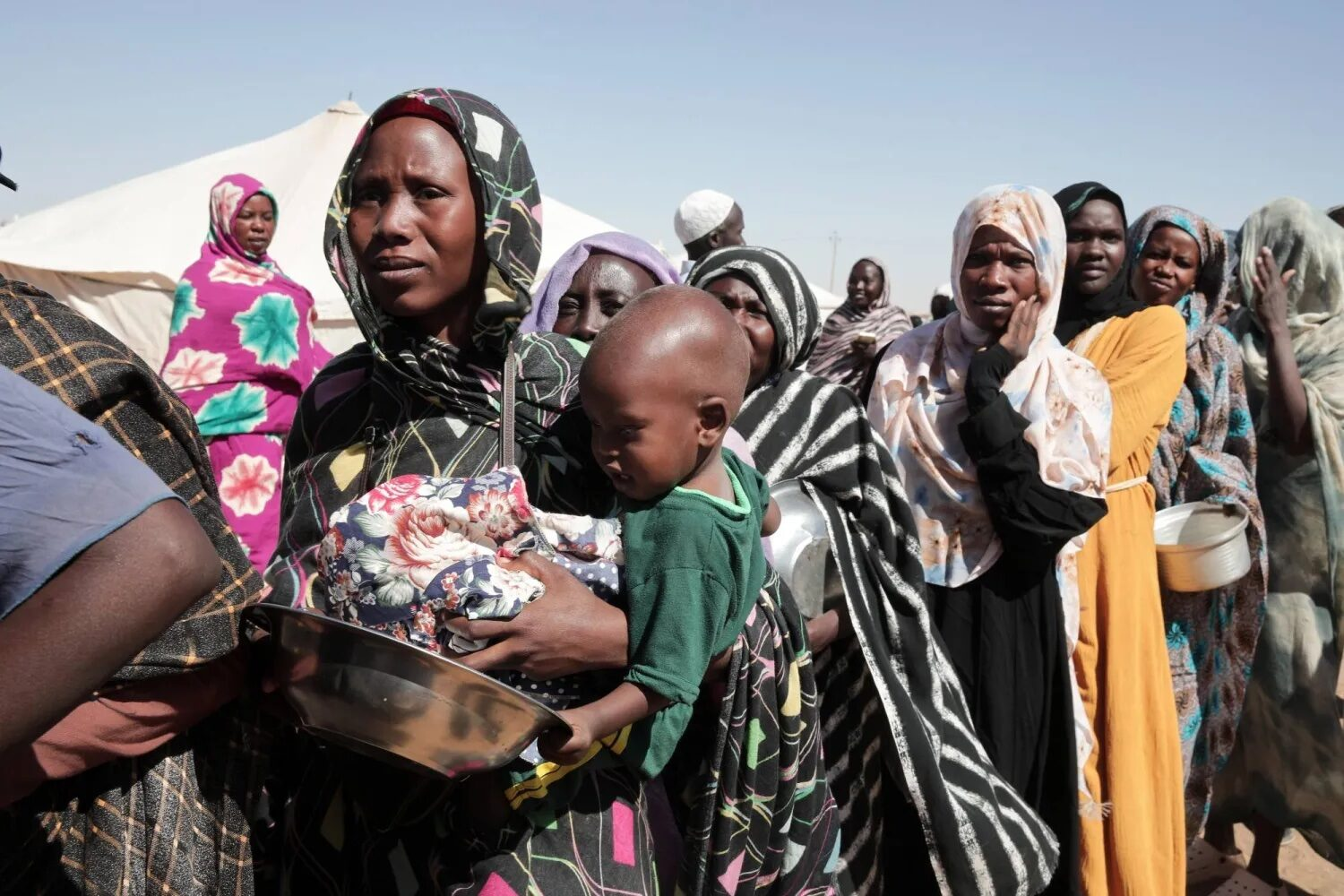
The UN warned that millions would be left without life-saving help if donor support declined, so it cut its 2026 relief appeal in half.
Citing a sharp decline in global donor financing at a time when humanitarian needs are at their greatest point in decades, the UN has launched an emergency humanitarian appeal for $23 billion for 2025—barely half of what it had initially intended.
The organization acknowledged in a gloomy statement on Monday that the lower appeal will unavoidably leave out tens of millions of vulnerable individuals because aid organizations are forced to concentrate exclusively on those in the most dire circumstances due to declining contributions.
Only $12 billion of this year’s financing needs had been satisfied by November, according to UN data, the lowest amount in ten years and not enough to fulfill a fifth of the world’s humanitarian needs. The situation is made worse by aid organizations’ struggles with worsening security in war areas and restricted access to impacted communities.
The 2026 plan notes that over 250 million people worldwide need immediate aid, while also identifying 87 million whose lives are thought to be in imminent risk. Even with the lowered pitch, the UN still wants to reach 135 million people, which, if funds were available, would cost $33 billion.
UN assistance chief Tom Fletcher told reporters, “In the end, the cuts are forcing us into these tough, tough, brutal choices that we’re having to make.”
He declared, “We are underfunded, overstretched, and under attack.” The ambulance is then driven in the direction of the fire. In your place. Now, however, we are also being asked to extinguish the fire. Furthermore, the tank is not filled with enough water. And they’re shooting at us.
With $4 billion, the largest single request is for the occupied Palestinian territories, especially Gaza, where a two-year Israel-Hamas conflict has left nearly all of the 2.3 million residents displaced and nearly entirely dependent on charity.
The second and third most serious humanitarian crises that demand immediate international assistance are Sudan and Syria, respectively.
Nearly all of the funding for the UN’s humanitarian agencies comes from voluntary donations, mostly from Western countries. Although the United States continues to be the greatest donor, even with recent decreases under the Trump administration, its funding portion has drastically decreased, falling from more than one-third of total contributions in prior years to 15.6% in 2025.
This decrease and the increase in world unrest create worries that more people will go without the life-saving assistance they require.