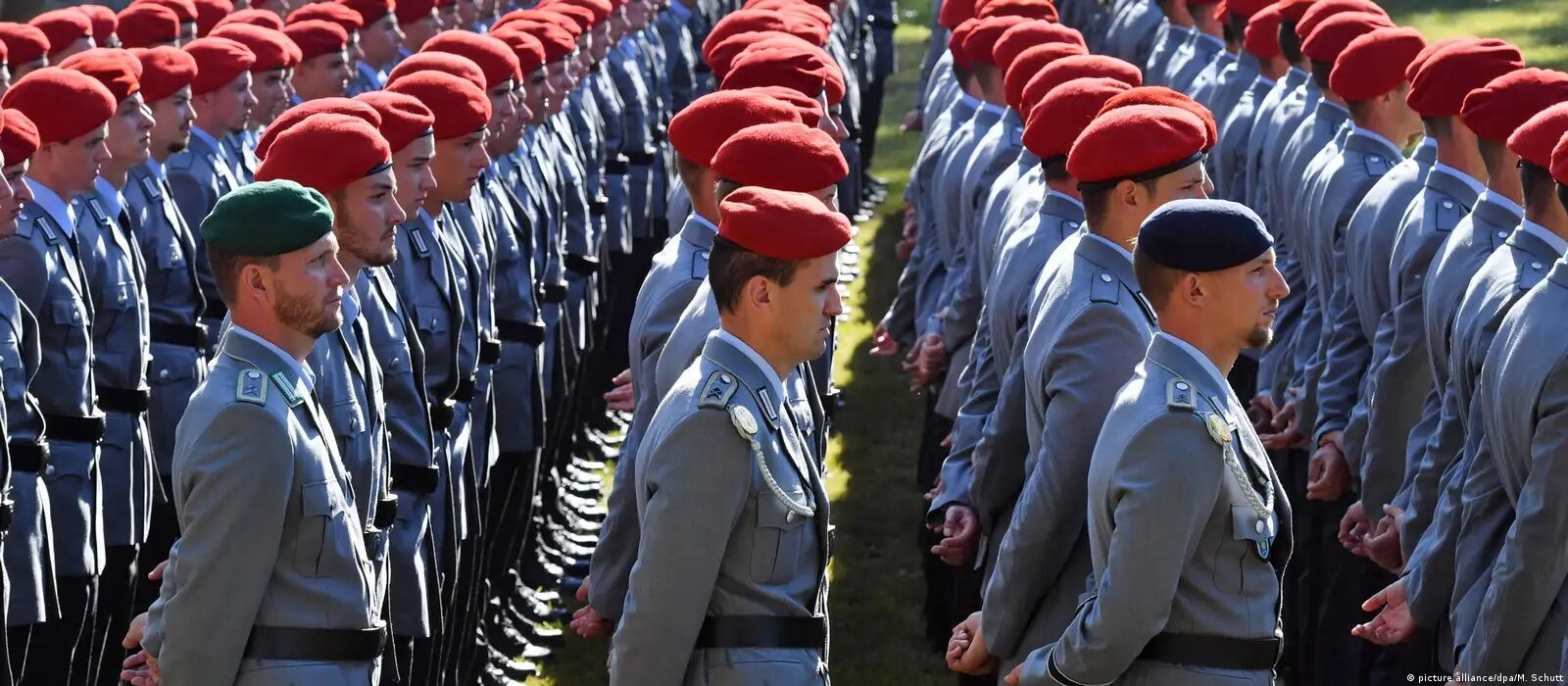
Germany has authorized 18-year-olds to enlist in the military voluntarily starting in 2026.
In reaction to Russia’s full-scale invasion of Ukraine, the Bundestag, the German parliament, has decided to implement a new voluntary military service program to bolster the country’s defense capabilities. The decision supports Chancellor Friedrich Merz’s goal of creating the most powerful conventional army in Europe and represents a significant change in Germany’s defense strategy.
Starting in January 2026, all 18-year-olds in Germany will be sent a questionnaire asking if they would be interested in joining the military under the new system. For men, the questionnaire will be required; for women, it will be optional. The framework will permit mandatory enrollment in the future in the event that national security deteriorates or volunteer numbers are insufficient, despite the government’s stress that service would remain voluntary for the time being.
Young Germans have largely opposed the reform. Up to 90 cities’ worth of students have declared their intention to go on strike on Friday in protest.
In a statement posted on social media, the organizers warned that “war offers no prospects for the future and destroys our livelihoods.” They added, “We don’t want to spend half a year of our lives locked up in barracks, being trained in drill and obedience and learning to kill.”
Around 1,500 pupils are anticipated to participate in the protests in Hamburg alone, leading school administrators to advise parents against removing their children from class to participate in the demonstrations.
By approving the change by a vote of 323 to 272, Germany became the most recent country in Europe to reinstate or extend national service programs. France launched a 10-month volunteer military training for youths between the ages of 18 and 19 just last month.
All 18-year-old men in Germany will undergo universal medical exams starting in July 2027 to assess their suitability for possible military duty. According to defense minister Boris Pistorius, the tests were required to make sure Germany could promptly identify people who could provide “homeland protection” in the case of an attack.
There are now about 182,000 soldiers in Germany’s Bundeswehr. With a long-term objective of increasing numbers to 260,000 soldiers by the early 2030s—supported by roughly 200,000 reservists to meet new NATO requirements—Pistorius hopes to expand this by 20,000 within a year.
Following the end of the Cold War, the Bundeswehr was drastically reduced in size; its force strength plummeted in the 1990s, and Angela Merkel formally eliminated mandatory military service in 2011. But rising security concerns, especially American pressure and Russian aggressiveness, have forced a reconsideration.
A monthly compensation of €2,600, one of the highest incentives in Europe, will be given to voluntary recruits. By contrast, volunteers in France receive at least €800 a month.
The Bundestag was scheduled to vote on a contentious pensions reform package that would maintain constant state pension levels until 2031 in addition to the military service change. The proposal is essential to the coalition deal between Merz’s conservatives and the Social Democrats, who hold a precarious 12-seat majority in the Bundestag.
Threatening to oppose the plan, younger conservative MPs said it was unjust to future generations and not fiscally viable. To lessen the number of votes required for passing and allay fears of a government collapse, the opposition Left Party has stated that it will abstain.
The administration has breathing room as it moves forward with its biggest defense reforms in more than ten years since the Left Party’s action seems to have narrowly avoided a serious political crisis.