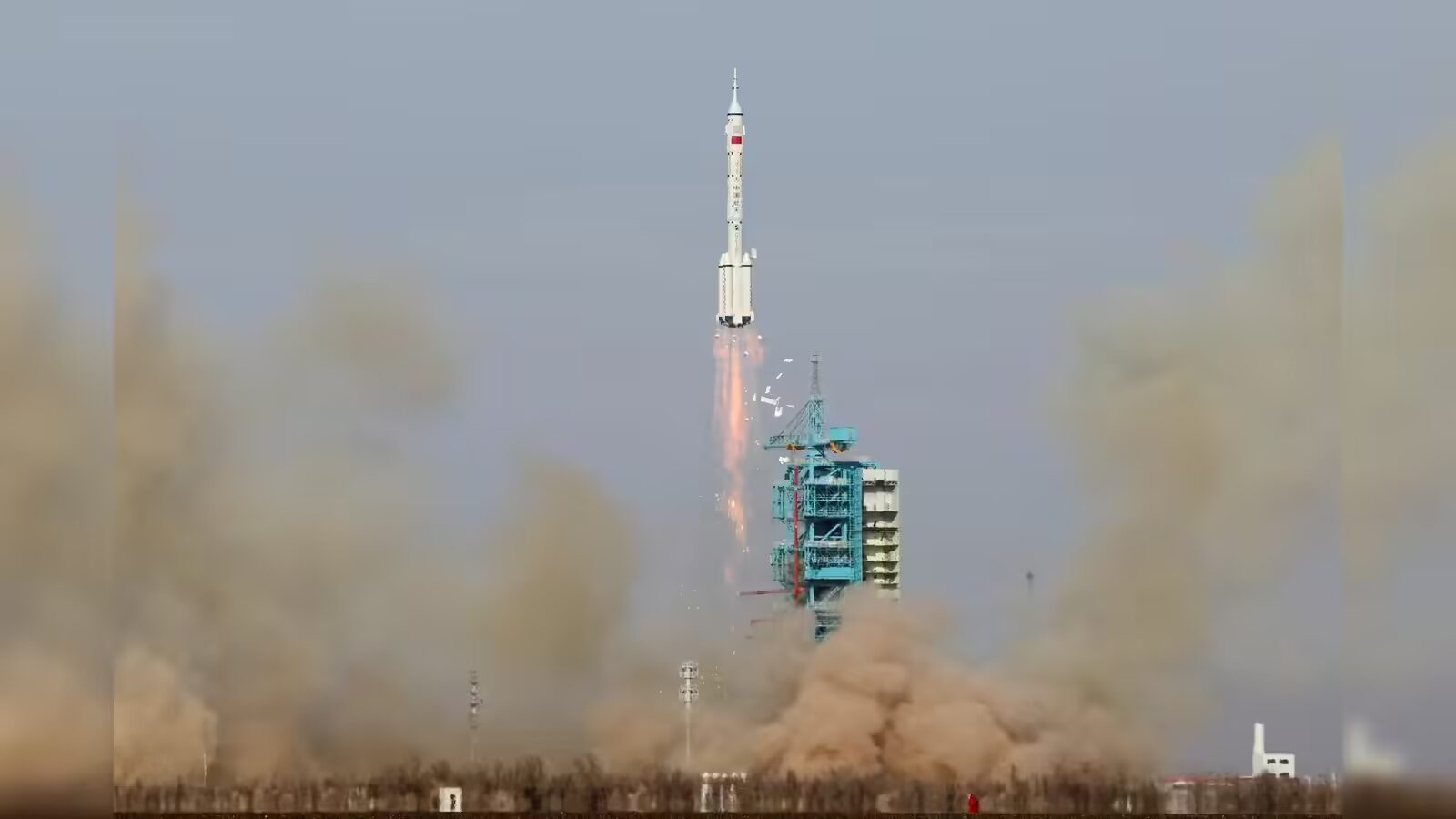
China has initiated an emergency rocket mission to rescue three astronauts who are currently stranded on the Tiangong space station.
China has initiated the launch of an uncrewed spacecraft to ensure a secure return option for three astronauts currently stationed aboard the Tiangong space station, following damage to a previously planned return vehicle that left them without a means to return to Earth.
The Long March-2F rocket, carrying the Shenzhou-22 spacecraft, lifted off from the Jiuquan Satellite Launch Centre shortly after noon local time (04:00 GMT) on Tuesday, as showcased by state broadcaster CCTV. The mission, initially scheduled for 2026 as a crewed flight, has been expedited due to debris damage to the Shenzhou-20 spacecraft, currently docked at the station and considered unsafe for human transport.
The incident interrupted the final crew change in November, compelling the current trio—astronauts Zhang Lu, Wu Fei, and Zhang Hongzhang—to stay aboard Tiangong without a flightworthy vessel for emergency return. Officials have confirmed that the astronauts are “working normally” as Shenzhou-22 offers a dependable emergency return option.
The Shenzhou-22 mission underscores an unusual setback for China’s swiftly advancing space programme, which has poured billions into building capabilities to compete with those of the United States, Russia, and Europe. In 2022, China achieved the milestone of becoming the third nation to launch humans into orbit, following the United States and the former Soviet Union, with aspirations to send astronauts to the moon by 2030.
The launch highlights Beijing’s dedication to sustaining a continuously crewed space station and prioritizing the safety of its astronauts while broadening its presence in space.