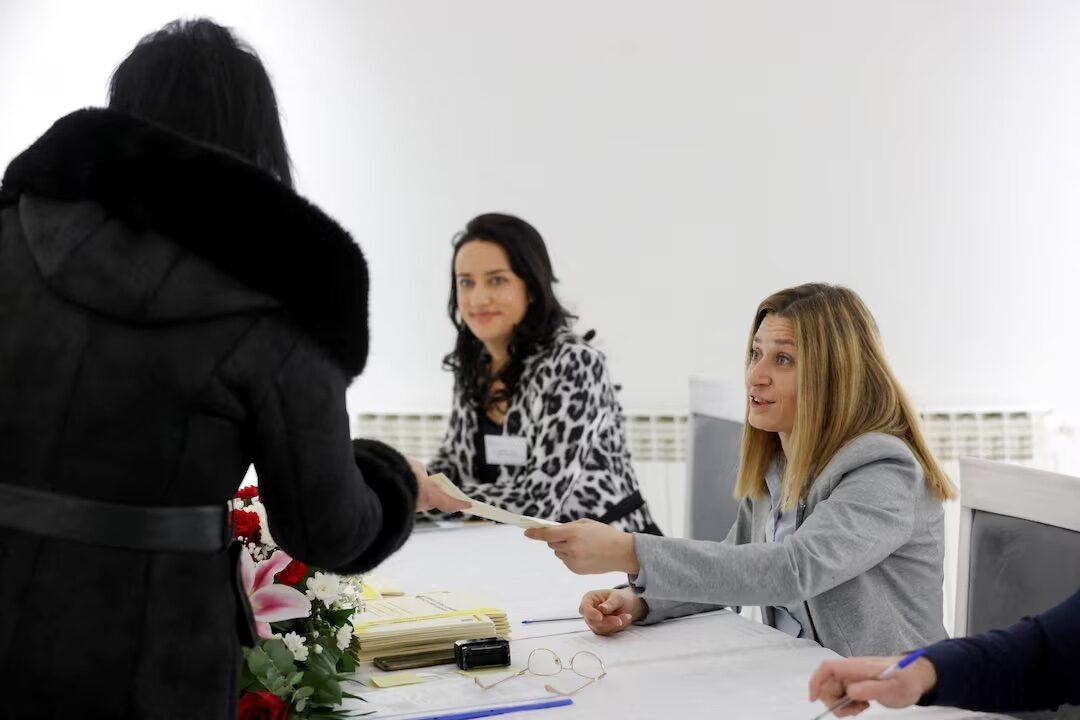
Polls closed swiftly in a snap vote for a new president of Bosnia’s autonomous Serb Republic on Sunday, following the removal of former president Milorad Dodik from office and his six-year ban from politics.
The presidential vote will decide if the Bosnian Serb-dominated region shifts away from Dodik’s nationalist agenda or persists with separatist policies that threaten the internal unity of the delicate Balkan country.
Zeljko Bakalar, a member of the central election commission, stated that preliminary figures indicate turnout at slightly above 31%. Over 1.2 million individuals qualified to cast their votes.
The preliminary election results will be published by the central election commission at 2200 GMT.
Observers from various non-governmental organizations reported irregularities, including shortages of electoral materials at certain polling stations, breaches of the pre-election news blackout, restrictions on election observation, and pressure exerted on voters.
The concluding race is anticipated to feature two leading contenders among six candidates – Dodik’s associate Sinisa Karan from his ruling Alliance of Independent Social Democrats, and opposition candidate Branko Blanusa of the Serb Democratic Party. The presidential term will be shorter than a year, as a general election is set for next October.
The majority of voters in Banja Luka, the region’s largest city, expressed a lack of optimism regarding the potential for change.
“There is nothing to be expected,” remarked Bozidar Knezevic. “We must navigate this situation independently.”
Postwar Bosnia consists of the Serb Republic and the Federation, which is shared by Croats and Bosniaks, connected through a fragile central government.
‘Support Dodik’
In February, pro-Russian separatist Dodik was found guilty of disregarding the constitutional court and an international peace envoy, resulting in Bosnia’s most significant political crisis since the conclusion of its brutal war three decades ago.
He consistently dismissed the verdict, which was confirmed by an appeals council in August and the constitutional court earlier this month, but in October unexpectedly designated a trusted ally as his temporary successor.
The authority of the region’s presidents is largely ceremonial; however, Dodik, who has occupied key government positions in the Serb region for the majority of the past 25 years, has consolidated all executive powers throughout his tenure.
Karan, presently the minister of scientific and technological development for the Serb Republic, has run his campaign with the slogan that casting a vote for him equates to a “vote for president Dodik.” Posters featuring the two of them smiling together have been displayed across the region.
Blanusa is a university professor and a fresh presence in the political arena. He enjoys the backing of the majority of Serb opposition parties and has committed to combating corruption and the “state capture” of resources within the Serb Republic.