The Israeli military reported that an airstrike on a southern suburb of Beirut on Sunday resulted in the death of Hezbollah’s top military official, despite a truce brokered by the U.S. a year prior.
The military reported that the strike, the first in months on the outskirts of the Lebanese capital, aimed at Ali Tabtabai, the acting chief of staff for Iran-backed Hezbollah.
Hezbollah announced the death of Tabtabai in a statement, expressing sorrow over the loss of “the great jihadist commander” who had “dedicated his life to confronting the Israeli enemy until his final moments,” highlighting his prominence, though specifics regarding his role were not provided.
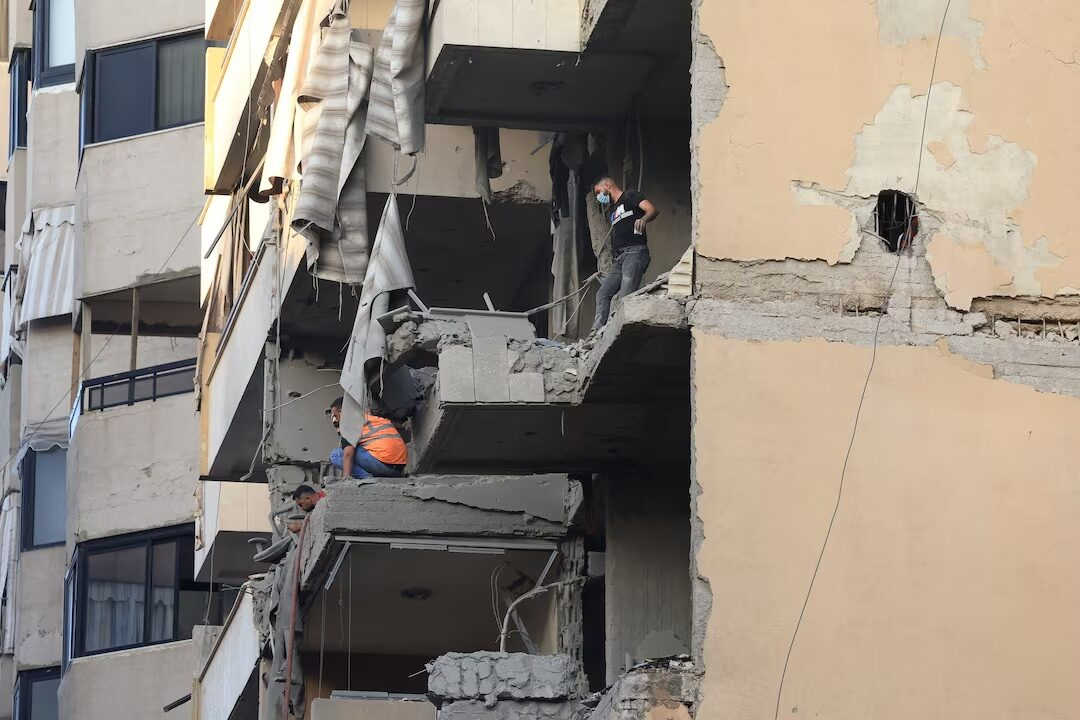
According to Hezbollah official Mahmoud Qmati, Israel’s strike has crossed a “red line” as he stood near the bombed-out building in the Haret Hreik suburb, a stronghold of Hezbollah.
The leadership of Hezbollah would determine the group’s response and the manner in which it would be executed, he noted.
FIVE LIVES LOST IN STRIKE
The health ministry of Lebanon reported that the strike resulted in the deaths of five individuals and left 28 others injured. A multi-storey building was struck, causing debris to tumble onto the cars on the main road beneath.
A Reuters reporter noted that individuals hurried from their apartment buildings, apprehensive about additional bombardment.
In 2016, the United States placed sanctions on Tabtabai, recognizing him as a significant leader within Hezbollah and announcing a reward of up to $5 million for any information regarding his whereabouts.
The statement from the Israeli military indicated that Tabtabai “led the majority of Hezbollah’s units and made significant efforts to prepare them for conflict with Israel”.
In a brief televised address, Israeli Prime Minister Benjamin Netanyahu stated that Israel would not permit Hezbollah to reestablish its forces and expressed his expectation for the Lebanese government “to meet its obligation to disarm Hezbollah.”
Lebanese President Joseph Aoun called on the international community to take action to stop the Israeli attacks.
A week before Pope Leo’s anticipated arrival in Lebanon for his inaugural foreign trip, many Lebanese are expressing hope that the visit may herald a brighter future for the country.
The ceasefire in November 2024 aimed to conclude a year of conflict between Hezbollah and the Israeli military, which was initiated by Hezbollah’s rocket attacks on Israeli positions following the October 7, 2023 assault by its Palestinian ally, Hamas.
Since the truce, Israel has maintained almost daily strikes on Lebanon, focusing on what it claims are Hezbollah arms depots, fighters, and the group’s attempts to rebuild. It has intensified those strikes in recent weeks.
When asked whether Israel had informed the U.S. prior to executing the strike, Israeli government spokesperson Shosh Bedrosian stated that Israel makes decisions on its own.
Israel has already eliminated a significant portion of Hezbollah’s leadership.
Israel removed a significant portion of the group’s leadership throughout the year-long conflict, including its then-leader Hassan Nasrallah.
Since 2024, Israel and Lebanon have exchanged accusations regarding violations of the ceasefire.
Lebanon asserts that Israel’s ongoing strikes and occupation of five southern posts within Lebanese territories constitute significant violations. Aoun expresses his willingness to engage in negotiations; however, he has yet to receive a favorable reply from Israeli officials.
Israel has accused Hezbollah of attempting to regroup in the south and is urging Lebanon to take more decisive action in seizing all unauthorized weapons throughout the country, including those belonging to Hezbollah.
Hezbollah has refrained from firing on Israel since the ceasefire began and asserts that it is adhering to the agreement.