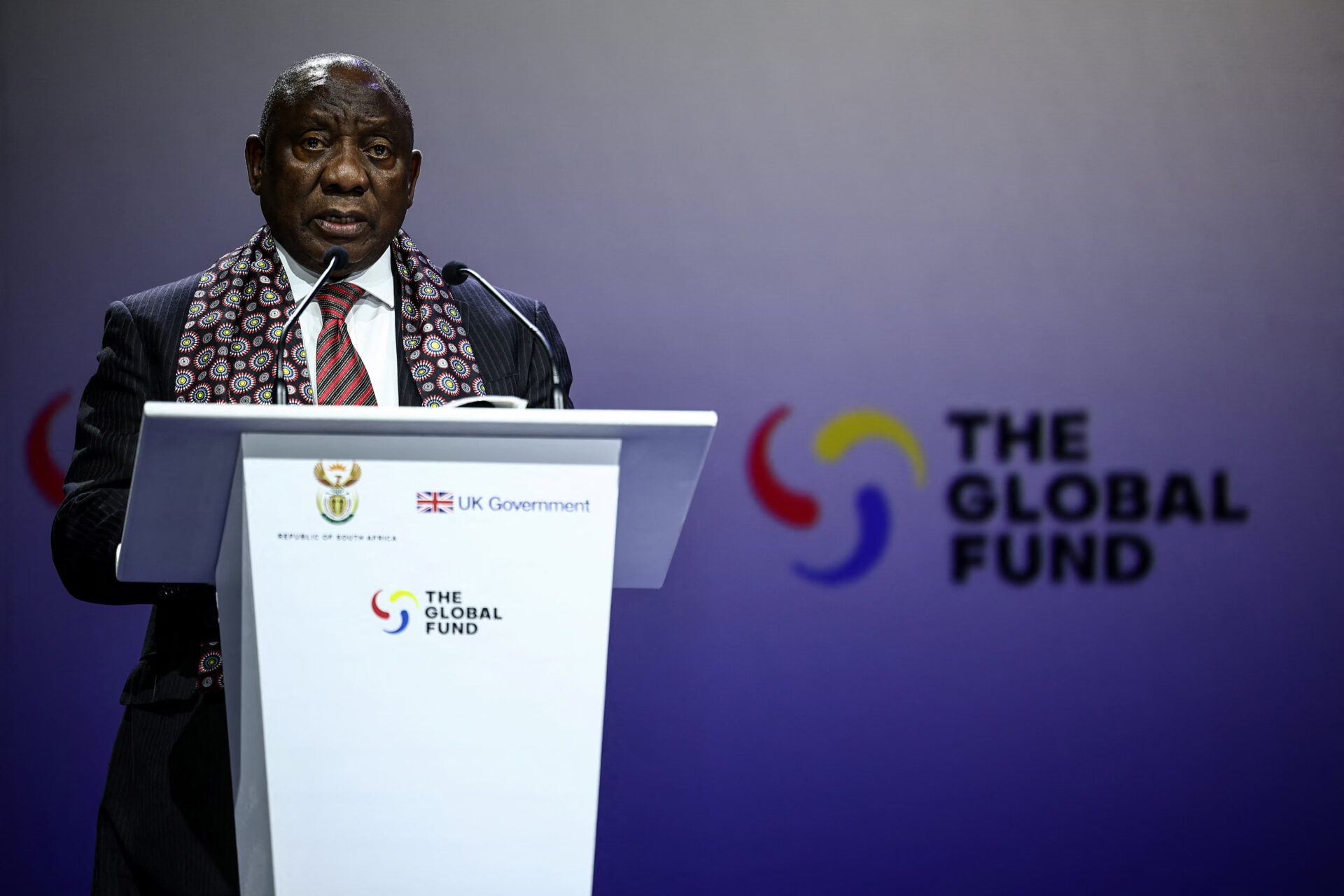
At an event in Johannesburg on Friday, a global health program that fights AIDS, TB, and malaria raised $11.34 billion, falling short of its goal for work from 2027 to 2029.
The Global Fund to Fight AIDS, Tuberculosis and Malaria, based in Geneva, is attempting to raise $18 billion for its operations in a difficult environment for funding global health that has seen several major contributors pull out after President Donald Trump’s aid reform in the US.
Peter Sands, executive director of the Global Fund, stated, “Money will be tight, so we must be smarter,” during the gathering on the fringes of the Group of 20 summit, which unites the 20 largest countries in the world.
He declared that “the old model” of development assistance was obsolete and that nations needed to become more self-sufficient, but he cautioned that a change too quick would sabotage advancement.
In 2026, Sands said, the Global Fund intends to reduce operating expenses by 20%.
The US has committed $4.6 billion. The United States has historically been the main contributor to the Global Fund; in 2022, former President Joe Biden hosted the previous fundraising event and pledged $6 billion, however the new administration has yet to deliver the entire amount.
The current gap has already prompted the Global Fund to warn countries that their current grants for projects will be reduced until the end of 2026.
The organization claims that since its founding in 2002, it has helped governments provide life-saving supplies including insecticide-treated malaria nets, antiretroviral medicine for HIV, and TB treatments, saving 70 million lives.
The Global Fund sought to raise $18 billion in 2022 as well, but ultimately raised slightly over $14 billion at the pledging event, earning $15.7 billion.