Trump’s idea to establish an international military and governance board in Gaza is supported by the UN, but Hamas opposes it as foreign domination.
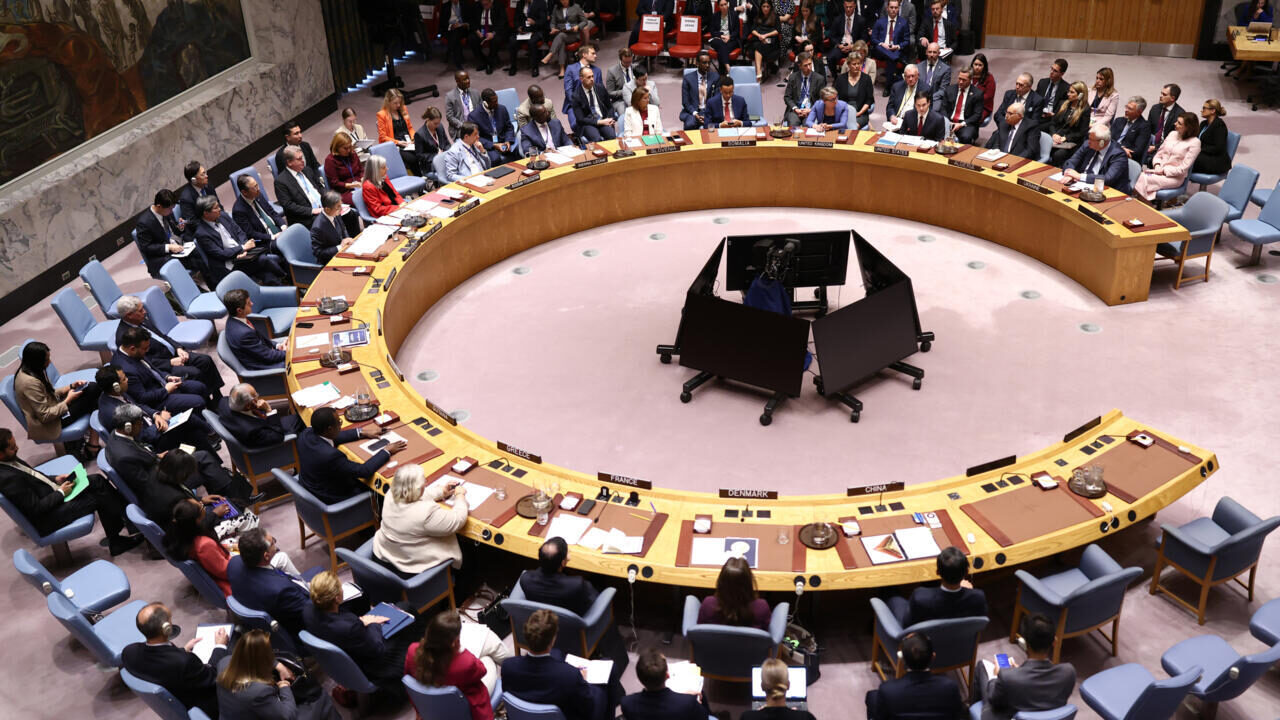
In a resolution written by the United States, the UN Security Council endorsed President Donald Trump’s 20-point plan for Gaza, which included the establishment of a new transitional governance structure and an International Stabilization Force (ISF).
Russia and China abstained, allowing the resolution to pass without opposition, while 13 member nations, including the UK, France, and Somalia, voted in favor. The resolution is among the most important UN rulings on Gaza since the war began.
UN Secretary-General António Guterres’ spokesperson described the approval as “an important step in consolidating the ceasefire,” but there would need to be a lot of coordination on the ground for it to be put into effect.
Hamas said that the plan violated Palestinian sovereignty and promptly rejected the Security Council’s ruling.
On Telegram, the organization claimed that the resolution “imposes an international guardianship mechanism” on Gaza and charged that the proposed ISF was supporting Israel.
“It loses its neutrality when the international force is given tasks inside the Gaza Strip, like disarming the resistance,” Hamas continued.
In accordance with the resolution, the ISF will work with Israel, Egypt, and a recently trained Palestinian police force to protect border regions and supervise the long-term disarmament of armed non-state actors, such as Hamas. In addition, the force would assist with tunnel demolition, weapon removal, and civilian protection.
Mike Waltz, the US ambassador to the UN, stated that the ISF will be in charge of “securing the area, supporting the demilitarization of Gaza, dismantling terrorist infrastructure, removing weapons, and ensuring the safety of Palestinian civilians.”
The Board of Peace (BoP) was established as a transitional organization by the Security Council with the responsibility of overseeing government, restoring institutions, and organizing humanitarian and reconstruction activities. Gaza’s rehabilitation following two years of conflict will be funded by a trust fund supported by the World Bank.
The decision, which Trump praised as “historic,” was seen as an international endorsement of the BoP, which he is slated to chair.
The approved resolution, in contrast to previous drafts, included wording that Arab states insisted on including, namely, a pathway for Palestinian self-determination and statehood. A major barrier to future political talks is Israel’s ongoing opposition to the creation of a Palestinian state.
The council’s resolution must “translate into concrete action,” according to Guterres’s spokesperson, and support the resuscitation of a legitimate political process that aims to secure a two-state solution.
China and Russia supported the resolution but criticized it for not ensuring direct UN control and for not being clear about the makeup of the ISF and BoP.
While both countries abstained out of respect for the Palestinian Authority and the eight Arab and Muslim-majority governments who backed the measure, they claimed the wording did not adequately reiterate the importance of the two-state solution.
The first part of Trump’s proposal, which included a ceasefire between Israel and Hamas as well as the release of detainees and hostages, started on October 10. Waltz referred to the precarious respite in combat as “a fragile, fragile first step.”
On October 7, 2023, militants led by Hamas assaulted Israel, killing almost 1,200 people and taking 251 captives. This marked the start of the war. The health ministry controlled by Hamas claims that Israeli military operations in Gaza have killed at least 69,483 Palestinians since then.