Why gospel musicians from Rwanda are using Kiswahili
Kiswahili has long been used in Rwandan music by artists, but the trend is currently taking a different turn and sweeping the country’s gospel sector.
Many of the nation’s best gospel artists are now gaining international notoriety for their songs in addition to releasing them exclusively in Swahili.
However, what is behind this expanding trend?
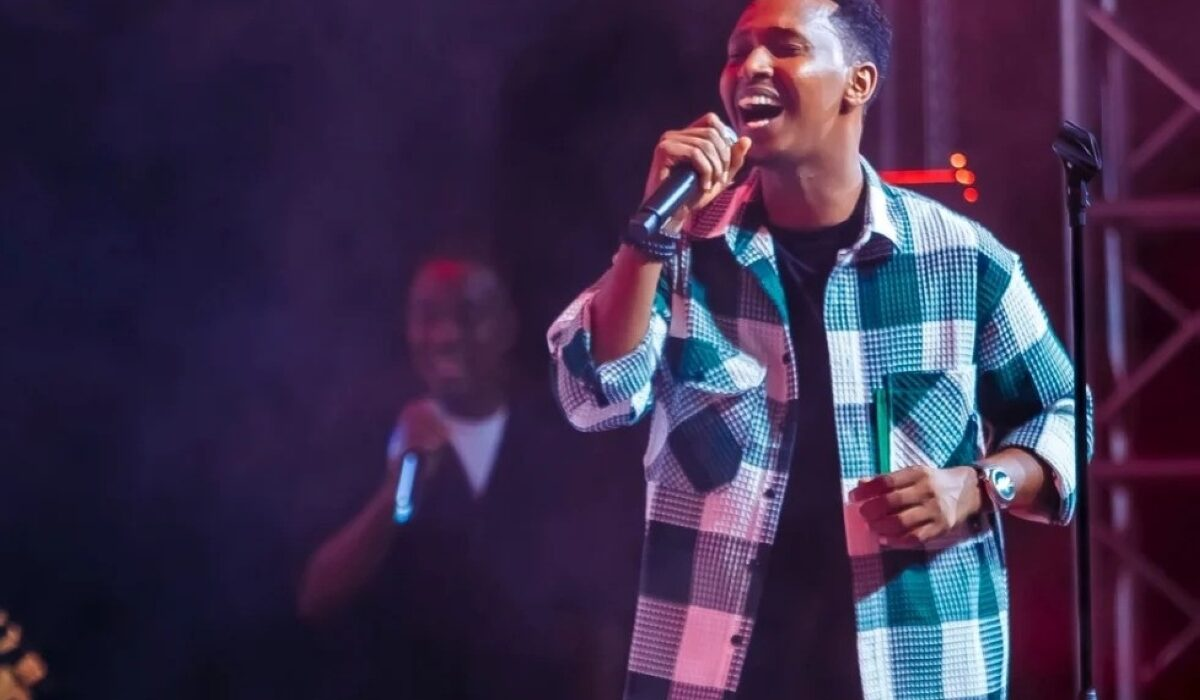
Israel Mbonyi won the Tanzania Gospel Music Awards’ Best International Worship Artist title earlier this year with his song Sikiliza. The Swahili composition of the song was partly responsible for its popularity.
To date, the 2024 track has received over 22 million views on YouTube, with Tanzanian and Kenyan audiences showing a particular affinity for it. This came after a run of Tanzanian concerts, including one when the prize was presented in Mlimani.
With more than 85 million views, his previous Swahili hit, Nina Siri, written in the same language, continues to be the most viewed Rwandan gospel music on YouTube.
Several gospel musicians from Rwanda have done the same in recent years.
The Swahili song “Emmanuel” by Vestine and Dorcas received about 10 million views, while Swahili songs by artists such Chryso Ndasingwa, Elie Bahati, and Tonzi have also expanded their audience.
Language as a link between regions
The New Times interviewed gospel musicians and industry leaders to learn more about the driving forces behind this change.
Chryso Ndasingwa, a well-known gospel singer, sees the relationship as both spiritual and musical. Ndasingwa disclosed that in order to be proficient in Swahili for his worship service, he even had to enroll in classes.
Swahili has a lovely rhythm and richness that give worship a really emotional mood. Nearly 500 million Christians in East Africa are connected by this language. In his opinion, Swahili is something greater, a voice of regional acclaim that cuts across boundaries,” he stated.
According to Ndasingwa, songs in Swahili serve as an emotional link between people, including those who are not fluent in the language.
“Emotionally, even people who don’t speak Swahili well can feel the anointing and message of Swahili songs.”
Swahili gospel has gained popularity in Rwanda, and on a regional level, it facilitates our artists’ ability to reach new audiences and form partnerships. “Watching that growth is beautiful,” he remarked.
He disclosed that he is now engaged in new projects that combine Swahili and English because he thinks that this linguistic diversity helps spread the Rwandan gospel throughout the region.
From the viewpoint of a veteran: “This didn’t start today”
One of Rwanda’s most revered gospel singers is Clementine Uwitonze, well known in the gospel music industry as Tonzi. She points out that while the scale is new, the pattern is not.
“I believe that gospel musicians from Rwanda did not begin writing songs in Swahili till recently. Some people, including myself, were already doing this before social media became popular, Tonzi stated.
But the digital age has significantly increased the impact, she said.
“It has advanced to a new level today because the internet, particularly YouTube, has made it simpler for musicians to quickly reach a large audience with their songs. The market grew as a result. The fact that many people speak Swahili, particularly in East Africa, is a great thing because it helps spread the word.
Tonzi underlined that Swahili releases have given artists access to opportunities both practically and spiritually.
“More doors open in various locations the more songs are listened to and enjoyed, and this might even result in real cash gains. “Artists can continue to create more music and live better lives, which sustainably supports their ministry,” she said.
A calculated step to expand globally
The Swahili change, according to gospel musician Elie Bahati, best known for his smash song “Uko Ngusabira,” is both artistic and strategic.
“Kiswahili is the most widely spoken language in Africa and one of the most widely spoken languages worldwide,” he stated. “From a strategic standpoint, it has a larger global audience than Kinyarwanda, our native tongue.”
Bahati also cited the recent success of Papi Clever & Dorcas and Israel Mbonyi, whose Swahili gospel songs have taken over East African playlists and inspired others to do the same.
“Almost everyone is now following that direction, hoping to experience the same impact, since their songs found huge success in the region,” he said.
Singing in Swahili is more than simply a fad for many Rwandan gospel performers; it’s a bridge. It strengthens their message of faith and solidarity and links them to the larger East African gospel movement.
The objective, according to Ndasingwa, is to develop worship that transcends cultural boundaries.
“We can reach hearts in different places by combining Kinyarwanda, Swahili, and English,” he said.
Kiswahili’s ascent in Rwanda
Originating near the East African coast, Swahili, also known as Kiswahili, is a Bantu language that has grown to be an important communication tool throughout the region.
In 2017, Swahili joined Kinyarwanda, English, and French as the fourth official language of Rwanda. The ruling was in line with the nation’s wider assimilation into the East African Community (EAC), which in 2023 formally acknowledged Swahili as a regional tongue.
Swahili is the fourth most spoken language in Rwanda, with approximately 4% of people aged 15 and older being literate in it, according to the 2022 Rwanda Population and Housing Census (RPHC5).