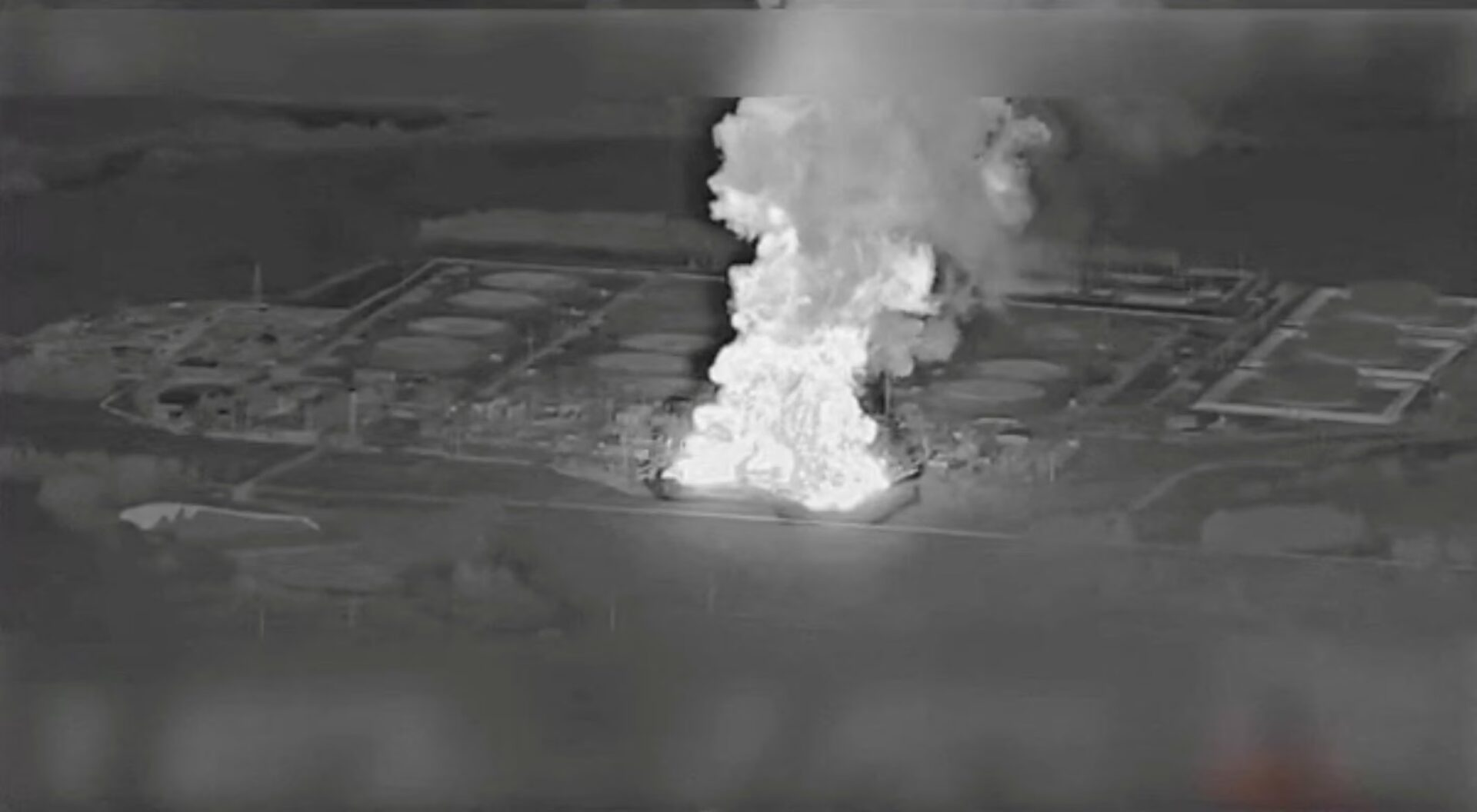
Russia continued to process oil by utilizing spare capacity and quick repairs in spite of Ukraine’s drone attacks on important facilities.
Despite Ukraine’s biggest drone effort to date, industry sources and data indicate that Russia’s oil refining has only decreased by 3% this year. By employing spare units and restoring damaged facilities, refineries were able to counteract the damage caused by the attacks and avoid a more severe drop in fuel production.
In an effort to damage Moscow’s main sources of war finance, Ukraine has increased long-range drone attacks deep inside Russian territory, focusing on refineries, depots, and pipelines. At least 17 significant refineries were hit by the majority of the strikes, which started in August 2025 and forced Russia to increase drone defenses and reduce petroleum exports.
According to estimates based on three unnamed Russian industry sources, attacks and scheduled maintenance temporarily eliminated almost 20% of Russia’s refining capacity between August and October, when the second wave peaked. Nevertheless, compared to the same time last year, total refining volumes decreased by only 6% to about 5.1 million barrels per day. About 220 million metric tons (5.2 million barrels per day) of oil were processed between January and October, a 3% decrease from 2024.
According to sources, Russian refineries that had been running below capacity prior to the assaults reduced losses by promptly repairing damaged facilities and restarting spare units at both damaged and unaffected plants. Although it is rarely used to its full potential, Russia’s overall refining capacity of about 6.6 million barrels per day gives operators flexibility in emergency situations.
Kyiv sees its drone campaign as a means of reducing Moscow’s oil earnings and restricting fuel supply to Russian forces. Russian crude oil and product sales revenue dropped to one of the lowest levels since the start of the war in 2022 in August, according to the International Energy Agency. According to President Volodymyr Zelenskiy, long-range strikes may have reduced Russia’s supply of gasoline by as much as 20%.
The domestic fuel market is stable, according to the Kremlin. Moscow will not yield to outside pressure, according to President Vladimir Putin’s pledge.
The drone assaults have had noticeable effects, even if Russian refineries have adjusted. Ryazan, Volgograd, Saratov, Tuapse, Ufa, and Astrakhan were among the six key facilities that Ukraine hit in the first quarter of 2025. According to data from the UK-based Open Source Centre, since August, at least 58 more attacks have targeted Russian energy sites, extending up to 2,000 km (1,200 miles) into Russian territory. Among the damaged refineries are Salavat, Kirishi, and Novokuibyshevsk.
Russia’s attempts to procure spare parts, many of which were first provided by Western companies that modernized Russian refineries over the previous 30 years, are made more difficult by Western sanctions. According to reports, Russian businesses have either imported substitutes from China, a crucial geopolitical ally, or created homegrown answers. According to industry sources, repairs may get distillation units back into operation in a matter of weeks, but they are expensive and may result in lengthier downtime if drone assaults continue.
According to analysts, Russia’s refining industry is resilient, demonstrating its ability to use spare capacity and make quick repairs. However, sustained strikes may make it more difficult for the nation to maintain production in the long run.