China’s retail sales and industrial output experienced its slowest rise in more than a year, putting more pressure on decision-makers.
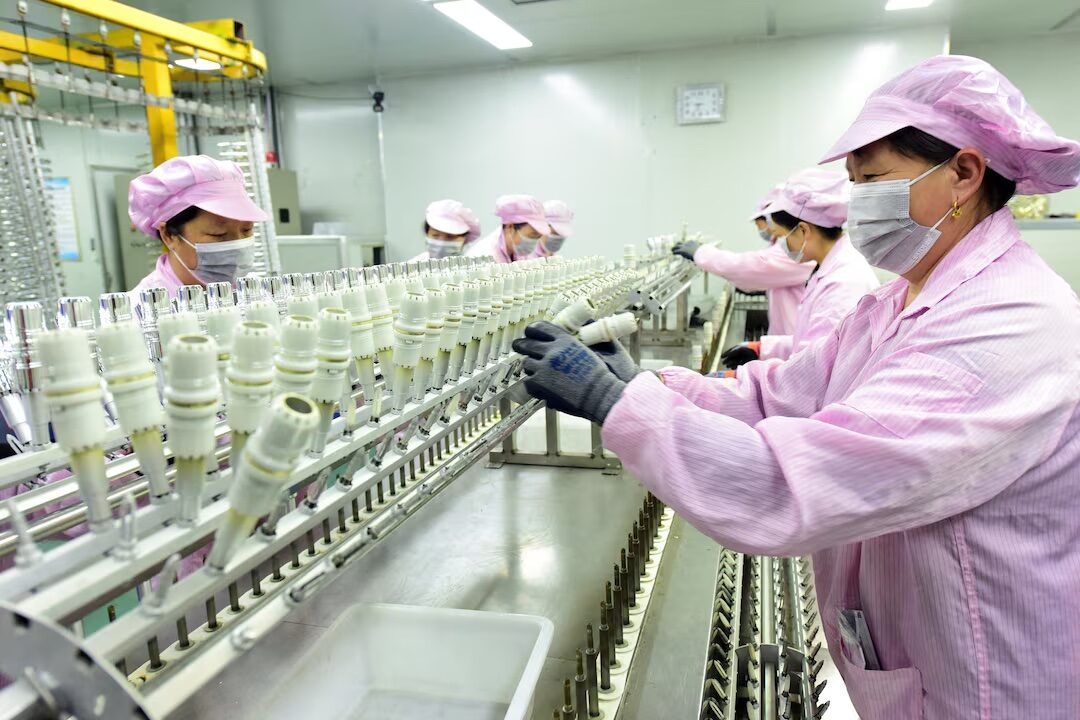
Both factory output and retail sales grew at their slowest rates in more than a year in October, indicating growing pressure on officials to boost the $19 trillion export-driven economy. Persistent trade conflicts with the United States and weak domestic demand have increased economic concerns.
According to the National Bureau of Statistics (NBS), industrial output increased 4.9% year over year in October, short of projections of a 5.5% increase and the worst annual growth since August 2024. In September, output increased by 6.5 percent. Retail sales, a crucial indicator of consumer spending, increased 2.9%, which was worse than the 2.8% anticipated and the lowest pace since August of last year.
The data highlights structural issues that the world’s second-largest economy is experiencing, according to economists. The top Asia economist at HSBC, Fred Neumann, stated that “China’s economy is facing pressures from all sides.” It will be difficult to maintain export-driven growth, and domestic investment and consumption may not rebound without significant stimulus.
October also saw a decline in exports and a halt to an eight-month trend of increasing automobile sales, even though it was anticipated that auto sales would increase before the phase-out of subsidies. Although the Singles’ Day shopping event had a minor positive influence on retail numbers, consumer sentiment remained muted, indicating that even lowered prices have limited impact.
In the first ten months of this year, fixed asset investment declined 1.7% year over year, which was more than the 0.8% decline that was anticipated since low confidence hampered expenditure on private and infrastructure projects. Although structural reforms pose political risk, policymakers have recognized the need to raise household spending, control local government debt, and resolve long-standing supply-demand imbalances.
The Conference Board’s China Center lead economist Yuhan Zhang stated, “State-owned infrastructure companies are supporting the headline figure.” The real estate market, which is a significant source of household wealth, is still having difficulties, as new home values are dropping at the quickest monthly rate in a year.
Since the government only needs 4.5%–4.6% GDP in the fourth quarter to reach its 5% annual target, analysts forecast Beijing may postpone major stimulus until 2026. For policymakers, structural issues like a weakening real estate market, uncertain trade, and low consumer spending will probably continue to be top priorities.