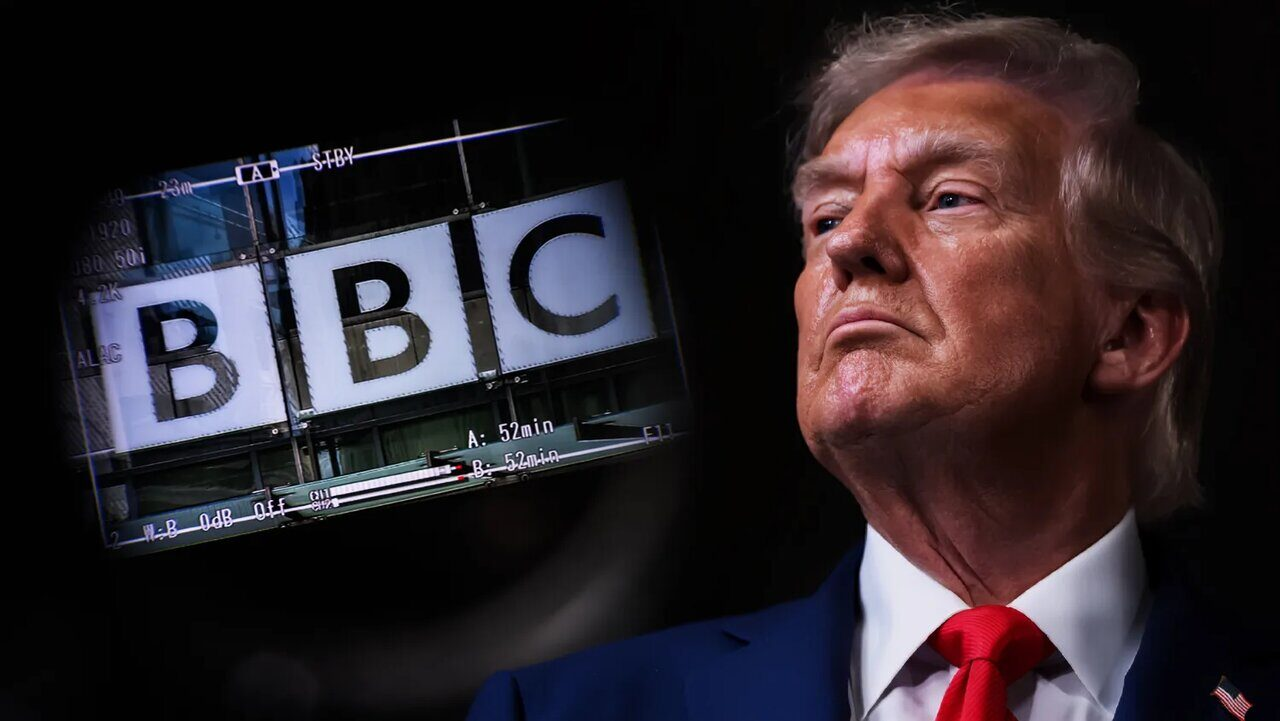
BBC apologizes for a portion of Trump’s statement that was edited in a Panorama broadcast, but they deny his request for monetary compensation.
After admitting that a modified segment of US President Donald Trump’s address from January 6, 2021, in a Panorama documentary gave the wrong impression, the BBC formally apologized to the president. The broadcaster has, however, adamantly denied Trump’s demand for monetary reparations, which his attorneys claimed may amount to $1 billion (£759 million) in the absence of a complete retraction and damages.
The BBC acknowledged that Panorama’s edit “unintentionally created the impression” that Trump had made a continuous appeal to action that indicated direct promotion of violence in a statement that was posted in its Corrections and Clarifications section. The company apologized for the mistake and stated that the show would not be rebroadcast.
As pressure grew over editorial standards and oversight, BBC director general Tim Davie and head of news Deborah Turness resigned on Sunday in response to the incident. According to a BBC spokesperson, the broadcaster wrote back to Trump’s legal team, and Samir Shah, the chair of the BBC, personally wrote the White House to apologize on behalf of the company.
The BBC said there was no legal foundation for a defamation claim, even though they apologized for the edit. It contended that the edited excerpt was 12 seconds of an hour-long show with many points of view, that the documentary was only accessible in the UK, and that the part was cut for clarity rather than to deceive. The BBC said that Trump was later re-elected, which it claimed disproved any allegation of damage to his character.
Trump told supporters, “We’re going to walk down to the Capitol and we’re going to cheer on our brave senators and congressmen and women,” in the first part of his speech. More than fifty minutes later, he added, “And we fight.” We battle fiercely. These sentences were positioned adjacent to one another in Panorama’s edit, giving the impression that they were one long section.
In an interview with Fox News, Trump claimed that the edit had “defrauded” viewers and “butchered” his comments. His attorneys sought an apology, a retraction, and damages for the purported harm.
After the Daily Telegraph exposed a second incident of a similar edit, which was broadcast on Newsnight in 2022, the scandal grew more intense. During that presentation, Trump was shown saying multiple lines from various sections of the same speech as if they were one after the other, and the host’s commentary implied that the comments had something to do with the violence that broke out at the Capitol. During his appearance on the broadcast at the time, former White House chief of staff Mick Mulvaney cautioned that the clip seemed “spliced together.”
The BBC reiterated that it adheres to “the highest editorial standards” while acknowledging the second accusation and stating that it was looking into the situation. The fresh disclosures, according to Trump’s legal team, showed a “pattern of defamation.”
As Liberal Democrat leader Sir Ed Davey urged Downing Street to “defend the impartiality and independence of the BBC” and urged the UK prime minister to step in diplomatically, the political ramifications grew.
After a leaked internal note by a former adviser to the BBC’s editorial standards committee criticized various aspects of BBC journalism, such as the way the BBC handled trans issues and BBC Arabic’s coverage of the Israel-Gaza conflict, worries about the Panorama documentary grew. A statement was not provided by the Department of Culture, Media, and Sport.
The BBC argues that the mistakes were inadvertent and that, notwithstanding its flaws in these particular cases, its reporting does not qualify as defamatory under US law, despite facing legal threats and scrutiny of its editorial procedures.