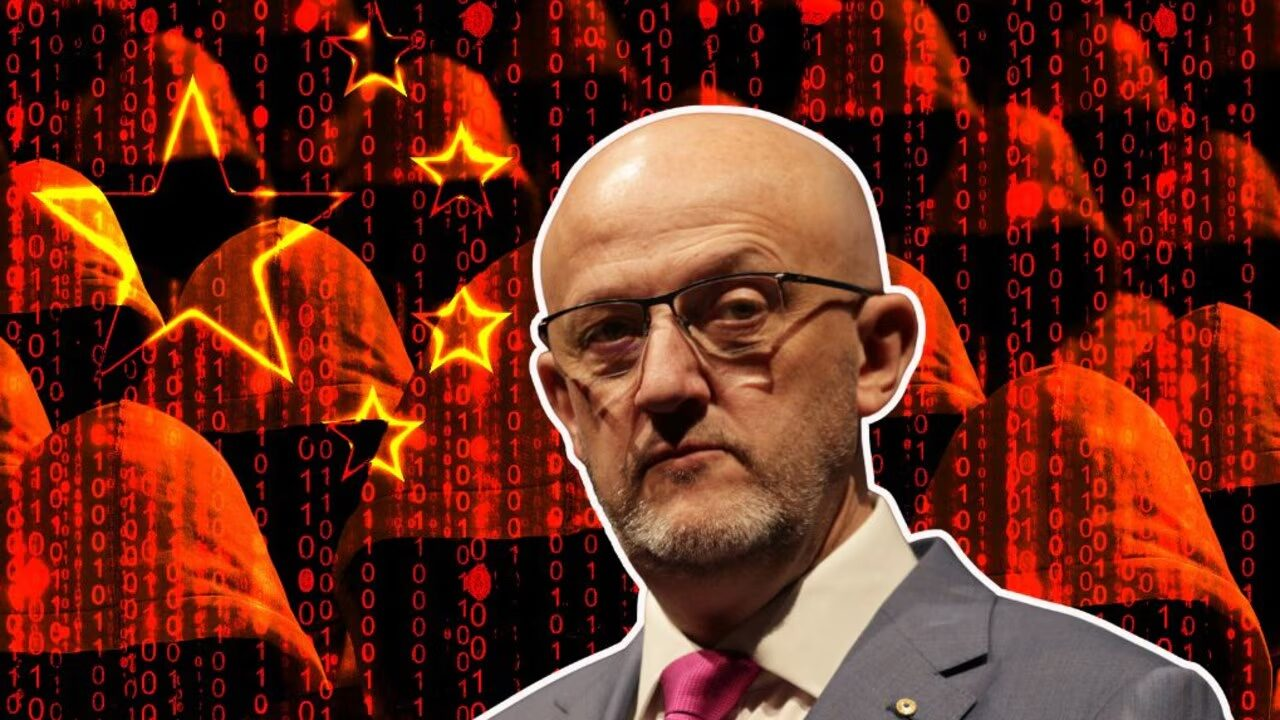
ASIO issues a warning about the growing potential of high-impact sabotage from Chinese-affiliated hackers who are targeting Australia’s vital infrastructure.
According to Mike Burgess, chief of the Australian Security Intelligence Organization (ASIO), Australia is becoming vulnerable to “high-impact sabotage” by hackers associated with the Chinese military and government. Burgess spoke at a business gathering in Melbourne about “unprecedented levels of espionage” and cautioned that key national infrastructure may be the target of cyber-enabled attacks in the coming five years.
For persistent attempts to search and infiltrate Australia’s most vulnerable networks, such as the water supply, transportation, telecommunications, and energy grids, Burgess singled out a single nation-state, generally believed to be China. He added that similar threats are faced by allies. A request for comment has been sent to the Chinese embassy.
Two Chinese hacker organizations, Salt Typhoon and Volt Typhoon, were singled out by the ASIO chief. With a primary focus on espionage, Salt Typhoon breaches telecommunications networks in order to collect confidential data. Volt Typhoon, which targets infrastructure systems to facilitate possible future sabotage, is thought to be more disruptive. Both groups have actively explored Australian networks, Burgess emphasized.
According to Burgess, “these groups are extremely skilled, employing excellent tradecraft to identify networks, test vulnerabilities, and sustain continuous undetected access.” “Once inside, they thoroughly map systems, getting ready for possible sabotage whenever they want.”
Burgess cautioned that in order to obstruct decision-making, harm the economy, impair defense capabilities, and sow social unrest, authoritarian governments are becoming more and more eager to interfere with and destroy vital systems. The serious effects that communication system failures can have on society have been demonstrated by even small network outages.
“What if a nation-state could take down all networks across the country, turn off the electricity during a heat wave, contaminate water supplies, or bring down financial systems?” he said. “The disturbance would be disastrous.”
Economic costs associated with espionage are already high. According to conservative ASIO estimates, espionage cost Australia A$12.5 billion ($8.2 billion; £6.2 billion) in 2023–2024. This amount included around $2 billion in intellectual property and trade secrets that were taken from Australian businesses. Burgess cautioned that efforts to provide foreign businesses with economic advantages are increasingly being directed at private sector projects, agreements, and investments. Client information is also in jeopardy.
The head of ASIO emphasized the critical necessity for strong cyber defenses and constant watchfulness. He asserted that hackers actively plan for possible sabotage in addition to stealing information. “In order to avoid catastrophic disruption, Australia needs to fortify safeguards for its private sector networks and vital infrastructure.”
Australia is currently dealing with a quickly changing cyber threat environment, where sabotage and espionage are being used as political instruments. To protect economic stability and national security, the public and private sectors must take urgent action as hackers become more skilled and hostile.