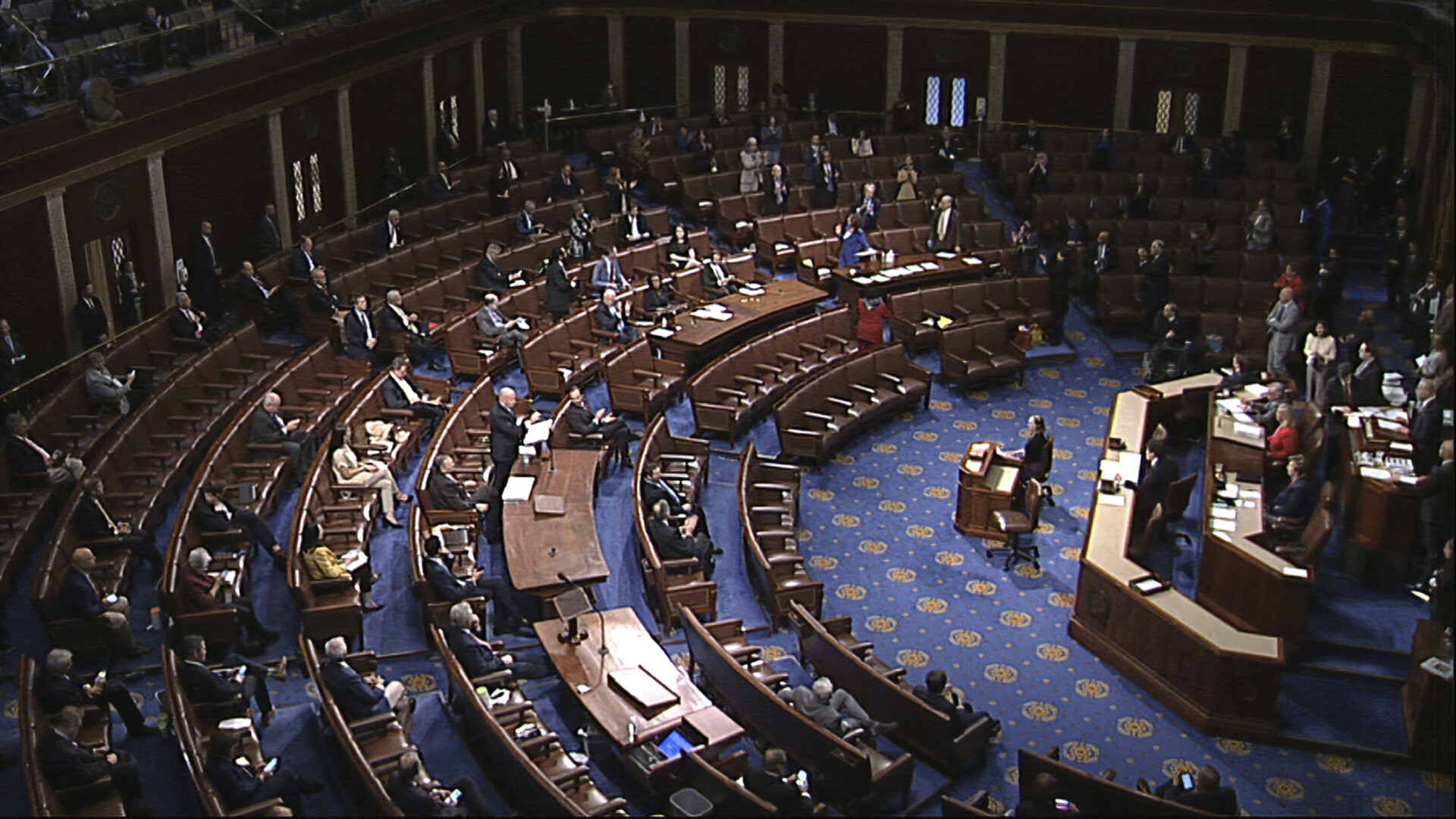
US Senate Moves Forward with Bipartisan Legislation to Conclude 40-Day Government Shutdown
US Senate passes a bipartisan package to restore worker pay and fund the government through January 30 in an effort to end the 40-day shutdown.
On Sunday, the US Senate advanced a bill to reopen the federal government and end the 40-day shutdown that has caused air traffic disruptions nationwide, delayed food aid, and furloughed federal employees.
In a procedural vote, senators advanced a bill passed by the House that will be altered to include three full-year appropriations bills and finance the government through January 30. The altered bill still needs to be approved by the House of Representatives before being forwarded to President Donald Trump for his signature, which may take several days, even if the Senate adopts it in the end.
A December vote on extending Affordable Care Act (ACA) subsidies was agreed upon by Republicans in a compromise with a number of Democrats who had opposed their party’s leadership. Due to expire at the end of the year, these subsidies—which assist Americans with lower incomes in paying for private health insurance—have been a top Democratic priority during the funding impasse.
A 60-40 vote was needed to move the bill, which is the bare minimum needed to end a Senate filibuster.
Before the vote, President Trump told reporters at the White House that it appeared the shutdown was almost over.
Federal worker unions and their allies would gain a significant victory since the proposal would forbid federal agencies from terminating workers until January 30. Additionally, the bill would put a temporary halt to Trump’s long-running effort to reduce the size of the federal workforce.
Official data indicate that approximately 2.2 million citizens were employed by the federal government at the beginning of Trump’s second term. The reduction initiative is predicted to result in the departure of at least 300,000 workers by the end of this year.
Additionally, the bill reimburses all federal workers, including military personnel, Border Patrol officers, and air traffic controllers—many of whom have been unpaid since the closure started.
Republican leaders will try to get bipartisan support when the Senate meets again on Monday in order to go around Senate rules and swiftly pass the package. In the absence of that agreement, the chamber would have to operate according to normal protocol, which might mean that the shutdown would last until the following weekend.
Senate Majority Leader John Thune told reporters during the chamber’s adjournment on Sunday that the vote was “good tonight.” We’re hoping to get a chance to arrange the next votes tomorrow. Naturally, some consent and collaboration will be required for that.
A source involved with the negotiations said that Independent Senator Angus King of Maine and Democratic Senators Maggie Hassan and Jeanne Shaheen of New Hampshire mediated the agreement on Sunday.
For more than a month, I have stated unequivocally that extending the ACA enhanced premium tax credits and reopening government are my top objectives. On X (previously Twitter), Shaheen said, “This is our best way to achieve both of these goals.”
Some members of his party criticized Senate Minority Leader Chuck Schumer’s decision to vote against the proposal.
Rep. Ro Khanna posted on X that Senator Schumer should be replaced since he is no longer effective. “What will you stand up for if you can’t spearhead the effort to prevent Americans’ health insurance prices from soaring? “
Sunday was the 40th day of the longest shutdown in US history, which has caused crucial services like food assistance, national parks, and air travel to be hampered and government employees to go without pay. There are concerns about significant flight delays during the hectic Thanksgiving holiday season later this month due to a lack of air traffic controllers.
The Senate was forced to pass a resolution, according to Republican Senator Thom Tillis of North Carolina, because of the shutdown’s economic effects and mounting public annoyance. The air pressure outside rises, temperatures drop, and suddenly it seems like everything will come together, Tillis added.
Kevin Hassett, the White House’s economic adviser, cautioned that if the government stays down for an extended period of time, the fourth quarter’s US economic growth may turn negative, especially if air travel difficulties continue until Thanksgiving, which is this year on November 27.
The squabbling on Capitol Hill occurred as Trump redoubled his efforts to switch from ACA subsidies to individual payments. A key point of contention in the shutdown impasse is the subsidies, which have contributed to the ACA’s enrollment doubling to 24 million since their expansion in 2021. Republicans have stated that they will resolve the issue only if government funding is restored.
The subsidies are “a windfall for Health Insurance Companies, and a DISASTER for the American people,” Trump said on Truth Social, adding, “Once the government is open, I stand ready to work with both parties to solve this problem.”
Analysts predict that average monthly prices for Americans shopping for 2026 Obamacare health plans will more than double because the subsidies from the government are slated to expire at the end of the year. However, the ACA’s open enrollment period ends on January 15th, giving lawmakers time to consider legislation that would extend the credits into the next year.