UN Sounds the Alarm as Africa Receives Only 2% of Global Clean Energy Investment
Excerpt: The United Nations has cautioned that immediate action is required to combat climate change, even with the $2 trillion investment in renewable energy.
According to the United states (UN), it now appears impossible to surpass the 1.5°C global temperature target set by states worldwide, even with the $2 trillion investments made in renewable energy last year.
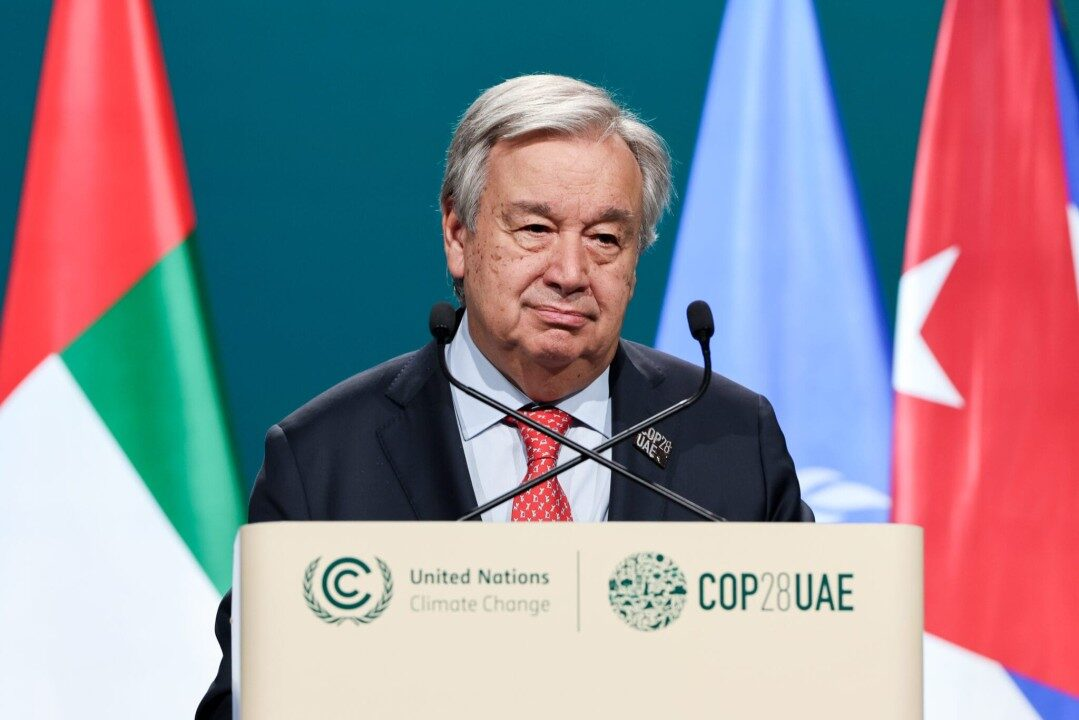
Speaking at the Energy Transition Roundtable at the 30th Conference of the Parties to the United Nations Framework Convention on Climate Change (COP30) in Belém, Brazil, UN Secretary General António Guterres urged the cessation of fossil fuel subsidies and people-centered grid investment.
Countries decided to try to keep global warming below the 1.5°C threshold, primarily to prevent the most severe and irreversible climatic effects. It entails keeping the average global temperature increase to 1.5°C or less than what it was prior to the Industrial Revolution (around the late 1800s). The global temperature has already increased by nearly 1.2°C.
“Renewables are now the least expensive source of new electricity in almost every country; global investment in clean energy reached $2 trillion last year, $800 billion more than fossil fuels; and 90% of new power capacity came from renewables.” They are enabling communities that have been left in the dark for a long time and driving prosperity.
Clean energy jobs now surpass fossil fuel jobs globally, and every dollar spent in renewables generates three times as many jobs as a dollar invested in fossil fuels. The revolution in renewable energy has here. However, we need to move much more quickly and make sure that every country benefits equally.
Countries decided at COP28 to increase energy efficiency and triple renewable energy capacity by 2030, as well as to make the transition away from fossil fuels in a fair, orderly, and just way. We need to close the delivery gap now that the mandate is clear.
And this is where we are dangerously failing, Excellencies. The world is still on track to warm by more than 2°C, even if new state promises are fully implemented. That implies that there will be more heat waves, floods, and suffering everywhere. According to scientists, it is now inevitable that we will surpass 1.5°C, beginning no later than the early 2030s. However, the magnitude and speed of our efforts today will determine how large and how long that overshoot remains,” the UN chief said.
He noted that global emissions must drop by nearly half by 2030, reach net zero by 2050, and then go net negative in order to bring global temperatures back below 1.5°C by the end of the century.
He says the first step is to make things clear and coherent, match laws, regulations, and incentives with a just energy transition, and get rid of fossil fuel subsidies that lock us into the past and distort markets.
Second, prioritize equity and people in the transition process; assist communities and workers whose livelihoods still rely on coal, oil, and gas; and offer new possibilities, protection, and training, particularly for women and young people.
Third, make investments in efficiency, storage, and grids. Renewable energy is growing, and infrastructure needs to keep up quickly. Fourth, use clean power to meet all new electrical demands, especially those from data centers that are spearheading the AI revolution. Instead of being a new cause of stress, technology must be a part of the solution,” he continued.
The fifth step, according to Guterres, is to open up large-scale financing for developing nations. He emphasized that Africa currently receives 2% of global investments in clean energy and that international cooperation is necessary to remove obstacles, lower capital costs, and attract private investment.
“Even if the routes in each nation may differ, the end point must be the same: A net-zero planet fueled by renewable energy sources, followed steadily by a net-negative world. Through increased collaboration, investment, and technology transfer—and tailored to various capacities and dependencies—we must help poor nations carry out their pledge to move away from fossil fuels.
“Let’s move quickly and together. Make equity the catalyst for progress and create resilient, inclusive, and clean economies. Transform the need for climate change into a global opportunity for prosperity. Fossil fuels are becoming obsolete. Clean energy is becoming more popular. The UN Secretary General emphasized, “Let’s make the transition equitable, swift, and final.”
Sidi Ould Tah, the group president of the African Development Bank (AfDB), has reiterated the organization’s dedication to turning “promises into progress,” emphasizing that the bank is the first multilateral development organization to attain financing parity between climate adaptation and mitigation.
Dr. Ould Tah emphasized the Bank’s resolve to step up climate action during his remarks at the Belém Climate Summit, which brings together world leaders in Brazil before to COP30 to review progress on the Paris Agreement.
He addressed the plenary at a session on Climate and environment: Forests and Oceans, saying, “We are all gathered here, driven by our collective responsibility to protect nature, our most precious asset in combating climate change and ensuring humanity’s survival.”
According to a bank statement, African delegates emphasized the continent’s vital role in maintaining global climate stability. While Nigeria’s Vice President Kashim Shettima asked for new mechanisms to protect forests and oceans, the Republic of Congo pointed out that Africa, which is home to 17% of the world’s tropical forests, loses an estimated 3.7 million hectares per year.
“Africa is requesting fair access to the carbon market so that nations can replenish their ocean and forest resources,” Shettima stated.
Ould Tah, the president of the bank, emphasized that Africa’s ecosystems are essential climate regulators in addition to being natural resources. “The largest tropical peatlands in the world are found in the Congo Basin, which stores approximately 29 billion tons of carbon, which is equal to three years’ worth of global emissions,” he said.
He presented the Bank’s climate strategy, which is based on its four cardinal points: investing in resilient, environmentally friendly infrastructure; encouraging debt-for-nature swaps; empowering women and youth in environmental protection; and mobilizing resources for green growth.
In addition, Ould Tah joined Brazilian President Luiz Inácio Lula da Silva in establishing the Tropical Forests Forever Facility, an international fund intended to aid nations that share the Congo and Amazon basins as well as other tropical forest areas.
Ould Tah referred to Brazil’s historic “Tropical Forest Forever” proposal as a turning point in international climate solidarity and said, “The African Development Bank warmly welcomes it.” “This innovative collaboration complements our biodiversity initiatives, including the Central African Forests Commission and the Congo Basin Forest Fund,” he continued.
The New Collective Quantified Goal (NCQG) for climate financing, which commits industrialized countries to mobilizing at least $300 billion annually for developing nations by 2035, is anticipated to be the focus of COP30 negotiations, which began today on November 10.
The AfDB said it is assisting the continent in investigating creative financing options because those obligations have not yet been fulfilled.