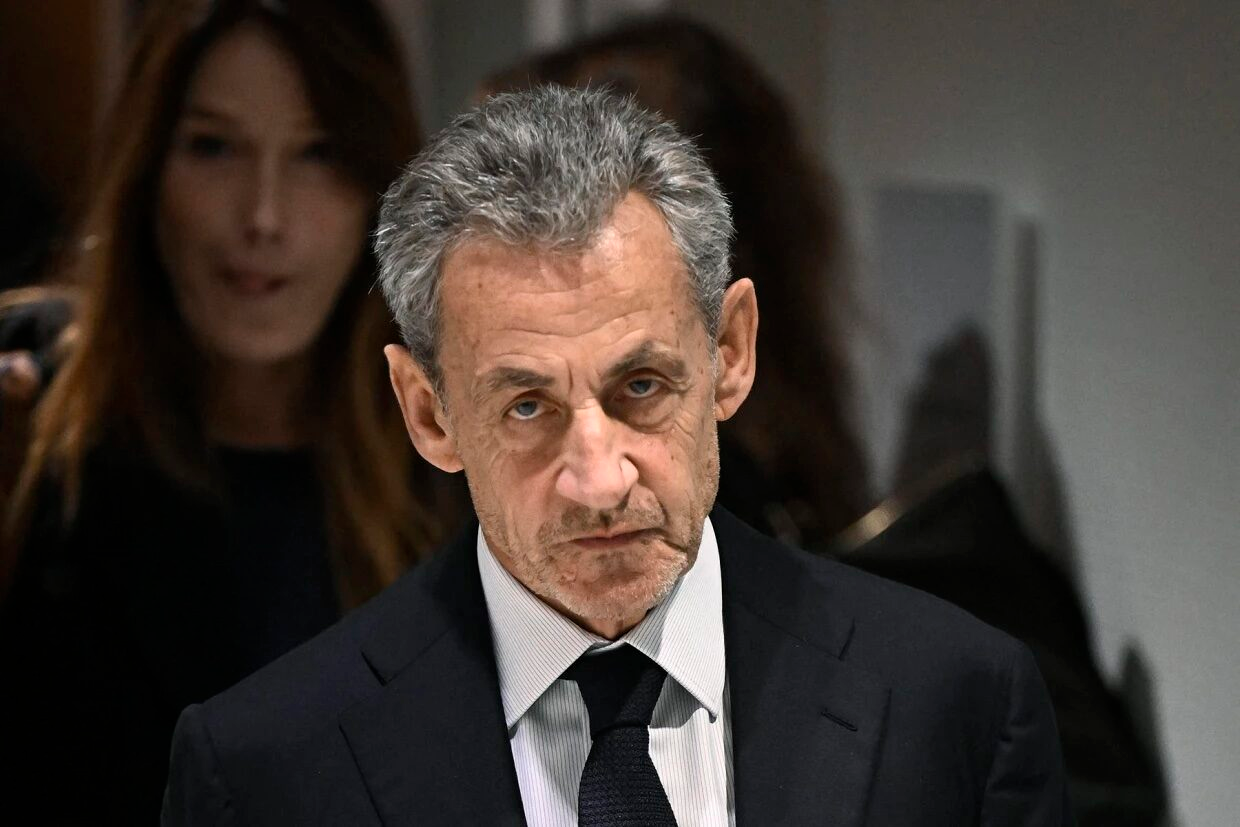
Nicolas Sarkozy, the former president of France, wants to be released from prison while he appeals his five-year sentence for using Libyan campaign funds.
Weeks after he started serving a five-year prison term for plotting to gather campaign finances from Libya, former French President Nicolas Sarkozy will have his plea to be released from jail pending appeal considered in a Paris court on Monday.
In connection with close associates’ attempts to obtain funding for his 2007 presidential campaign from the late Libyan dictator Muammar Gaddafi, the 70-year-old veteran conservative leader was convicted of criminal conspiracy. Other charges against Sarkozy, such as corruption and unlawful campaign financing, were dropped.
Judge Nathalie Gavarino stated that because of the “extraordinary seriousness” of the offense, the sentence must be implemented right once. Last month, Sarkozy was imprisoned at Paris’s La Santé jail, marking a precipitous decline in popularity for the man who led France from 2007 to 2012.
Sarkozy, who has challenged the decision and continuously denied any involvement, has described himself as a victim of hatred and retaliation. He will be represented by his attorneys before the appeals court on Monday; he will not be present in person.
Following Sarkozy’s incarceration, lawyer Christophe Ingrain stated that his client did not fit any of the legal criteria for “provisional detention,” noting that Sarkozy had consistently cooperated with court orders and appearances.
Provisional custody is only permitted under French criminal law in order to stop additional criminal behavior or to guarantee that the accused person is still accessible to the legal system.
Sarkozy might have to wear an electronic tag, post bail, or make frequent appearances at the police station if the judge grants his parole.
Since leaving government, Sarkozy has been involved in a number of legal disputes. His conviction for influence peddling and corruption was affirmed by France’s highest court last year, and he was given a one-year electronic monitoring tag—the first time a former French head of state had been subjected to such a requirement. Since then, the tag has been taken off.
A third conviction for unlawful campaign finance connected to his unsuccessful 2012 reelection campaign was also upheld by an appeals court last year. Later this month, the highest court in France is anticipated to render a final decision on that case.
Sarkozy, who was formerly one of the most powerful politicians in France, has insisted that the legal actions against him are politically driven and has maintained his innocence in numerous cases.