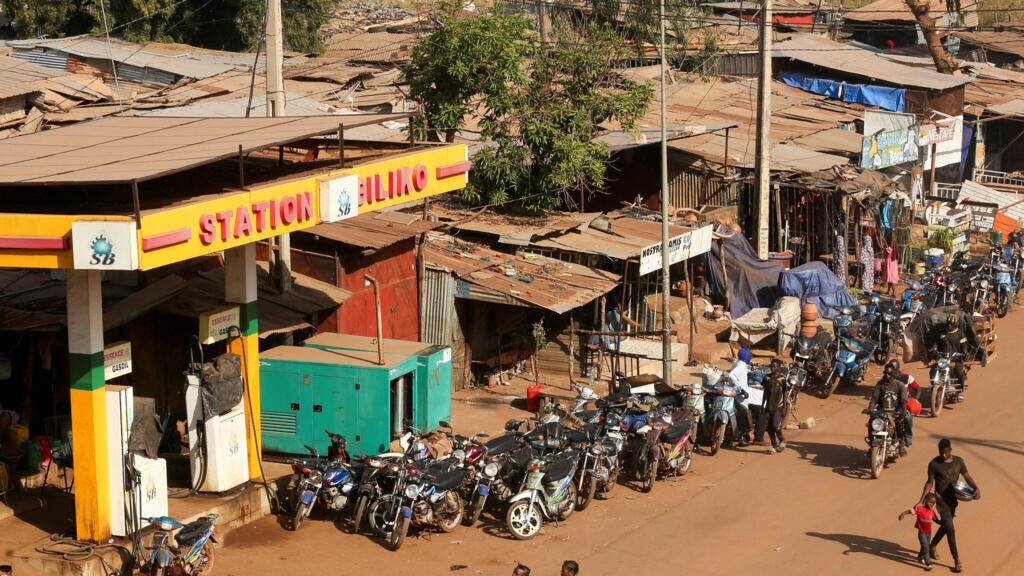
The African Union has called for international collaboration and intelligence exchange to combat the deteriorating situation in Mali brought on the Islamist fuel embargoes.
The African Union (AU) has called for a swift international response, including increased intelligence sharing, to address the deteriorating security situation in Mali, where terrorists with ties to Al Qaeda have increased kidnappings and imposed a debilitating fuel blockade.
Jama’at Nusrat al-Islam wal-Muslimin (JNIM), a jihadist organization active throughout the Sahel, has been enforcing the blockade since September. It has caused disruptions in gasoline supplies, resulting in weeks of business and school closures. In certain areas of the country, the shortfall has paralyzed daily life and transportation, worsening humanitarian conditions and feeding concerns that the extremists would try to seize more territory.
The AU Commission Chairperson, Mahmoud Ali Youssouf, said in a statement on Sunday that he was “deeply concerned over the rapidly deteriorating security situation in Mali, where terrorist groups have imposed blockades, disrupted access to essential supplies, and severely worsened humanitarian conditions for civilians.”
For Sahel countries fighting violent extremism, Youssouf demanded “enhanced cooperation, intelligence-sharing, and sustained support.” The quick release of three Egyptian nationals who were allegedly abducted by the terrorists was another demand he made.
Known for using ransom money to finance its operations, JNIM has been focusing more on foreigners. Two United Arab Emirates nationals were released in October following the payment of a ransom of almost $50 million, according to a recent Reuters article.
The United States, France, Britain, and Italy are among the Western nations that have recommended their nationals to flee Mali as the situation worsens. Meanwhile, following a two-week closure due to the fuel shortage, schools in the capital, Bamako, resumed on Monday.
The AU’s warning comes as there is growing fear that Mali’s security and humanitarian crisis could worsen and destabilize the larger Sahel region if regional and international coordination is not improved.