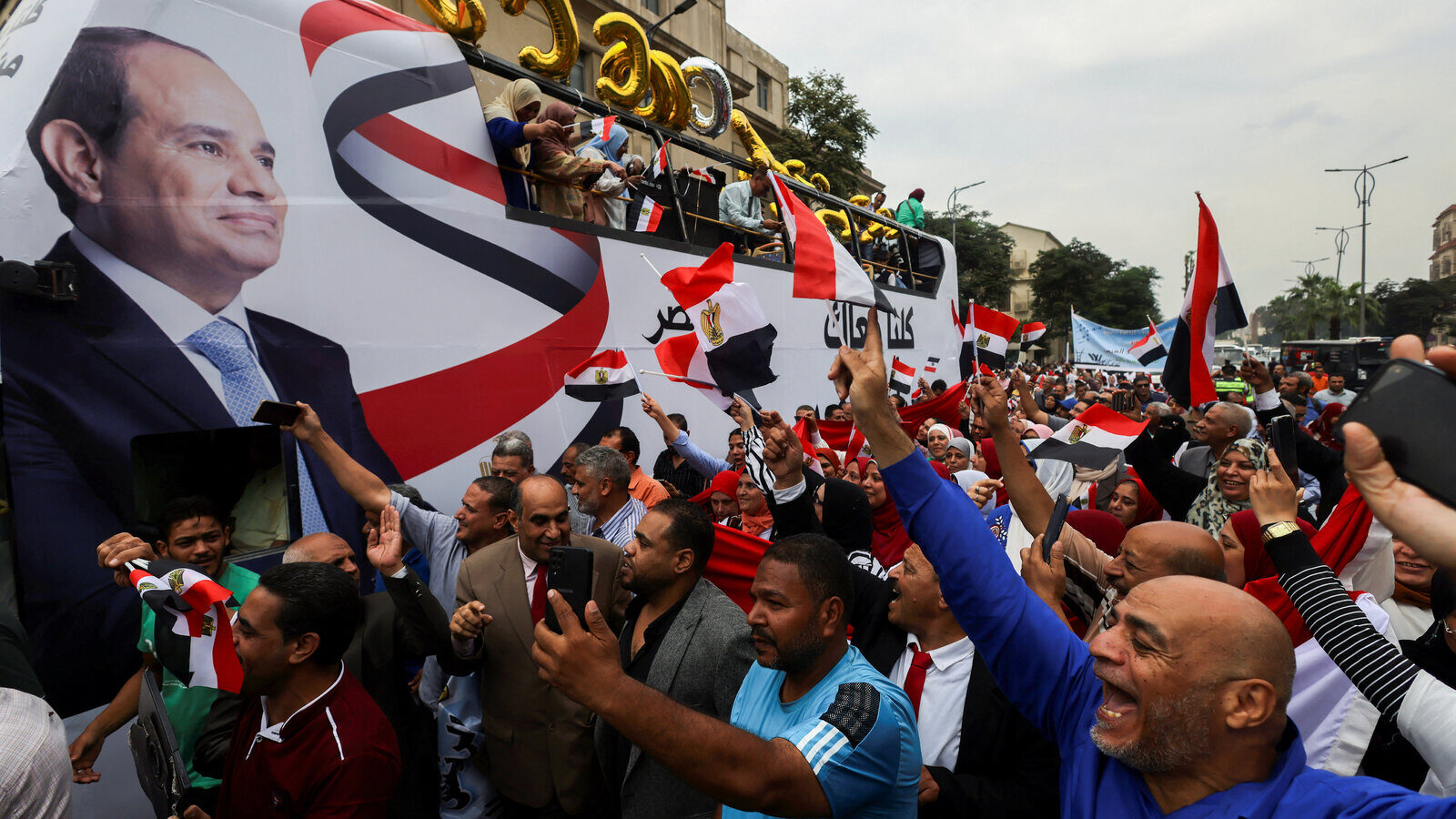
Egypt votes for a new parliament, but there is little competition among the several pro-Sisi groups
Egypt’s parliamentary election is being contested by a wide range of groups, but the ones that are expected to control the chamber share a strong support for President Abdel Fattah al-Sisi and agree on most substantive matters.
Sisi was elected to a third six-year term, the last permitted by Egypt’s existing constitution, over two years ago, and voting in Egypt started Monday. Polling takes place over a period of more than five weeks and is divided into multiple parts.
On paper, the twelve logos on campaign banners that were displayed on streetside and traffic circle banners were as congested as they had been since the 2011 Arab Spring rebellion ended decades of one-party rule.
However, the parties are now mostly in agreement as they attempt to pique interest among a disinterested populace, in contrast to previous days when Islamists, liberals, socialists, and regime loyalists fought fierce campaigning for hearts and minds.
ALLOCATED SEATS FOR THE CLOSED PARTY LIST
A hybrid voting system, which gives closed party lists just under half of the seats, is another system they are running under together.
Only one list appeared on the ballot this year, giving three pro-government parties the majority of the seats. This virtually ensured a victory for numerous politicians before the first ballot was ever cast.
Both leftists and ultraconservative Islamists were among the opposition figures who were prohibited from running as independent candidates due to a revised interpretation of a military service requirement. Others were excluded due to campaign expenses and medical screening.
Critics claim that many voters are now indifferent as a result of these actions, particularly after years of economic suffering. Just over 17% of voters cast ballots for parliament’s consultative upper house this summer.
At one Giza polling location, a 58-year-old electrician named Amgad claimed that he was bussed in to vote by candidates’ staff, although he was not of which candidates they were because “all the delegates work together.”
Proponents of the system claim that the party lists reflect a range of opinions and passions and contribute to improved representation for minorities and women. They deny the manipulation of voters.
A request for comment from Egypt’s State Information Service, which communicates with international media, was not immediately answered.
The new party was introduced as a “unifying entity.”
Lawmaking was controlled by the National Democratic Party under previous president Hosni Mubarak, who was overthrown in 2011, and significant positions were held by businesspeople and Mubarak’s son.
Sisi, however, has never attended a party. The outcome of the upper house will probably hurt the Nation’s Future party, which is most closely linked to his agenda.
Founded late last year and now fielding former ministers and businessmen, the National Front Party was one of the largest winners in that vote.
Diaa Rashwan, the co-founder of the party and the chief of the State Information Service, stated in a TV interview early this year that the party is “neither loyalist nor opposition, nor is it a single school of thought.” The party only needed 5,000 endorsements to get started, but claimed to have amassed nearly half a million.
According to him, it is a “unifying entity” instead.
The Homeland Defenders, a party started in 2013 by former military commanders and which also gained support in the upper house vote, and Nation’s Future are also on the list.
Speaking to Reuters, Homeland Defenders aims to realize “a long-term developmental vision aligned with the state’s leadership,” Amr Suleiman said.
According to him, there was “strong competition among parties and independents for individual seats” in the election.
DEFENSE IN A BIND
According to Timothy Kaldas, an analyst at the Tahrir Institute for Middle East Policy in the United States, the growth of pro-government parties contributes to the centralization of power by preventing the unification of competing power centers.
“Going from the Nation’s Future Party dominating parliament to a bunch of loyalist parties is a way to further weaken all of them, and also a way to reward new loyalists,” added the politician.
Opposition leaders are now faced with the choice of either joining the list or risking exclusion.
In the end, the Social Democratic Party chose to include its name. One of the party’s parliamentary candidates, Maha Abdel Nasser, stated, “We still feel there’s room to influence politics in the house, so we’re not going to waste it.”
Founded by Nobel laureate Mohamed ElBaradei in 2012, the Constitution Party adopted a different strategy by partnering with the Conservative Party to run for individual seats.
According to Mariam Farouk, the bloc’s spokesman, the campaign faced significant challenges from “political money” and disinterested voters.