Saudi Arabia strengthens its stance on Israel ties prior to negotiations with Trump
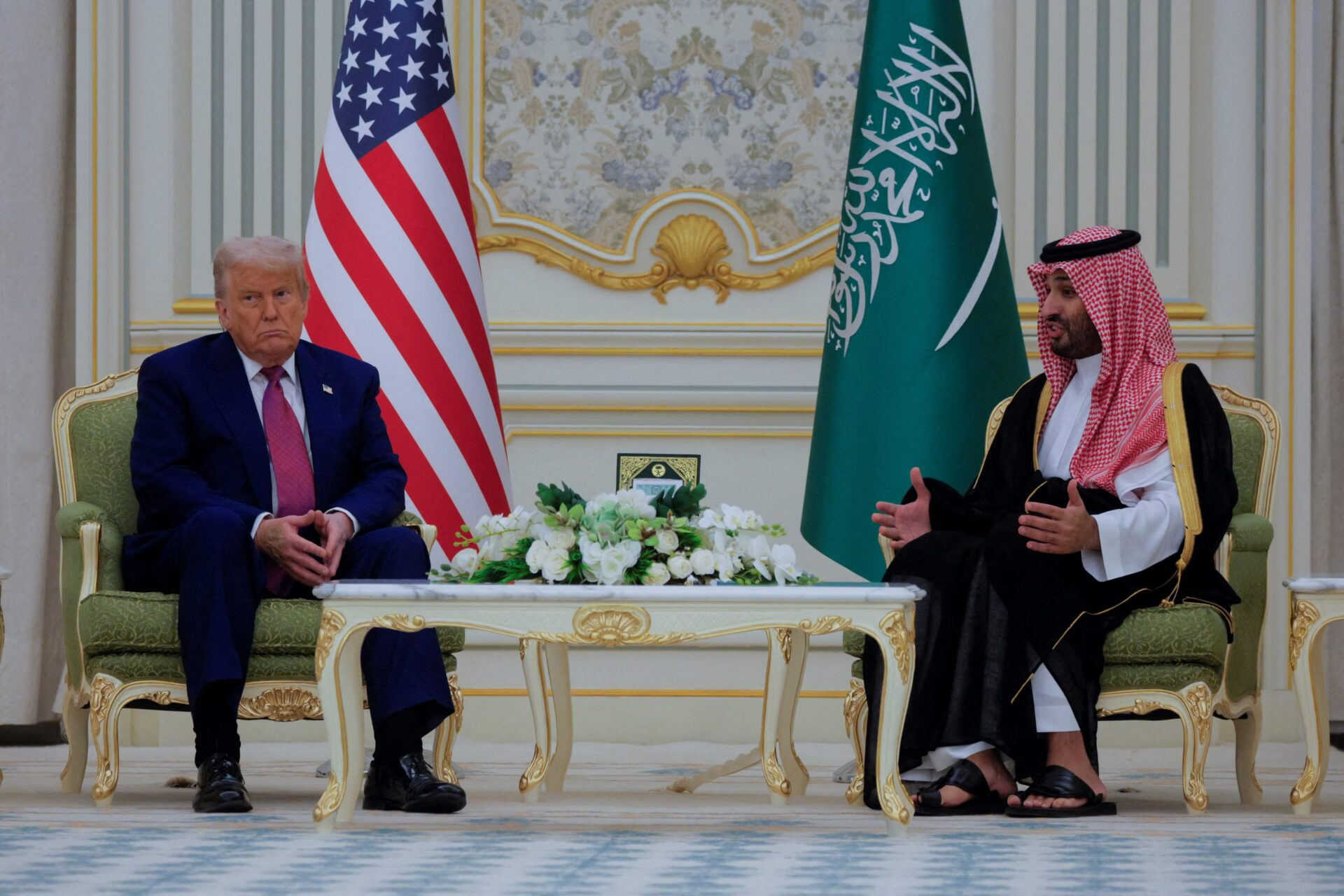
Saudi Crown Prince Mohammed bin Salman’s visit to the White House this month is unlikely to result in Saudi Arabia agreeing to normalize relations with Israel, despite U.S. President Donald Trump’s exaggerated claims to the contrary.
After decades of animosity, Israel and Saudi Arabia have established diplomatic ties, which could upend the Middle East’s political and security environment and increase American influence there.
Last month, Trump expressed his hope that Saudi Arabia would “very soon” join the other Muslim nations who signed the Abraham Accords in 2020, which normalized relations with Israel.
According to two Gulf sources who spoke to Reuters, Riyadh has communicated to Washington via diplomatic channels that its stance has not altered and that it will only join if a plan for Palestinian statehood is agreed upon.
Before making any public remarks, they said, the goal is to prevent diplomatic blunders and guarantee that the Saudi and American stances are in line. According to one, the goal was to prevent misunderstandings during or following the November 18 White House negotiations.
Jonathan Panikoff, a former deputy U.S. national intelligence officer for the Middle East, stated that the Crown Prince, also referred to as MbS, “is not likely to entertain any possible formalizing of ties in the near future without at least a credible pathway to a Palestinian state.”
MbS would probably try to utilize his relationship with Trump to get “more explicit and vocal buy-in for the establishment of a sovereign Palestinian state,” according to Panikoff, who is currently working at the Atlantic Council think tank in Washington.
Trump’s scathing remarks regarding Abraham’s accoutrements
The Crown Prince’s trip to Washington next week will be his first since the 2018 murder of Washington Post journalist Jamal Khashoggi, a MbS critic whose death in the Saudi consulate in Istanbul sparked international indignation. Direct involvement was denied by MbS.
Under the Abraham Accords, the United Arab Emirates, Bahrain, and Morocco have already normalized their relations with Israel, and Trump has stated that he anticipates the accords will soon be expanded.
He stated on November 5 that “we have a lot of people joining now the Abraham Accords, and hopefully we’re going to get Saudi Arabia very soon,” but he did not provide this date.
“I hope to see Saudi Arabia go in, and I hope to see others go in,” he stated in an October 17 television interview. I believe that everyone enters when Saudi Arabia does.
However, the topic of Palestinian statehood was avoided in the deal that Bahrain, Morocco, and the United Arab Emirates inked.
According to the two Gulf sources, Riyadh had told Washington that any recognition of Israel would need to be a part of a new framework rather than merely an extension of an existing agreement.
Recognizing Israel would be more than just a diplomatic achievement for Saudi Arabia, the country that gave rise to Islam and is the guardian of its two holiest sites, Mecca and Medina. Resolving one of the oldest and most unsolvable disputes in the region is linked to this extremely delicate national security problem.
Such a move would be challenging at a time when, despite a tenuous ceasefire in the conflict that followed the October 7, 2023, Hamas-led attack on southern Israel, Arab public mistrust of Israel is still high due to the scope of its military offensive during the war against the Palestinian militant group Hamas in Gaza.
Manal Radwan, a representative of the Saudi Foreign Ministry, has demanded that Israel leave the Gaza Strip in a clear, time-bound manner, that an international protection force be sent there, and that the Palestinian Authority be given more authority and allowed to return to Gaza.
The creation of a Palestinian state, which is a requirement for regional integration and the application of the two-state solution, depends on these actions, she said.
Saudi Arabia sees no immediate chance to meet Trump’s demand that it normalize relations with Israel because Israeli Prime Minister Benjamin Netanyahu is adamantly against Palestinian independence, the sources told Reuters.
Saudi officials claim that compromises that neither Washington nor Israel are currently willing to make are necessary for progress on that front.
THE CROWN PRINCE AND TRUMP WILL SEAL THE DEFENSE PACT
Saudi officials are determined to focus the Trump-MbS summit on defense investment and collaboration, fearing that the contentious topic of normalizing relations with Israel may take center stage.
The summit is anticipated to solidify America’s military presence in the Gulf and to sign a crucial defense agreement that will specify the extent of U.S. military support for the de facto leader of the world’s largest oil exporter.
However, the potential transaction has been reduced.
The defense agreement is not the complete, Congress-approved pact that Riyadh had previously demanded in return for the long-promised normalization of relations with Israel, according to three Western diplomats and two additional Gulf sources.
The pact broadens collaboration to encompass advanced technologies and defense, and it is loosely based on an agreement with Qatar that was created by presidential order in September.
According to the two Gulf sources, Riyadh lobbied for clauses that would enable subsequent U.S. administrations to upgrade the agreement to a complete treaty, providing continuity for a non-binding agreement that might be revoked by presidents in the future.
According to David Makovsky, a fellow at the Washington Institute who oversees a project on Arab-Israeli relations, “it’s not the treaty they want, they might not see it as perfect but it’s a stepping stone (to a full treaty).”
According to Gulf sources and Western diplomats, the complicated negotiation arithmetic created by the relationship between the defense pact, normalization with Israel, and Palestinian statehood has forced Riyadh and Washington to agree to a limited defense accord in the absence of advancement on the other two tracks.
They claim that if normalization progresses, that compromise may eventually turn into a complete treaty.
The chairman of the Saudi-based Gulf Research Institute think tank, Abdelaziz al-Sagher, stated that “the Saudi-American negotiations have undergone a fundamental shift in environment and context following the developments in Gaza since October 7.”
He stated that although Riyadh now wanted Saudi national security needs to be addressed independently, there was still a direct correlation between normalizing relations with Israel and Palestinian statehood.
“The Saudi position is clear: meeting the Kingdom’s national security demands will help shape its broader stance on regional issues, including the resolution of the Palestinian-Israeli conflict,” he stated.
THE IRAN RECEDING THREAT
With the political obstacles in Washington and the changing regional landscape, a defense alliance akin to NATO seems unlikely.
Israeli attacks on Iran’s nuclear and military facilities over the past year have strategically undermined Iran, the primary threat that formerly motivated Riyadh’s quest for legally enforceable U.S. guarantees.
Heavy hits have also been delivered to Tehran’s proxies, including the Houthis in Yemen, Hamas in Gaza, and the Hezbollah movement in Lebanon.
The desire for a two-thirds congressionally approved treaty has waned as pressure from Iran has subsided, particularly in the absence of normalization with Israel.
According to the two Gulf sources, such an agreement would probably include restrictions on Saudi Arabia’s growing technological and economic connections with China, making Riyadh’s efforts to strike a balance between strategic independence and American security assurances more difficult.
According to the sources, the present agreement would strengthen collaboration between Saudi defense companies and the United States, increase the number of joint military drills, and contain measures to curtail Riyadh’s military-industrial connections with China.
Additionally, it would expedite advanced U.S. arms shipments to the monarchy, avoiding the political obstacles and delays that have halted past agreements.