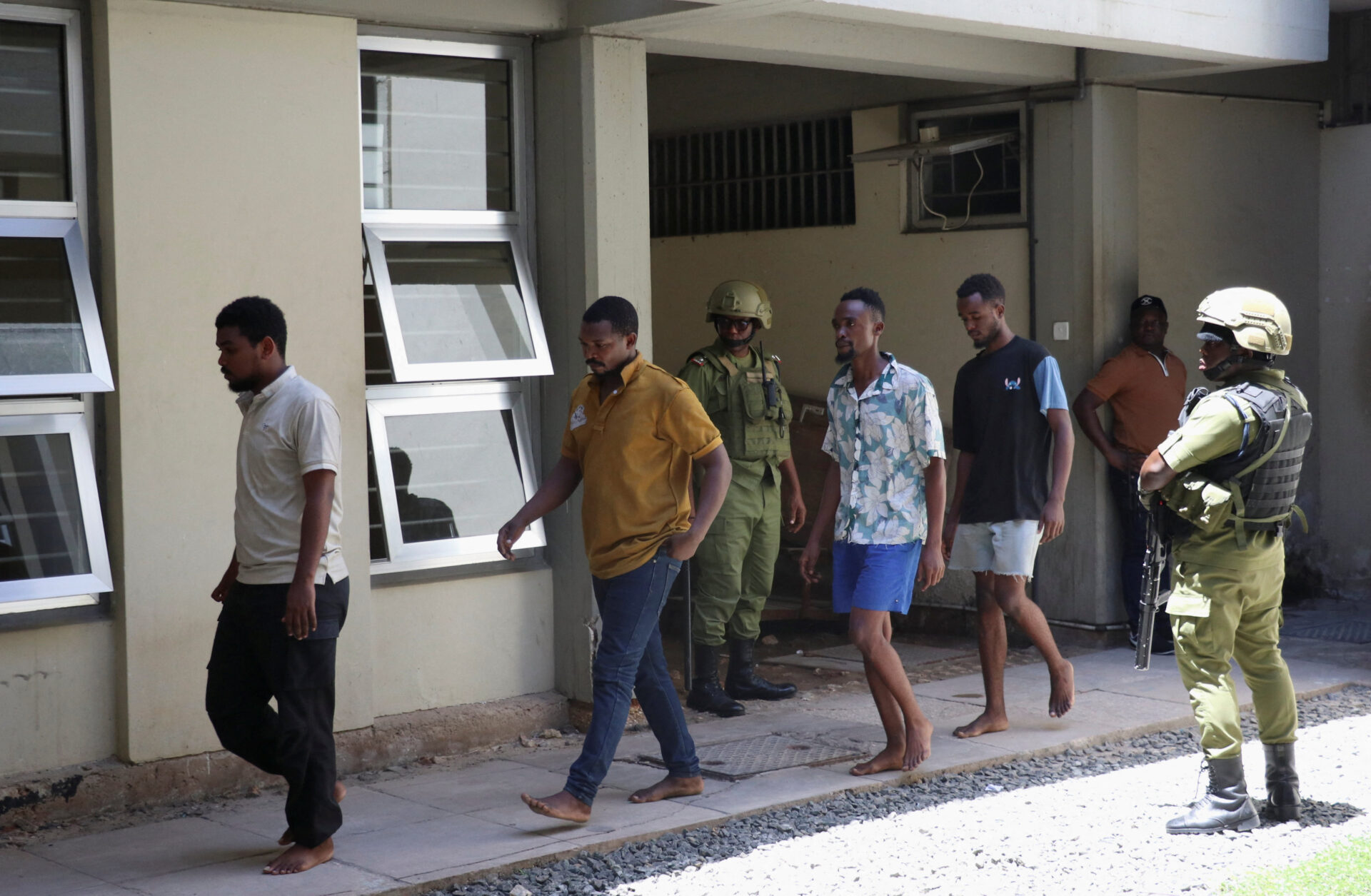
Tanzanian police arrested a top official from the opposition party CHADEMA on Saturday. Nine other people are also being sought in connection with the violent protests that happened after last week’s polls.
Human rights groups and CHADEMA both say that more than 1,000 people were killed by security troops. The government said those numbers were too high, but it didn’t give its own death toll.
The group CHADEMA said that Amani Golugwa, who was its assistant secretary general, was arrested by police. On the same day that 145 people were charged with treason, police named Golugwa and nine others as people they wanted to talk to about the investigation into the protests.
“The police force, in collaboration with other defence and security agencies, is continuing a serious manhunt to find all who planned, coordinated and executed this evil act,” a police statement said.
Protests happened after incumbent Hassan won by a huge margin.
Tundu Lissu, the leader of CHADEMA, was charged with treason in April. He and another major opposition candidate were both taken off the ballot, which is what started most of the protests.
With almost 98% of the vote, the electoral board said that President Samia Suluhu Hassan was the winner. On Monday, she was sworn in.
The police statement said that John Mnyika, who is the secretary general of CHADEMA, and Brenda Rupia, who is in charge of media for the party, are wanted for arrest.
CHADEMA said that the government was making party leaders and members admit to planning protests.
“The government intends to charge our leaders with treason in an attempt to cripple the party’s leadership and paralyse its operations,” the party said in a tweet.
Observers from the African Union said the vote was not real and that they had seen evidence of ballot boxes being stuffed. People have said bad things about the process, but the government has said the election was fair.
Police said in a statement on Saturday that violent protests started on October 29 in Dar es Salaam, Arusha, Mwanza, Mbeya, and other towns and regions across the country. This was the first time that the full scope of the unrest was described.
Police said that people were hurt during the unrest but did not give any more information. Private and public property was also destroyed, such as bank teller machines and government offices.