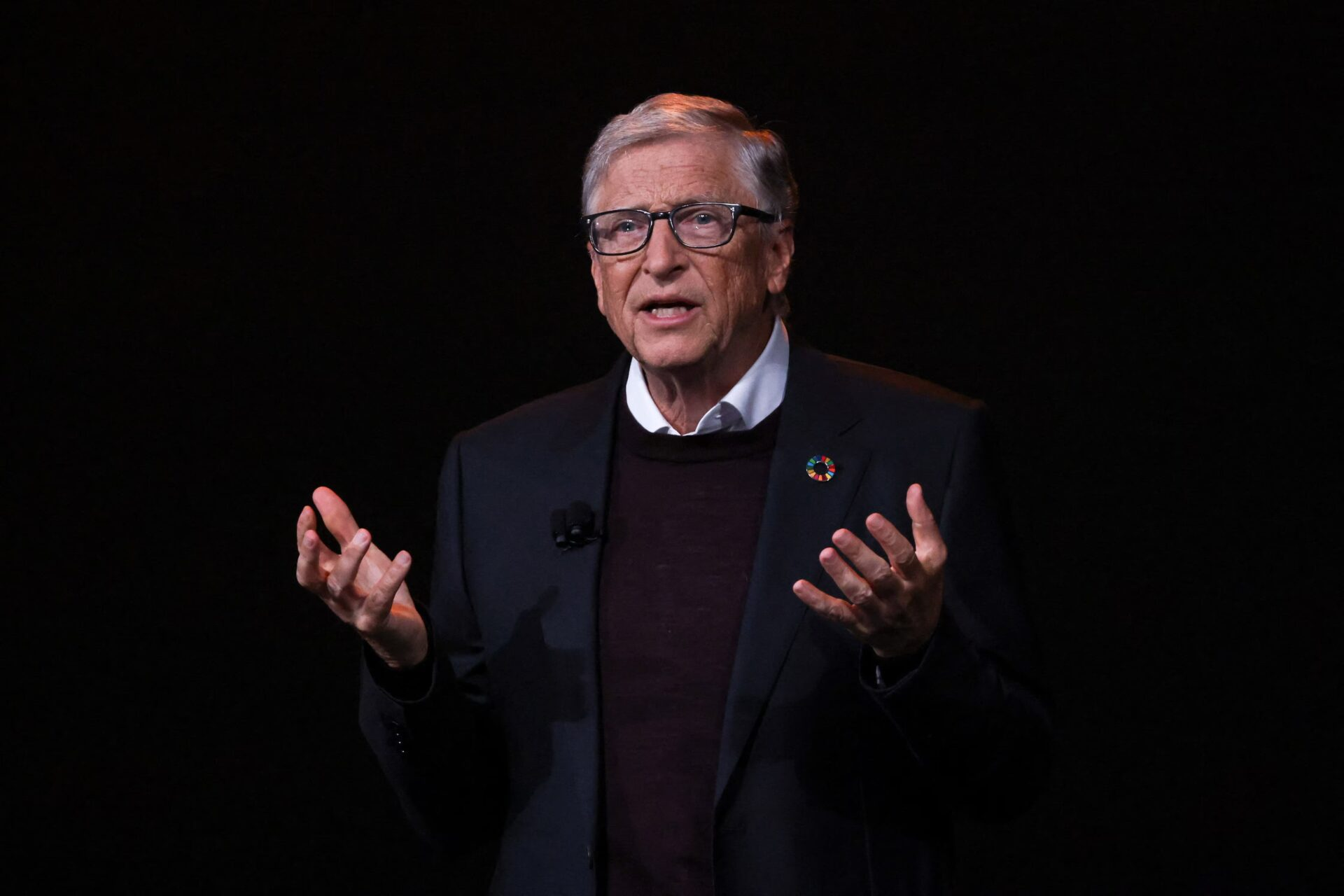
The CEO of the group told Reuters that the billionaire Bill Gates’ foundation will invest at least $1.4 billion over the next four years to assist farmers in Asia and sub-Saharan Africa in gaining access to technologies for weather adaptation.
The investment will be used on technologies such as measuring soil health and biofertilizers that employ microorganisms instead of chemicals to boost plant development, according to Mark Suzman, chairman of the Gates Foundation, speaking ahead of next week’s COP30 climate summit in Brazil.
Last week, Gates urged for a change in climate policy, shifting the focus from emissions targets to aiding the impoverished, who are increasingly suffering from unpredictable weather and other climate extremes.
“These are the people who have contributed such a minimal fraction to the greenhouse gas emission that is causing climate change, but they are the most affected because those climate impacts actually hit them in terms of their ability to feed themselves and their families,” Suzman said to Reuters prior to the funding was made public.
The United Nations has called for greater protection for agriculture as global warming worsens, pointing out that climate-driven weather extremes are becoming a greater danger to agricultural output and food security.
Crop resilience was identified in a report by over 20 companies, including consultants Systemiq, as one of the most effective investment sectors. According to the report, which was published on Tuesday, there is a need for climate-resilient crop types, better weather forecasts, and technologies like AI-enabled mapping and guiding.
ADVANCED FARMING TECHNOLOGIES
A newly developed potato variety that is resistant to blight, a disease that is spreading to higher elevations as global temperatures increase, was released Thursday by the International Potato Center, one of the groups that previously benefited from Gates Foundation support.
“This new potato was developed in Peru by identifying wild potatoes with resistance to the disease and incorporating this resistance into cultivated varieties,” Thiago Mendes, a researcher for the business, explained.
In order to help farmers in African nations like Kenya and Rwanda avoid losing seeds and supplies by planting or harvesting at the optimal times, TomorrowNow, another beneficiary, provides weather reports via text message, CEO Wanjeri Mbugua told Reuters.
According to Suzman, there is a lot of research and development going on for agricultural solutions, but the world’s poorest people should be the ones to receive such answers.
“The jury is still out on if we’re going to see that,” he stated.