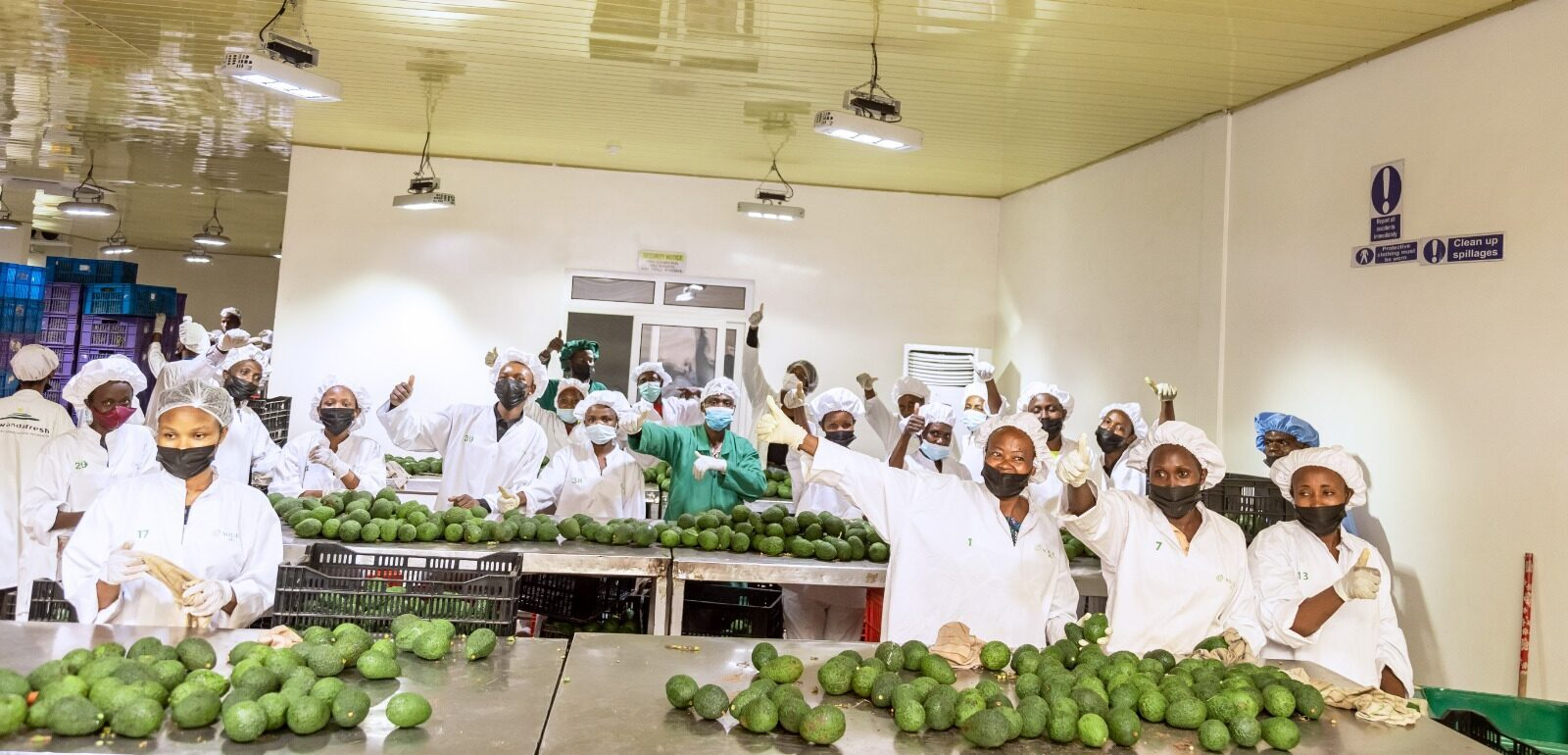
Rwanda’s embassy in Beijing said the country is completing plans to sign a protocol with China that will open the door for Rwandan avocados to be exported to the Chinese market.
The development may represent yet another significant turning point in the two nations’ continuously expanding bilateral commercial relationship.
The Middle East already has a burgeoning market for Rwandan avocados, especially in the United Arab Emirates. Alongside more established exports like coffee and tea, the butter fruit is quickly emerging as another source of income for Rwanda.
Since making its debut at the China International Import Expo (CIIE) in 2018, Rwanda has effectively brought a wide variety of premium goods to the Chinese market, such as handicrafts, coffee, tea, chile, natural honey, and macadamia nuts.
Rwanda’s exports to China have steadily increased in value and diversification, rising from $35 million in 2019 to $160.6 million in 2024, with avocados set to be added soon.
On Tuesday, November 4, the Rwandan embassy declared that the protocol for the sale of Rwandan avocados to China would soon be signed, expanding the range of Rwandan goods that Chinese consumers may purchase.
Rwanda made the statement in advance of its participation in the 8th edition of the CIIE, which will take place in Shanghai from November 5–10.
The embassy released a statement saying, “As Rwanda begins its eighth appearance at the CIIE, with over 15 brands represented, it reaffirms its commitment to enhancing economic and cultural ties with China and to showcasing the best of Rwanda to the international community.”
Results have been obtained from Rwanda’s involvement in the CIIE. Sales on e-commerce platforms have increased as a result of products like Rwandan coffee and chili becoming widely recognized by Chinese consumers for their unique flavor and inherent quality.
Rwanda’s involvement in the import expo, according to the Embassy, continues to provide the nation with an essential platform to advance trade, draw in investment, and enhance travel and cross-cultural interactions. Additionally, it offers a means of showcasing Rwanda’s economic development and potential for the future.
The embassy went on to say, “This year’s participation takes place against the backdrop of growing collaboration between Rwanda and China in trade, investment, and industrial development, guided by the Forum on China-Africa Cooperation (FOCAC) and the Belt and Road Initiative (BRI).”
Rwandan businesses, especially smallholder farmers and women-led cooperatives, now use the CIIE as a route to the profitable Chinese market. Local producers have improved household incomes, increased exports, and created new jobs through collaborations formed at the fair.
Rwandan businesses, particularly women-led cooperatives and smallholder farmers, have found the CIIE to be a very useful platform for accessing the Chinese market. In the past, Rwandan companies—especially those that produce coffee, tea, and honey—have formed significant business alliances that help the country create jobs and generate revenue, according to Rwanda’s ambassador to China, James Kimonyo.
He underlined the wider effects of these trade relationships, stating, “Every product displayed represents a value chain that benefits local communities.” Chinese shoppers are helping households and business owners in Rwanda’s rural communities when they purchase Rwandan coffee or honey. This is the prosperity that we all aspire to.
In addition to commerce, China continues to be Rwanda’s top source of FDI, with $460 million invested in 2024 in industries like mining, agro-processing, real estate, and manufacturing.
Rwanda’s National Agricultural Export Board (NAEB) reports that its avocado exports brought in $6.3 million in 2023, compared to just $440,000 in 2013. At an average price of $2 per kilogram, Rwanda exported 3,200 tonnes of avocados that year. Local growers are looking at big markets like China and India as the government aims to boost avocado exports to 31,000 tonnes by 2029.