DR Congo crisis: Doha peace talks are uncertain
DR Congo President Felix Tshisekedi has said that talks between the Congolese government and the AFC/M23 could result in a peace deal this week, but the rebels have cautioned that a lack of a clear agenda for the talks and Kinshasa’s repeated ceasefire violations are obstacles to any agreement.
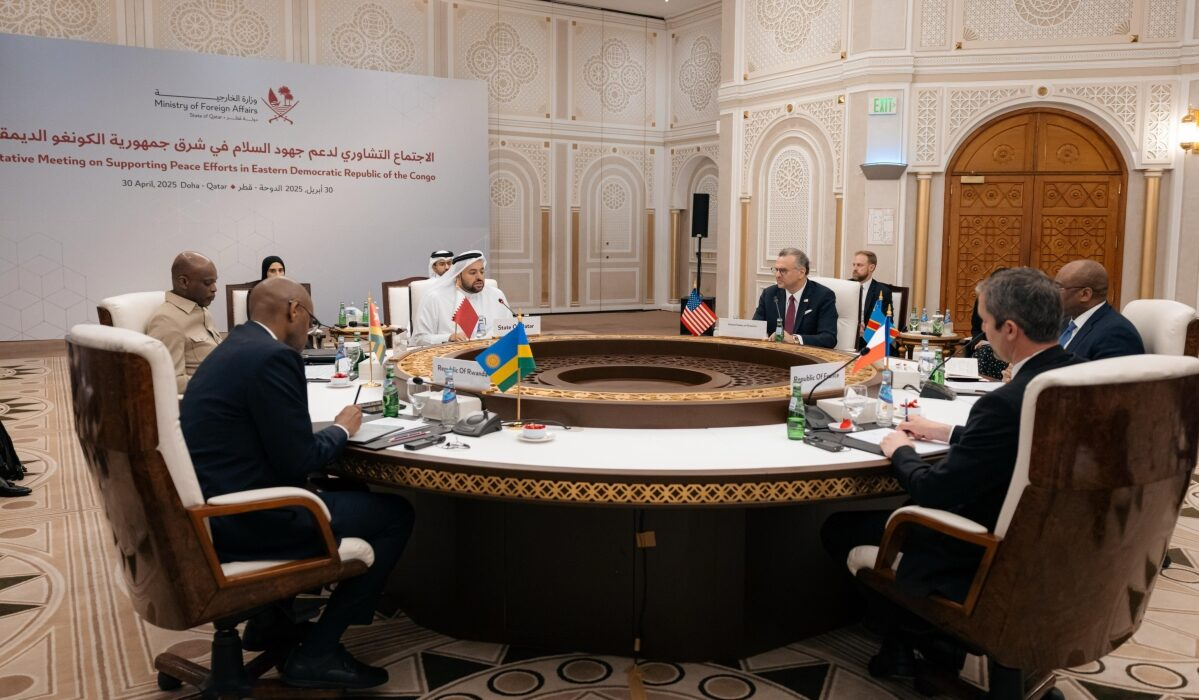
Signed on July 19 in Doha, Qatar, the Declaration of Principles said that all sides must adhere to a durable ceasefire, which is a crucial basis for efforts to foster confidence that may eventually allow for a formal peace deal.
Nonetheless, commentators warn that the peace effort brokered by Qatar may be in danger if fighting in eastern DR Congo continues.
Tshisekedi stated that “the conclusion of this agreement” is required before he and Rwandan President Paul Kagame can travel to Washington, D.C., to meet with US President Donald Trump during his November 2 visit to Egypt, where he met with Congolese community members.
The rocky path to a peace agreement?
On October 14, after the sixth round of peace negotiations in the Gulf nation, Kinshasa and the AFC/M23 movement signed a ceasefire monitoring agreement. The goal of the agreement was to create a collaborative committee to oversee and confirm the establishment of a long-term ceasefire.
Additionally, it stated that the mechanism must be operational by October 21st, which is seven days away. The AFC/M23 movement, however, claims that despite ongoing confrontations, not much has changed.
Oscar Balinda, a movement spokeswoman, told The New Times on Monday, November 3, “The ceasefire monitoring team has not been established as expected.”
“The mediator failed to disclose the reasons why the two sides did not meet. In an effort to reclaim our liberated zones, Kinshasa is continuing its war operations in eastern Democratic Republic of the Congo, launching fresh attacks, bombing heavily populated areas, and focusing on our positions.
Balinda stated that there were no arrangements or correspondence from the mediator regarding any such meeting or peace agreement in relation to the discussions that Tshisekedi had announced.
“Our negotiation team is always willing to participate in additional discussions and is still in Doha, where the peace process is occurring,” he stated.
However, we are still waiting for the permanent ceasefire to be fully activated and are still in the implementation stage. As of right now, we have not heard anything about the next round of negotiations or the signing of a peace agreement.
“Real discussions addressing the underlying causes of the violence in the Democratic Republic of the Congo are still a ways off. The ceasefire team must be formed first, then an irreversible, permanent ceasefire must be put into place.
Balinda went on to say that the process would follow five recently started protocols in accordance with the latest mediation developments. He pointed out that no progress has been achieved on the first procedure yet but failed to provide specifics.
What will happen if the fighting goes on?
Balinda echoed the recent statements of the movement’s political leader Corneille Nanga when asked about their options in the event that Kinshasa continued their attacks and the peace negotiations produced no breakthrough: “If the government continues to attack civilians and our positions, it would mean the Doha peace process holds no importance.”
“The mediator has received numerous reports of ceasefire violations, but nothing has been done about them. We anticipate that the mediator will hold the parties responsible,” Balinda continued.
He recalled the protracted suffering of Congolese refugees in neighboring countries and pointed out that Kinshasa has a history of breaking its own promises. He criticized Tshisekedi’s administration for its “dictatorial tendencies,” pointing to the recent disbandment of twelve opposition parties after their leaders met with former President Joseph Kabila in Kenya on October 14.
Regarding the Congolese government, Balinda stated, “There are issues they agree to at the peace talks and even sign, but their actions afterward show no political will to implement the agreements.”
“They are still committed to moving the conflict forward, hiring mercenaries daily, redeploying government troops, using Sukhoi fighter jets to bomb civilians, and deploying warships across Lake Tanganyika. The president seems determined to use force to end the problem.
The viewpoint of crisis observers
East African Legislative Assembly (EALA) member Fatuma Ndangiza emphasized that without dedication and consistency, the peace negotiations mediated by Qatar are meaningless. She cautioned that merely making statements and signing agreements won’t end the issue.
“The parties need to follow through on their promises. Both the Congolese government and AFC/M23 have shown confidence in Qatar as a trustworthy mediator, according to Ndangiza.
“You shouldn’t discourage it. Keeping in mind the interests of Congolese citizens and the area, it should instead maintain using its influence to make sure the parties take into account the investments already made rather than allowing earlier efforts to stop. Qatar may not be able to end the DR Congolean issue on its own, but when working with other parties, its voice matters.
She also underlined the importance of giving DR Congo special consideration, saying that although the Congolese technical team has demonstrated some dedication, Tshisekedi should be held responsible for halting negotiations in their final stages.
“The top levels are where political will begins. The game-changer is still their president in spite of Congolese diplomats’ persistent attempts. She made reference to the delays in the peace process mediated by Qatar and earlier negotiations between Rwanda and the Democratic Republic of the Congo, saying, “It has been noted that Tshisekedi has repeatedly stalled the process at the last minute.”
Ndangiza emphasized the need for key actors, particularly the AFC/M23 movement and the Congolese president, to guarantee security in eastern DR Congo, foster an atmosphere that is conducive to peacebuilding, and make it easier for the Doha process and the June 27 peace agreement between DR Congo and Rwanda to be implemented.
In addition to urging the AFC/M23 to uphold its pledges to the peace process, she called on Congolese civilians, mediators, the African Union, and the UN to demand progress and hold Tshisekedi accountable.
“The crisis would have been resolved long ago if Tshisekedi had viewed the mediation as a chance to guarantee peace and stability in his nation,” she said. “There should be a sense of urgency because regional security, stability in Rwanda, and the welfare of Congolese citizens—especially those who have fled to Rwanda and the surrounding area—are all directly related to peace in the Democratic Republic of the Congo. To enable the nation to concentrate on its development, a firm pause is required.
“With or without mediators, the DR Congo’s leadership needs to take the situation seriously and show a sincere desire to put an end to the crisis rather than pointing the finger at Rwanda and others for the nation’s instability. Long-standing governance deficiencies have created a void that needs to be filled permanently, Ndangiza stated.
She also mentioned that because of their own interests, international players are hesitant to hold the Congolese government responsible. “Anyone who supports the government in its wrongdoings and pursues economic, political, or bilateral interests in the Democratic Republic of the Congo should realize that no benefits will materialize as long as the crisis continues.” In order to promote regional and international cooperation, we all desire a stable and sustainable peace in the Democratic Republic of the Congo.
Balinda stressed that the movement remained dedicated to peace initiatives in spite of the current circumstances.
“Any platform where peace proposals may emerge has our full support. We have held discussions in Luanda, Burundi, Nairobi, Uganda, and now Doha. We never give up on finding peace and are committed to using diplomacy to settle the conflicts,” he stated.
He went on to say that Tshisekedi’s inclination for conflict keeps him in power.
“He lost both the first and second elections, and he is now taking advantage of the situation to strengthen his grip on power by claiming that he is the only one capable of bringing this war to a military conclusion,” Balinda stated.